OpenAI and Perplexity's AI Shopping Assistants: Transforming E-Commerce Experiences
Opinionated analysis of OpenAI and Perplexity AI shopping assistants—and how Perplexity AI Optimization can win visibility, trust, and conversions.
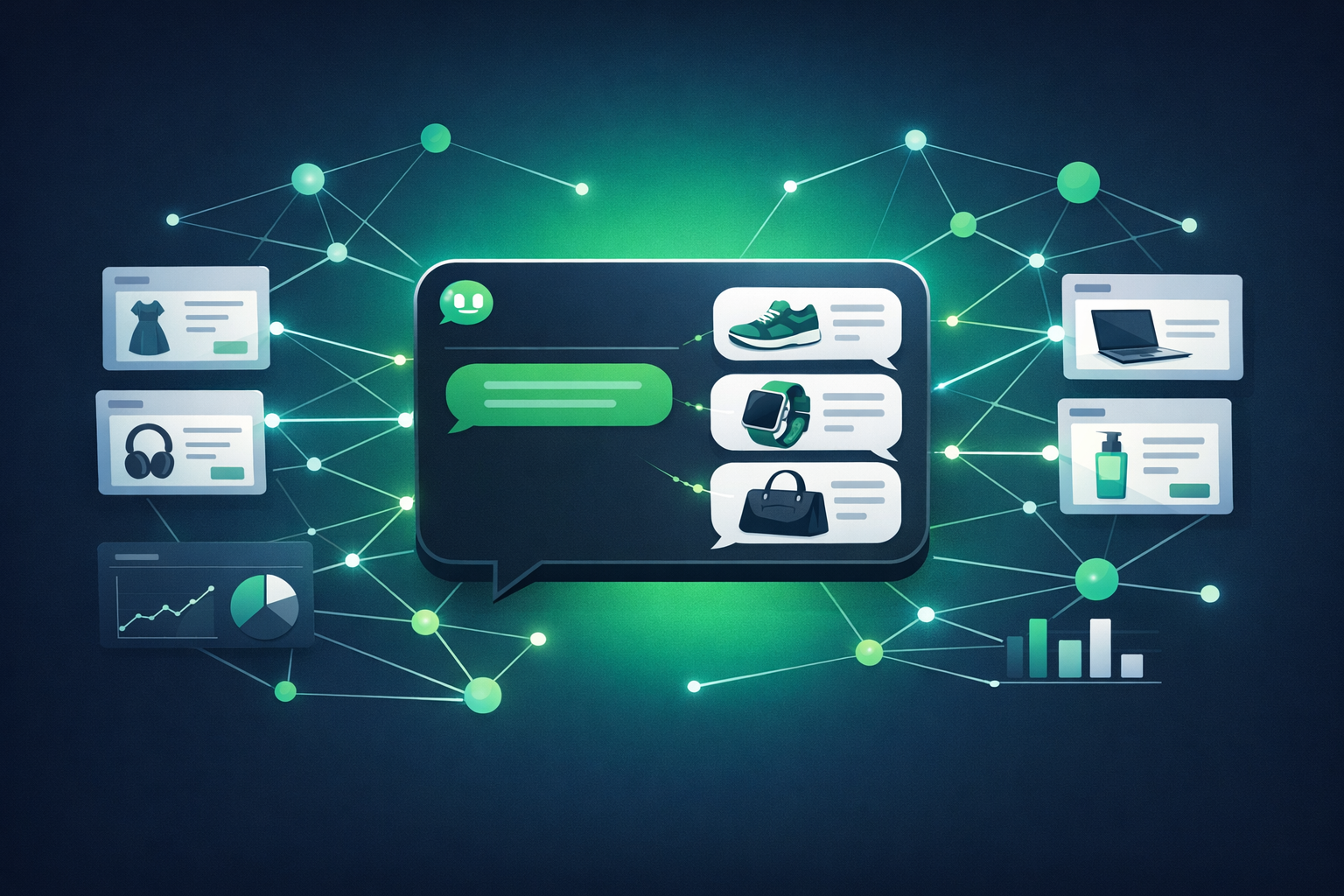
Holiday shopping 2025 is the first moment when “ask an assistant” became a mainstream shopping behavior rather than a novelty. TechCrunch reports that both OpenAI and Perplexity rolled out shopping features inside their existing chat experiences, positioning the assistant as a research-and-recommendation layer that sits above traditional search and retailer sites. TechCrunch also cites Adobe’s forecast that AI-assisted online shopping will grow 520% this holiday season—a signal that the behavior shift is not gradual; it’s discontinuous.
Our stance: AI shopping assistants will become the primary interface for high-intent product research. They compress the funnel, reduce brand-controlled touchpoints, and reframe competition from “ranking” to being included, cited, and framed as the safe recommendation.
This briefing focuses on one angle: assistant-mediated shopping decisions—how brands win visibility and trust when the “product discovery” unit is a synthesized answer (Perplexity) or a conversational agent (OpenAI), not a SERP.
The New Battleground: AI Shopping Assistants as the Default Product Discovery Layer
Thesis: discovery is shifting from search results to synthesized answers
Google’s experimental “AI Mode” is a useful proxy for where discovery is going: it’s explicitly designed for comparisons, reasoning, and follow-up questions, and it uses a “query fan-out” technique to run multiple related searches across subtopics and data sources, then synthesize the response. That’s not a UI tweak—it’s a new retrieval-and-synthesis workflow that reduces the number of discrete clicks a user needs to make.
Perplexity and OpenAI are now applying the same interaction model to shopping: ask for a gaming laptop under $1,000 with specific constraints; upload a photo of a garment and ask for cheaper alternatives.
Why this matters for Perplexity AI Optimization (PAIO) more than traditional SEO
Traditional SEO assumes the click is the prize. In assistant-mediated shopping, the click is often optional—and sometimes deferred until checkout. OpenAI partnered with Etsy and Shopify to enable in-chat purchases via ChatGPT’s Instant Checkout. Separately, PayPal enabled checkout-in-chat for Perplexity’s shopping experience.
For Perplexity specifically, the UX is typically citation-forward, which turns “being a source” into a measurable KPI. That’s why teams investing in Perplexity AI Optimization should treat citation share as seriously as they treated rank share.
If you want the broader foundations—prompting, settings, evaluation, troubleshooting—learn more about [Complete Guide to Perplexity AI Optimization] in our full guide: /briefing/the-complete-guide-to-perplexity-ai-optimization.
Actionable recommendation: Rebuild your discovery KPI tree around inclusion rate + citation share + recommendation framing (not just sessions and rank). Start by defining 25 “high-intent assistant queries” that mirror how people ask (constraints, budgets, “best for X”), then benchmark whether you appear in synthesized answers.
How OpenAI vs. Perplexity Make Shopping Recommendations (and Where Brands Get Filtered Out)
Two pipelines: conversational reasoning vs. citation-first synthesis
At a high level, both systems follow a similar pipeline:
- Query interpretation (intent, constraints, personalization signals)
- Retrieval (indexes, partners, feeds, web sources)
- Synthesis (comparison, trade-offs, “best options”)
- Ranking/ordering (what’s shown first, what’s omitted)
- Presentation (citations, cards, checkout hooks)
TechCrunch highlights a key structural difference: startups argue general assistants “piggyback off existing search indexes like Bing or Google,” while Perplexity told TechCrunch it has its own search index. That matters because the assistant can only recommend what it can retrieve reliably and reconcile across sources.
The hidden ranking factors: sources, structure, and retrievability
Here’s where brands get filtered out in practice:
- Thin product pages (missing specs, unclear variants, no decision guidance)
- Inconsistent price/availability across pages or channels
- Weak third-party corroboration (no credible mentions, reviews, testing)
- Poor machine readability (unclear model numbers, messy variants, weak schema)
- Policy ambiguity (returns, warranty, shipping timelines hard to verify)
A second-order dynamic is emerging: assistants are becoming more agentic—they don’t just answer; they act. Amazon alleged that Perplexity’s Comet browser and associated AI agent can automate shopping actions on Amazon; Perplexity disputed wrongdoing and said credentials are stored locally. And Perplexity’s own help center distinguishes between an assistant (summarize, research) and an agent that can execute multi-step workflows, while “checking with you before important or sensitive actions.”
When the system can transact, verification pressure rises: the assistant must justify recommendations with evidence it can defend.
If you need the broader mechanics of “how Perplexity retrieves and cites,” reference our comprehensive guide to Complete Guide to Perplexity AI Optimization: /briefing/the-complete-guide-to-perplexity-ai-optimization.
Actionable recommendation: Run a “retrievability audit” on your top 50 SKUs: can a third party extract exactly what the product is, which variants exist, current price/availability, and key policies in under 60 seconds—without guessing? If not, assistants will guess (or exclude you).
What Actually Wins in AI Shopping: Evidence Density, Not Brand Awareness
Brand teams often assume awareness drives inclusion. Our contrarian view: assistants reward evidence density—the volume and clarity of machine-verifiable product truth—more than brand storytelling.
Why? Because assistants are increasingly built for reasoning and tool use. Forbes’ overview of model releases underscores that frontier models are improving on agentic tasks, real-world coding, and reasoning—the exact capabilities needed to compare products, reconcile constraints, and execute shopping workflows.
Evidence stack: structured product data + narrative proof + third-party validation
Winning “evidence density” looks like a layered stack:
Perplexity AI Optimization playbook for shopping assistants
The PAIO implication is uncomfortable but profitable: copywriting matters less than corroboration.
Concrete assets that tend to perform well in assistant-mediated shopping:
- “Best for X” landing pages built around constraints assistants can parse:
- budget ceilings
- use cases
- must-have specs
- trade-offs and “who should not buy this”
- Comparison modules that are explicit and current:
- “Model A vs Model B” tables
- variant clarity (storage, color, size)
- policy deltas (warranty length, return window)
Disambiguation is the silent killer. If your variants are unclear, assistants will mix them—and the safest move is to exclude you.
Actionable recommendation: For your top category, publish one assistant-first comparison hub (not a blog post): a maintained page with decision criteria, a comparison table, and a timestamped update policy (e.g., “prices updated daily at 02:00 UTC”). Then ensure schema and on-page values match.
The Trust Problem: Bias, Monetization, and the Risk of “Pay-to-Recommend” Shopping
TechCrunch is explicit about the monetization gravity: these assistants run on expensive compute and are “still trying to figure out a path to profitability,” making e-commerce an obvious lever—potentially mirroring Google/Amazon ad dynamics.
That creates a structural risk: recommendation integrity may erode as sponsored placement, preferred partners, or opaque ranking logic expand. Even without outright ads, commercial partnerships can shape what’s easiest to retrieve and transact.
Counterpoint: assistants can reduce fraud and choice overload—if they can verify. But agentic shopping also expands the attack surface. Reuters reports Amazon sued Perplexity over alleged unauthorized access tied to an “agentic” shopping tool in Comet, with Perplexity denying wrongdoing and emphasizing local credential storage. Regardless of who’s right, the signal is clear: commerce agents will be scrutinized like payment systems, not like content products.
For brands, the practical lesson is not philosophical. It’s operational: assume scrutiny and engineer trust signals that survive adversarial evaluation.
Trust engineering checklist:
- Publish verifiable claims with supporting documentation (spec sheets, certifications)
- Maintain consistent, crawlable policy pages (returns, shipping, warranty)
- Pursue independent reviews that assistants can cite
- Reduce ambiguity in pricing/availability across channels
Actionable recommendation: Create a “trust packet” for your top SKUs: a single canonical page (or bundle) that includes specs, certifications, warranty, returns, and support documentation—internally consistent and externally linkable. Treat it as the page assistants should cite when stakes are high.
Action Plan: A 30-Day PAIO Sprint to Become ‘Citable’ in AI Shopping Answers
This is the fastest credible sprint we’ve seen work when teams need results without boiling the ocean.
Week-by-week execution checklist
Week 1: Query + competitor citation audit
- Define 25–50 assistant-style queries (constraints, “best for,” comparisons)
- Record: who gets cited/recommended; what source types dominate (retailers, publishers, forums)
- Identify “citation gaps” where your category is decided by third-party sources you don’t influence
Week 2: Product data cleanup + schema alignment
- Fix naming, variants, canonicalization
- Align Product/Offer/Review markup with visible truth
- Ensure price/availability consistency across PDP and feeds
Week 3: Build decision pages
- Publish 1–2 “best for X” pages per priority category
- Add side-by-side comparison tables and disqualifier FAQs
- Add “updated on” timestamps and update cadence
Week 4: Validation + refresh loop
- Pitch independent reviewers with a clear testing angle
- Refresh PDPs and policy pages for clarity and retrievability
- Iterate based on which pages start earning citations
KPIs and instrumentation for assistant-driven shopping journeys
Track what assistants actually change:
- Perplexity citation count/share for target queries
- Inclusion rate (how often you appear in answers at all)
- Referral sessions from answer engines
- Conversion rate by landing page type (PDP vs comparison hub)
- Assisted revenue attribution (multi-touch)
Instrumentation that matters:
- Use UTM conventions for assistant referrals where possible
- Analyze server logs for assistant/browser agent patterns (especially as Comet adoption grows)
- Separate “assistant discovery” dashboards from classic SEO dashboards
For a broader measurement and workflow framework, see the complete guide on Complete Guide to Perplexity AI Optimization: /briefing/the-complete-guide-to-perplexity-ai-optimization.
Actionable recommendation: Stop optimizing for clicks alone. Set a day-30 target for inclusion rate (e.g., “appear in 40% of our top 25 assistant queries”) and assign an owner to close the top three “evidence gaps” causing exclusion.
:::comparison :::
✓ Do's
- Build KPIs around inclusion rate + citation share + recommendation framing, not just rank and sessions.
- Publish assistant-first decision assets (constraint-driven “best for X” pages and maintained comparison hubs).
- Make product truth machine-verifiable: clean identifiers, consistent variants, aligned Product/Offer/Review schema, and stable policy pages.
- Invest in independent validation (credible testing/reviews) that assistants can cite when stakes are high.
✕ Don'ts
- Don’t rely on brand awareness or persuasive copy to compensate for missing specs, unclear variants, or policy ambiguity.
- Don’t let price/availability drift across PDPs, feeds, and channels—assistants treat conflicts as risk.
- Don’t optimize only for the click; assistant experiences can defer or compress clicks until checkout, especially with commerce rails (Shopify/PayPal partnerships cited by TechCrunch). :::
Learn More: Explore geo generative engine optimization ai search optimization guide for more insights.
Key Takeaways
- AI-assisted shopping is scaling fast: TechCrunch cites Adobe forecasting 520% growth in AI-assisted online shopping this holiday season—plan for mainstream behavior, not edge cases.
- Discovery is becoming synthesized: Google’s “AI Mode” and its “query fan-out” approach illustrate a retrieval-and-synthesis workflow that reduces multi-click SERP journeys.
- Clicks are no longer the only prize: With commerce rails (Shopify for OpenAI; PayPal for Perplexity), assistants can keep users inside the chat longer—making “being included” more valuable than “being clicked.”
- Perplexity is citation-forward—treat citations like rankings: For PAIO, citation share becomes a core visibility KPI, not a nice-to-have.
- Brands get filtered out via retrievability failures: Thin pages, inconsistent availability, weak schema, and unclear policies are practical exclusion triggers in assistant-mediated shopping.
- Evidence density wins: Structured product truth + constraint-resolving narrative proof + independent validation is the repeatable path to being recommended.
- Agentic shopping raises verification pressure: As assistants shift from answering to acting (Comet/agent workflows), trust signals and verifiable documentation become harder requirements, not soft differentiators.
FAQs
How do AI shopping assistants choose which products to recommend?
They interpret constraints, retrieve candidates from indexes/partners/web sources, synthesize trade-offs, then rank and present options. Systems that emphasize comparisons and reasoning (e.g., Google’s AI Mode) are designed to reduce multi-query journeys into a single synthesized flow.
How can I optimize my product pages for Perplexity AI citations?
Prioritize evidence density: clean specs, clear variants, consistent policies, and pages that answer decision criteria directly. Perplexity’s citation-forward behavior makes “being a source” a tangible KPI.
Do schema markup and product feeds influence AI shopping recommendations?
They influence retrievability and disambiguation—whether assistants can reliably extract price, availability, and variants without conflicting signals. As assistants become more agentic, machine-verifiable truth becomes more important than persuasive copy.
Will AI shopping assistants reduce traffic from Google to e-commerce sites?
They can, because synthesized answers and conversational follow-ups reduce the need for repeated SERP clicks. Google’s AI Mode explicitly targets multi-step exploration and comparison inside a single experience.
How can brands measure ROI from Perplexity and other answer engines?
Measure inclusion/citation share for high-intent queries, then connect assistant referrals to conversions and assisted revenue. Also segment analytics so assistant-driven journeys aren’t masked by classic SEO reporting.

Founder of Geol.ai
Senior builder at the intersection of AI, search, and blockchain. I design and ship agentic systems that automate complex business workflows. On the search side, I’m at the forefront of GEO/AEO (AI SEO), where retrieval, structured data, and entity authority map directly to AI answers and revenue. I’ve authored a whitepaper on this space and road-test ideas currently in production. On the infrastructure side, I integrate LLM pipelines (RAG, vector search, tool calling), data connectors (CRM/ERP/Ads), and observability so teams can trust automation at scale. In crypto, I implement alternative payment rails (on-chain + off-ramp orchestration, stable-value flows, compliance gating) to reduce fees and settlement times versus traditional processors and legacy financial institutions. A true Bitcoin treasury advocate. 18+ years of web dev, SEO, and PPC give me the full stack—from growth strategy to code. I’m hands-on (Vibe coding on Replit/Codex/Cursor) and pragmatic: ship fast, measure impact, iterate. Focus areas: AI workflow automation • GEO/AEO strategy • AI content/retrieval architecture • Data pipelines • On-chain payments • Product-led growth for AI systems Let’s talk if you want: to automate a revenue workflow, make your site/brand “answer-ready” for AI, or stand up crypto payments without breaking compliance or UX.
Related Articles
Perplexity AI’s Acquisition of Carbon: A Case Study in Upgrading Enterprise Search with RAG
Case study on how Perplexity AI’s Carbon acquisition strengthens enterprise search with RAG—implementation approach, measurable impact, and lessons learned.

The Complete Guide to Perplexity AI Optimization
Learn how to optimize Perplexity AI for better answers, citations, and workflows. Prompts, settings, evaluation, troubleshooting, and best practices.