Google AI Max is replacing Dynamic Search Ads: what it means for organic + AI search strategy
Google is sunsetting Dynamic Search Ads in favor of AI Max. How the switch reshapes ad coverage, landing-page selection, and the organic plus AI search playbook.
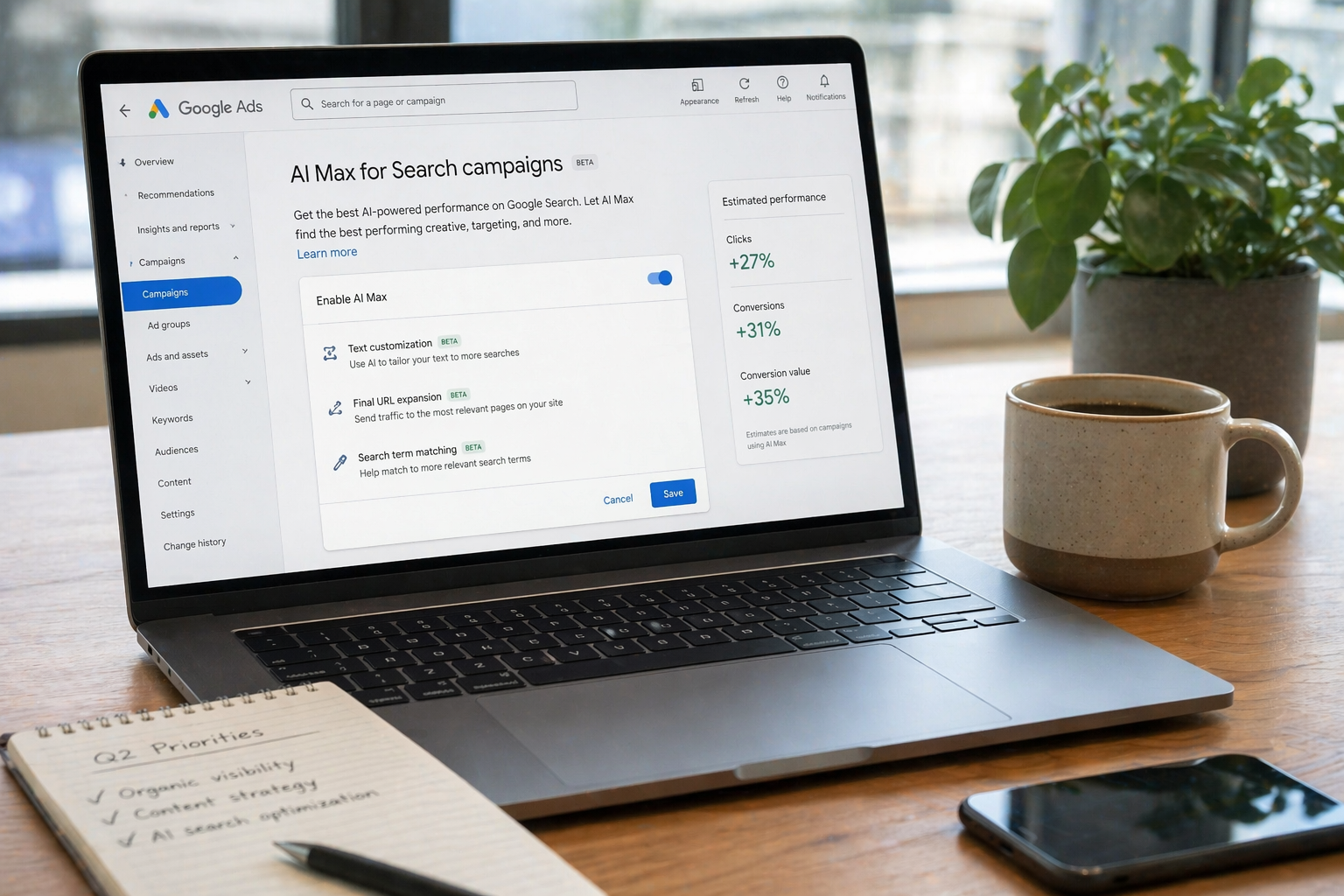
Google AI Max is replacing Dynamic Search Ads: what it means for organic + AI search strategy
Google’s decision to replace Dynamic Search Ads with AI Max is more than a paid media update. It signals that Google increasingly wants models, not marketers, to decide which queries, landing pages, and message variations best match intent. For organic teams, that means the same shift toward semantic understanding and automation is shaping how pages are discovered, summarized, and cited in AI-driven search.
In practice, SEO is moving from ranking for a keyword to becoming the best source for a topic, task, or moment. As Google adds more personalized context to discovery, and as OpenAI and Anthropic build retrieval-heavy assistants for work, visibility depends more on coverage, structure, trust, and machine-readable clarity. That is why this change matters beyond paid media: it shows how search systems are increasingly optimizing for intent resolution rather than keyword matching alone.
Treat AI Max as an early warning system. Paid-search automation often reveals where Google’s understanding of intent, landing-page selection, and personalization is going next. Teams that align PPC, SEO, and GEO now will adapt faster than teams that optimize each channel in isolation.
What Google is actually changing
According to Google’s announcement on AI Max replacing Dynamic Search Ads, the change formalizes a move from crawl-and-match automation toward AI-driven query expansion. Dynamic Search Ads already relied on site content rather than fixed keyword lists, but AI Max pushes further: Google’s systems infer broader intent, discover adjacent demand, and choose the most relevant destination based on model understanding, not exact keyword targeting alone.
For advertisers, that reduces the gap between demand discovery and ad delivery. For SEO teams, the larger lesson is that page eligibility will depend less on mapping one page to one keyword cluster and more on giving the model enough context to route many related intents to the right asset. Strong topical hubs, precise titles, useful subheads, and pages built around real tasks become more valuable when systems are doing more of the matching.
The practical difference is important. In a DSA world, a page might win because it happened to include the right phrase. In an AI Max world, the system is more likely to ask whether the page actually helps with a broader need such as comparing options, solving a problem, or completing a workflow. That favors sites with clear information architecture, deep coverage, and landing pages that reflect user jobs to be done rather than narrow keyword variants.
Why this matters for organic and AI discovery
This change lines up with Google’s broader move toward personalized AI search across Search, Gmail, Photos, Chrome, and other products. If discovery becomes more situational, there is no single ranking position to optimize for. Brands need content that stays useful across different contexts, from first-touch research to follow-up comparison to in-product assistance.
The same pattern appears outside Google. OpenAI’s enterprise roadmap emphasizes workplace retrieval and knowledge access, while Anthropic’s connector and web search push expands how documents are selected inside enterprise assistants. Together, those signals suggest that future visibility is shaped by two filters at once: model judgment about relevance and system access to the right documents.
For organic strategy, that means the competitive set is expanding. You are no longer only competing for a blue-link click. You are competing to become the page the model chooses to summarize, cite, or send a user to after considering context, prior behavior, connected accounts, and task intent. Visibility becomes conditional, not universal, so durable performance depends on being broadly useful and easy for machines to parse.
AI Max is not proof that websites matter less. It means the opposite: when models are selecting destinations and composing answers, pages with weak structure, thin evidence, or fuzzy intent mapping become easier to ignore.
Key findings for content, structure, and measurement
One of the clearest takeaways for organic teams is that format now affects findability. Research on citation behavior in large language models suggests that models do not only reward topical relevance. They also respond to content that is easy to segment, quote, and attribute. Clean headings, short definitional passages, lists, tables, and direct answers can improve the odds that a passage is extracted or cited.
That does not mean every page should sound robotic. It means pages should be organized in ways that help both humans and systems identify the main claim, the supporting evidence, and the action the reader should take next. A strong page often contains a concise summary near the top, scannable subsections, plain-language terminology, and proof points that can stand alone when lifted into an answer surface.
Measurement also has to change. Traditional rankings still matter, but they are no longer enough on their own. Teams should compare paid search query expansion with organic landing-page performance, monitor whether AI systems keep choosing the same pages for similar prompts, and look for changes in assisted visits, branded searches, and referred sessions from answer surfaces. In other words, measure source selection, not just rank position.
Another insight is that content architecture is becoming a competitive moat. When a site clearly separates definitions, use cases, comparisons, setup steps, and FAQs, models can map different intents to different page sections more reliably. That improves both paid landing-page routing and organic citation potential. Messy overlap, duplicated pages, or vague headings create ambiguity that automated systems are increasingly unlikely to reward.
Strategic implementation across SEO, PPC, and GEO
The best starting point is a shared intent map. Pull paid search terms, organic query themes, sales questions, and customer-support prompts into one taxonomy. Then group them by task: learn, compare, evaluate, buy, onboard, troubleshoot, or renew. This turns AI Max query expansion data into an SEO planning asset and helps content teams see where the site lacks pages that satisfy real moments in the journey.
Next, redesign key landing pages for machine-readable clarity. Each important page should have a focused purpose, an explicit primary question, strong headings, concise summaries, and evidence that can be quoted out of context. Add supporting blocks such as comparisons, setup steps, pricing context, or FAQs where they help. The goal is not more words for the sake of it; the goal is clearer retrieval pathways for both search engines and AI assistants.
Finally, close the loop with testing. Review which pages AI Max prefers for expanded queries, which organic pages earn long-click engagement, and which passages appear in AI answers or internal copilots. If a model keeps routing diverse intents to one page, that page may need tighter structure or supporting child pages. If models ignore an important page, the issue may be weak framing, thin evidence, or poor connection to adjacent topics.
Pick one high-value topic cluster and audit it end to end: paid queries, top landing pages, internal site search, support tickets, and AI prompt results. You will usually find that the winning structure is clearer and more modular than the existing content plan assumes.
This kind of pilot gives teams a shared proof point before they scale changes across the full site.
Common challenges and solutions
A common mistake is overreacting by creating a flood of thin pages for every inferred intent. That usually makes the site harder, not easier, for models to understand. A better approach is to build a deliberate topic hierarchy: cornerstone pages for broad tasks, supporting pages for distinct sub-intents, and clear internal links that explain the relationship between them.
Another challenge is trust. If AI systems are expected to summarize or cite your content, unsupported claims become a bigger liability. Add named sources where appropriate, keep dates current, show authorship on topics that require expertise, and use precise language. Citation-ready content is not only structured well; it also gives the system a reason to trust the passage enough to reuse it.
The third challenge is organizational. PPC teams, SEO teams, content strategists, product marketers, and knowledge-management owners often work from different taxonomies and dashboards. But AI search blurs those boundaries. The fix is shared governance: one intent model, one set of core pages, and one review process for the claims, structure, and freshness signals that affect both paid and organic performance.
Future outlook
The next phase of search will be less about public rankings alone and more about source selection across blended environments. Google is signaling that public web content, app context, and personalized signals will increasingly work together. OpenAI and Anthropic are showing a parallel path inside the enterprise, where connectors, permissions, and retrieval controls determine what gets surfaced and trusted.
That means the winning content strategy will look more like product design than classic publishing. Pages will need to be modular, current, reusable, and clearly scoped to the job they perform. Universal visibility will be harder to achieve, but conditional visibility can improve if your content is the cleanest answer for a specific task in a specific context.
Seen this way, AI Max is not just an ads migration. It is a preview of a broader search environment where systems expand intent automatically, personalize discovery aggressively, and reward sources that are easy to retrieve, interpret, and cite. Brands that learn from that now will have an advantage as AI answer surfaces take a larger share of discovery.
Conclusion and key takeaways
Google’s move from Dynamic Search Ads to AI Max makes one trend hard to ignore: search is being reorganized around model judgment. The systems deciding which ad to show, which landing page to route to, and which passage to summarize are converging on the same logic—understand intent broadly, personalize when possible, and prefer content that is well-structured and trustworthy.
For marketers, the response should be practical. Align paid and organic data, design pages around tasks instead of isolated keywords, and treat structure as a visibility lever. Teams that do that will be better prepared not only for Google’s changes, but for an AI search landscape shaped by retrieval, connectors, and citation behavior across many platforms.
Key Takeaways
AI Max signals a broader move from keyword matching to model-led intent expansion and page selection.
Organic visibility increasingly depends on topical coverage, structure, trust, and context readiness.
Paid search automation can reveal future SEO and GEO opportunities before they fully show up in organic results.
Formatting matters because AI systems are more likely to cite content that is clear, segmented, and evidence-based.
The most resilient strategy is shared governance across PPC, SEO, content, and knowledge teams.
FAQ

Founder of Geol.ai
Senior builder at the intersection of AI, search, and blockchain. I design and ship agentic systems that automate complex business workflows. On the search side, I’m at the forefront of GEO/AEO (AI SEO), where retrieval, structured data, and entity authority map directly to AI answers and revenue. I’ve authored a whitepaper on this space and road-test ideas currently in production. On the infrastructure side, I integrate LLM pipelines (RAG, vector search, tool calling), data connectors (CRM/ERP/Ads), and observability so teams can trust automation at scale. In crypto, I implement alternative payment rails (on-chain + off-ramp orchestration, stable-value flows, compliance gating) to reduce fees and settlement times versus traditional processors and legacy financial institutions. A true Bitcoin treasury advocate. 18+ years of web dev, SEO, and PPC give me the full stack—from growth strategy to code. I’m hands-on (Vibe coding on Replit/Codex/Cursor) and pragmatic: ship fast, measure impact, iterate. Focus areas: AI workflow automation • GEO/AEO strategy • AI content/retrieval architecture • Data pipelines • On-chain payments • Product-led growth for AI systems Let’s talk if you want: to automate a revenue workflow, make your site/brand “answer-ready” for AI, or stand up crypto payments without breaking compliance or UX.
Related Articles
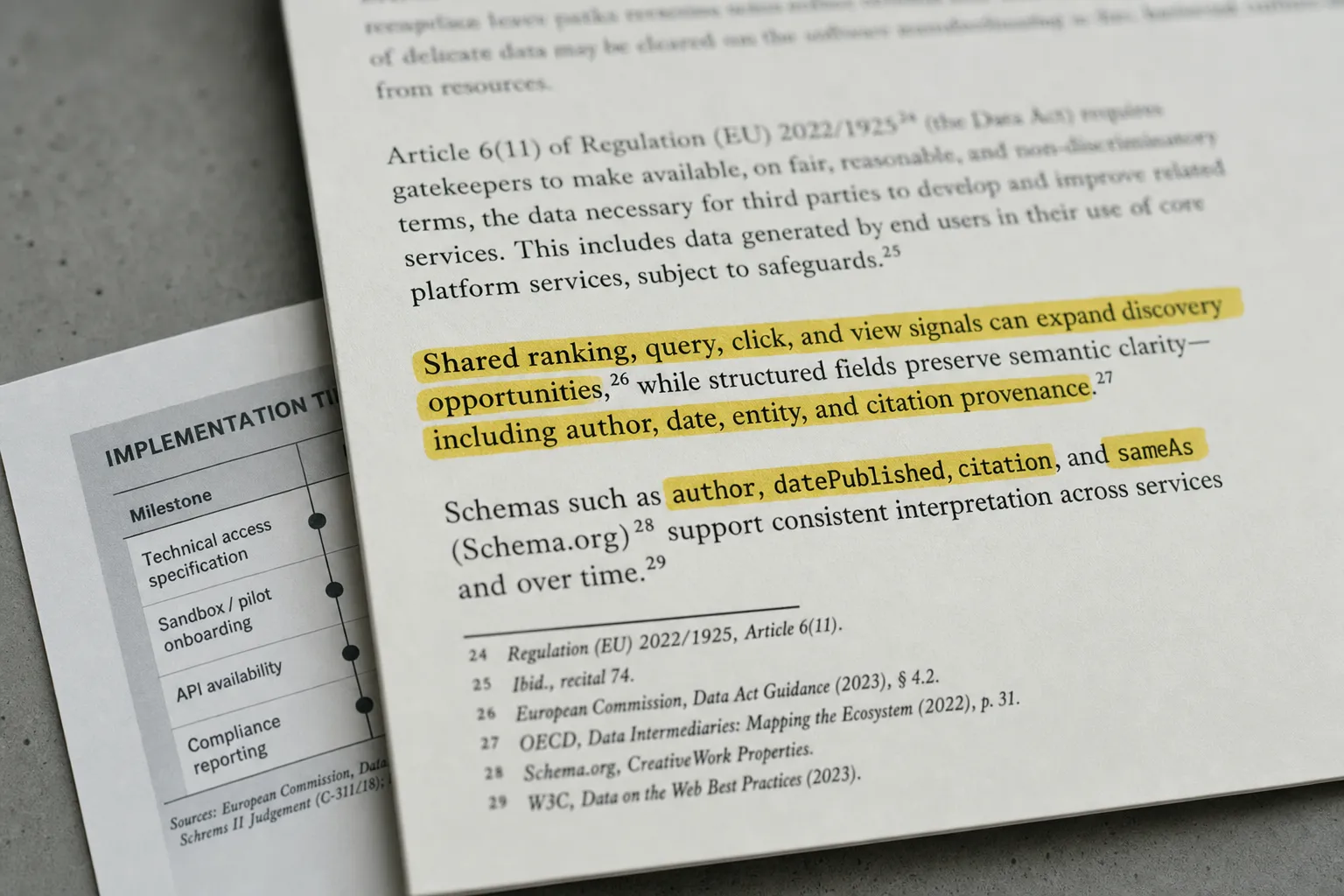
The EU Wants Google to Open Up Search Data to Rival AI Engines
EU plans to open Google Search data to rival AI engines. Learn why Structured Data—not raw click logs—will determine who can retrieve and cite the web.
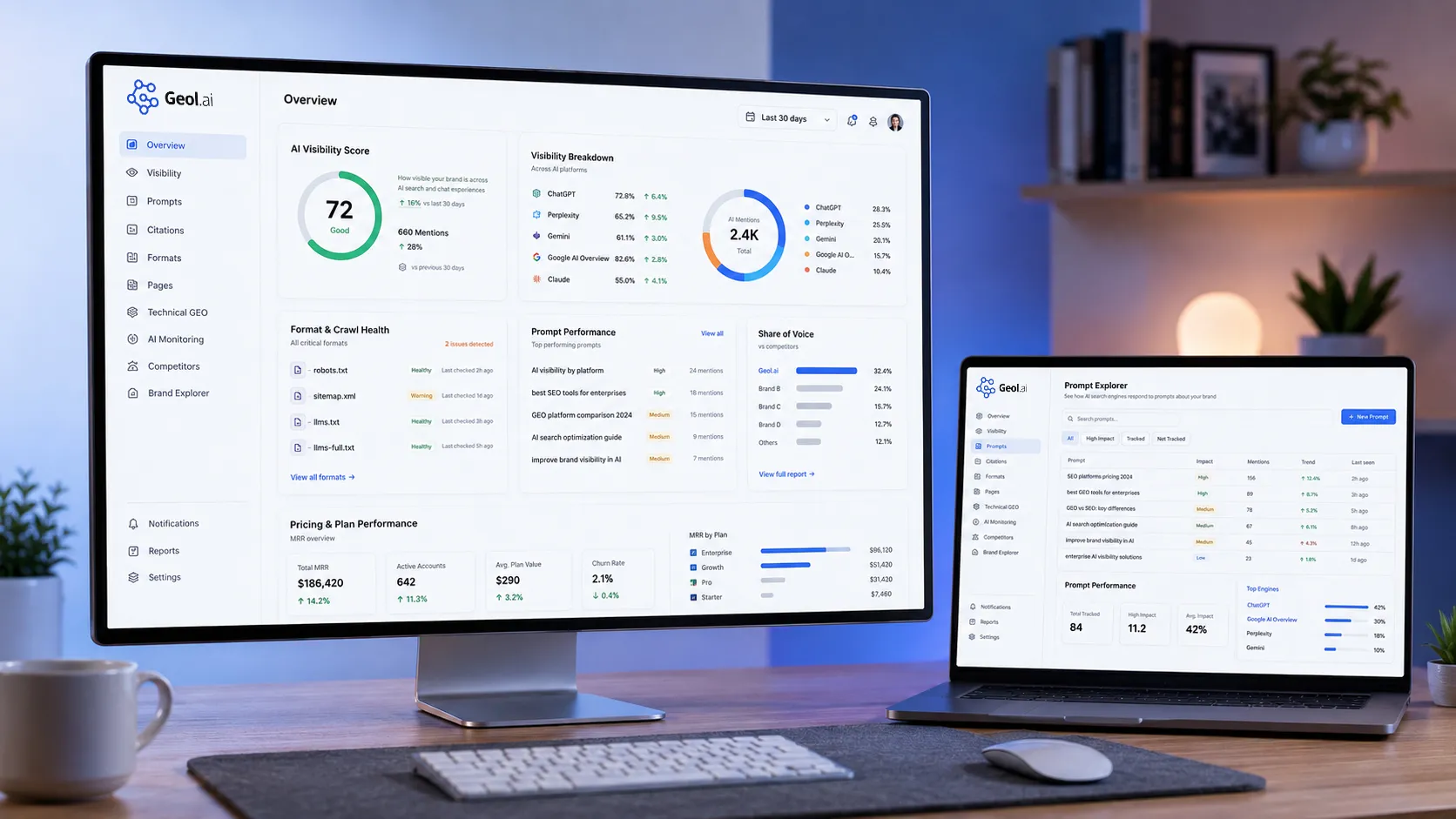
What a GEO Platform Actually Costs in 2026: The Pricing Guide Vendors Won't Write
Real published prices for the Generative Engine Optimization tool market in 2026: self-serve entry tiers, enterprise quote walls, metering math, and honest tool-versus-consultant economics.