OpenAI GPT — GPT-5.5 ('Spud') release and new model variants
OpenAI GPT — GPT-5.5 ('Spud') release and new model variants — analysis and GEO implications for AI search.
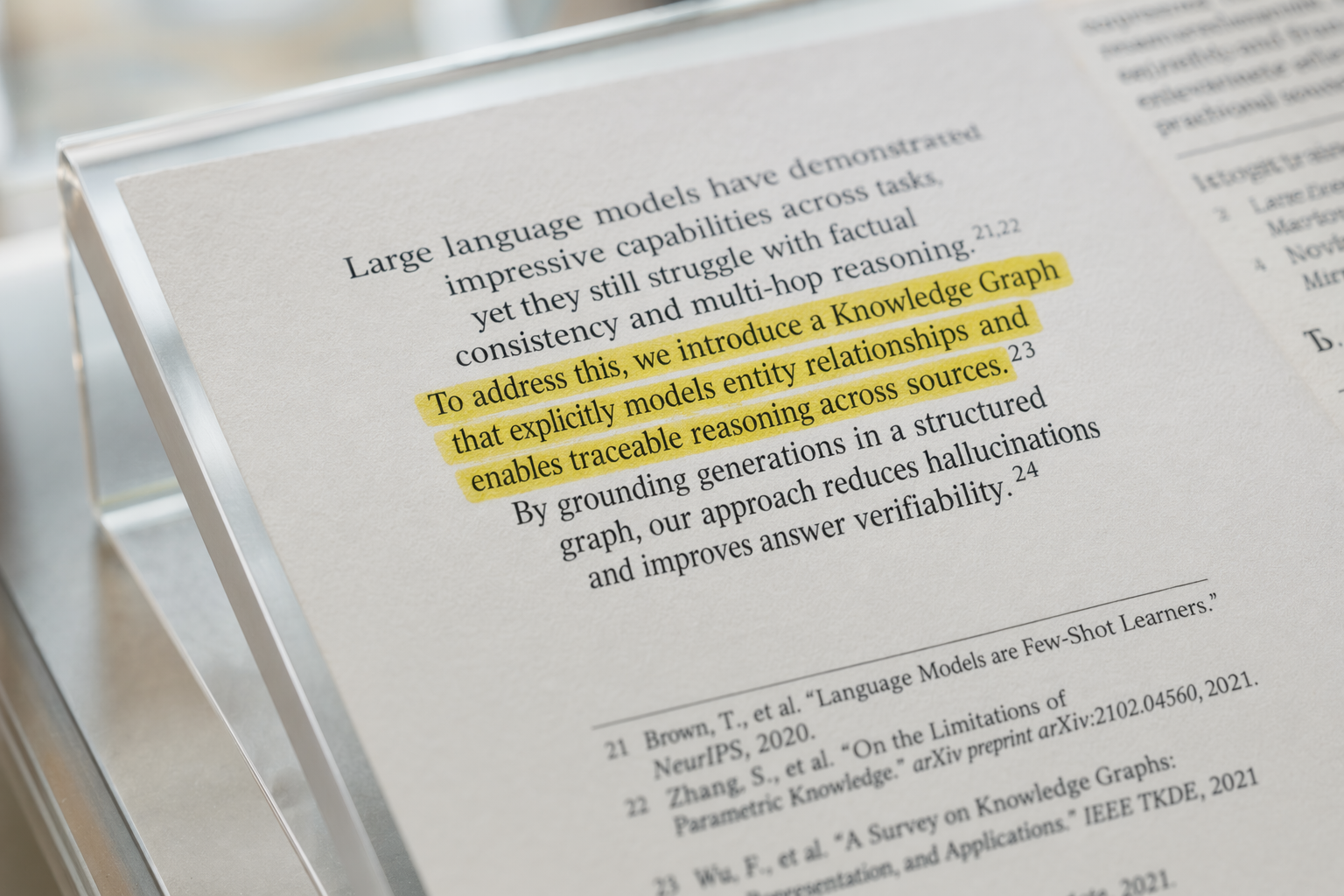
OpenAI GPT — GPT-5.5 ('Spud') release and new model variants
The main significance of GPT-5.5, reportedly codenamed 'Spud,' is not just that OpenAI shipped another frontier model. According to Axios reporting on April 23, 2026, the release points to stronger multi-step reasoning and more capable agentic workflows, alongside a broader family of specialized variants for enterprise, coding, and security use cases. For marketers, publishers, and product teams, that matters because AI systems are increasingly choosing, combining, and citing sources as part of a task, not just ranking pages for a query.
Read in context, Spud is part of a larger platform shift. OpenAI's release index around GPT-5.4 emphasizes tool-search and long-context retrieval, Google's AI Max rollout shows search moving toward AI-mediated matching, and Anthropic's web search tooling makes source-grounded answers a platform feature. The practical takeaway: content now has to be retrievable, attributable, and useful inside multi-step answer flows.
Why this release matters
The real question is no longer only "What can the model write?" It is "What sources can the model and its variants find, trust, and act on?" GPT-5.5 matters because it reinforces the convergence of reasoning, tool use, retrieval, and specialization.
If GPT-5.5 is better at multi-step tasks, thin pages optimized for one keyword become less competitive. Pages that combine entity clarity, evidence, and task completion become more valuable to answer engines.
Understanding the Fundamentals
To interpret the Spud release clearly, separate three layers. First is base capability: reasoning, language quality, and instruction following. Second is tool capability: search, retrieval, browsing, and action taking. Third is deployment variant: a model tuned for a context such as enterprise reliability, coding depth, or security-sensitive analysis. Industry coverage around GPT-5.5 suggests OpenAI is expanding this third layer as quickly as it improves the first two.
- Multi-step reasoning: maintaining coherent logic across several subproblems, turns, or decision points.
- Agentic workflow: a model plans, calls tools, checks results, and continues toward a goal instead of stopping at one answer.
- Tool-search orchestration: the model decides when and how to retrieve outside information.
- Long-context retrieval: finding the relevant passage inside large internal or public document sets.
- Citation quality: whether the answer points users to accurate, attributable, and current sources.
That framework explains why AI visibility is now a GEO problem, not only an SEO one. For deeper coverage, explore our guide to LLM ranking factors and our analysis of Google AI Max replacing Dynamic Search Ads. Both help show why retrieval logic is becoming as important as classic ranking mechanics.
Key Findings and Insights
The clearest finding from the GPT-5.5 cycle is that reasoning alone is no longer the whole story. Axios described Spud as stronger on multi-step reasoning and agentic workflows, while OpenAI's GPT-5.4-era release framing emphasizes search orchestration and long-context retrieval. Together, those signals suggest that frontier models are increasingly judged by how well they find, filter, and use evidence, not just how fluent they sound.
Signals behind the new model variants
| Signal | What changed | Why it matters for GEO |
|---|---|---|
| GPT-5.5 ('Spud') | Reported gains in multi-step reasoning and agentic workflows | Content needs to support chained tasks, not isolated facts |
| Tool-search capable GPT-5.4-era models | Search and retrieval are part of the answer pipeline | Authoritative pages need scannable structure and quotable evidence |
| Enterprise, coding, and security-oriented variants | Model families are being tuned for specific use cases and risk controls | One content asset rarely fits every retrieval context |
| Anthropic web search and enterprise tooling | Citation quality becomes a product feature | Provenance, freshness, and traceability influence trust |
Anthropic's web search documentation makes this trend explicit: source-grounded answers are becoming a differentiator. That raises the stakes for publishers, because poor sourcing can surface as fabricated or fuzzy attribution. Our case study on ghost citations shows the failure mode, while our GEO tools comparison review outlines how to measure citation confidence beyond traditional rank tracking.
Do not treat GPT-5.5 as a standalone launch. Treat it as proof that answer engines are converging on the same stack: reasoning plus retrieval plus source grounding plus task-specific variants.
Google reinforces the same direction. Its March 2026 AI updates show Search Live and AI Mode pushing discovery toward conversational and voice-first flows. We unpack that in our briefing on Google Search Live's global rollout, and the same retrieval logic applies to commercial journeys in our guide to AI search shopping.
Strategic Implementation
For most teams, the right response is not to rewrite everything. It is to make high-value content easier for model variants to retrieve, interpret, and cite. Start with the pages most likely to feed agentic tasks: product explainers, pricing, security docs, help content, policy pages, category hubs, and high-intent comparison content.
Audit entity clarity
Define the main entities on each page—brand, product, feature, audience, author, date, and supporting evidence—so a model can identify what the page is about without guessing.
Build answer-ready page structures
Use descriptive headings, short answer paragraphs, definitions, FAQs, and comparisons. Clean structure helps retrieval systems lift accurate snippets into multi-step responses.
Add source grounding
Cite primary evidence, publish dates, and document ownership. Specialized enterprise or security variants are more likely to prefer traceable claims over generic marketing copy.
Expand scenario coverage
Create pages for implementation, troubleshooting, compliance, and buying questions. Agentic systems need pages that complete tasks, not just pages that attract clicks.
Monitor model visibility
Track where your brand is cited, omitted, or paraphrased across platforms. Our GEO tools comparison review is a useful starting point for choosing the right measurement workflow.
If your funnel includes product discovery, separate informational and commercial prompt sets. Answer engines may cite a glossary page for education, a documentation page for validation, and a pricing or comparison page for action.
Common Challenges and Solutions
The biggest mistake is assuming a stronger model automatically creates fairer visibility. Better reasoning does not fix weak source material. If your content is ambiguous, outdated, or buried inside hard-to-parse formats, newer models can still skip it or summarize it badly.
- Pitfall: publishing broad thought leadership without hard facts. Solution: pair overview pages with specific documentation, dates, benchmarks, and source links.
- Pitfall: treating one page as the answer to every prompt. Solution: build a content cluster with definition, comparison, workflow, and troubleshooting pages.
- Pitfall: ignoring attribution risk. Solution: check how models cite you and correct ghost or missing citations quickly.
- Pitfall: optimizing only for desktop SERPs. Solution: test conversational and voice-first discovery patterns as Search Live-style interfaces expand.
Specialized variants can change what "good content" looks like. A coding model may prefer syntax-rich docs, while a security-oriented model may prefer provenance, risk language, and update history.
This is where governance matters. Maintain a clear publishing owner, versioning, and update cadence for pages likely to be used in AI answers. For the strategic backdrop, revisit our pieces on LLM ranking factors and Google AI Max to understand why retrieval logic is becoming the real gatekeeper.
Future Outlook
Expect more model families, not fewer. GPT-5.5 suggests OpenAI is comfortable shipping a general model while surrounding it with variants tuned for enterprise reliability, coding depth, or security-sensitive workflows. Competitors are moving the same way, which means publishers should plan for a multi-model environment instead of chasing one benchmark.
The next competitive layer will center on source selection, citation confidence, and real-time tool use. As conversational discovery grows through products like Search Live, the pages that win will be the ones that can be decomposed into trustworthy answer units across text, voice, and action flows. In that sense, GPT-5.5 is important less because of its nickname and more because it confirms the market direction: retrieval-aware, task-specific AI systems that reward clear, authoritative, up-to-date content.
Conclusion and Key Takeaways
For GEO teams, the practical takeaway is straightforward: build content that models can identify, verify, and reuse safely. The Spud release is a reminder that frontier systems are becoming better operators, not just better writers. When models can reason across steps and tools, the most valuable content is the content that reduces uncertainty at each step of the answer path.
Key Takeaways
GPT-5.5 ('Spud') signals a shift toward better multi-step reasoning and agentic workflows, not just incremental language quality.
New model variants mean content must serve different retrieval contexts, including enterprise, coding, and security-oriented use cases.
Tool use and long-context retrieval are now core visibility factors, so structured, evidence-backed pages outperform vague copy.
Citation quality is becoming a competitive feature across platforms, making provenance, freshness, and monitoring essential.
Teams should measure AI visibility by prompt class and funnel stage, not only by traditional search rankings.
Frequently asked questions

Founder of Geol.ai
Senior builder at the intersection of AI, search, and blockchain. I design and ship agentic systems that automate complex business workflows. On the search side, I’m at the forefront of GEO/AEO (AI SEO), where retrieval, structured data, and entity authority map directly to AI answers and revenue. I’ve authored a whitepaper on this space and road-test ideas currently in production. On the infrastructure side, I integrate LLM pipelines (RAG, vector search, tool calling), data connectors (CRM/ERP/Ads), and observability so teams can trust automation at scale. In crypto, I implement alternative payment rails (on-chain + off-ramp orchestration, stable-value flows, compliance gating) to reduce fees and settlement times versus traditional processors and legacy financial institutions. A true Bitcoin treasury advocate. 18+ years of web dev, SEO, and PPC give me the full stack—from growth strategy to code. I’m hands-on (Vibe coding on Replit/Codex/Cursor) and pragmatic: ship fast, measure impact, iterate. Focus areas: AI workflow automation • GEO/AEO strategy • AI content/retrieval architecture • Data pipelines • On-chain payments • Product-led growth for AI systems Let’s talk if you want: to automate a revenue workflow, make your site/brand “answer-ready” for AI, or stand up crypto payments without breaking compliance or UX.
Related Articles
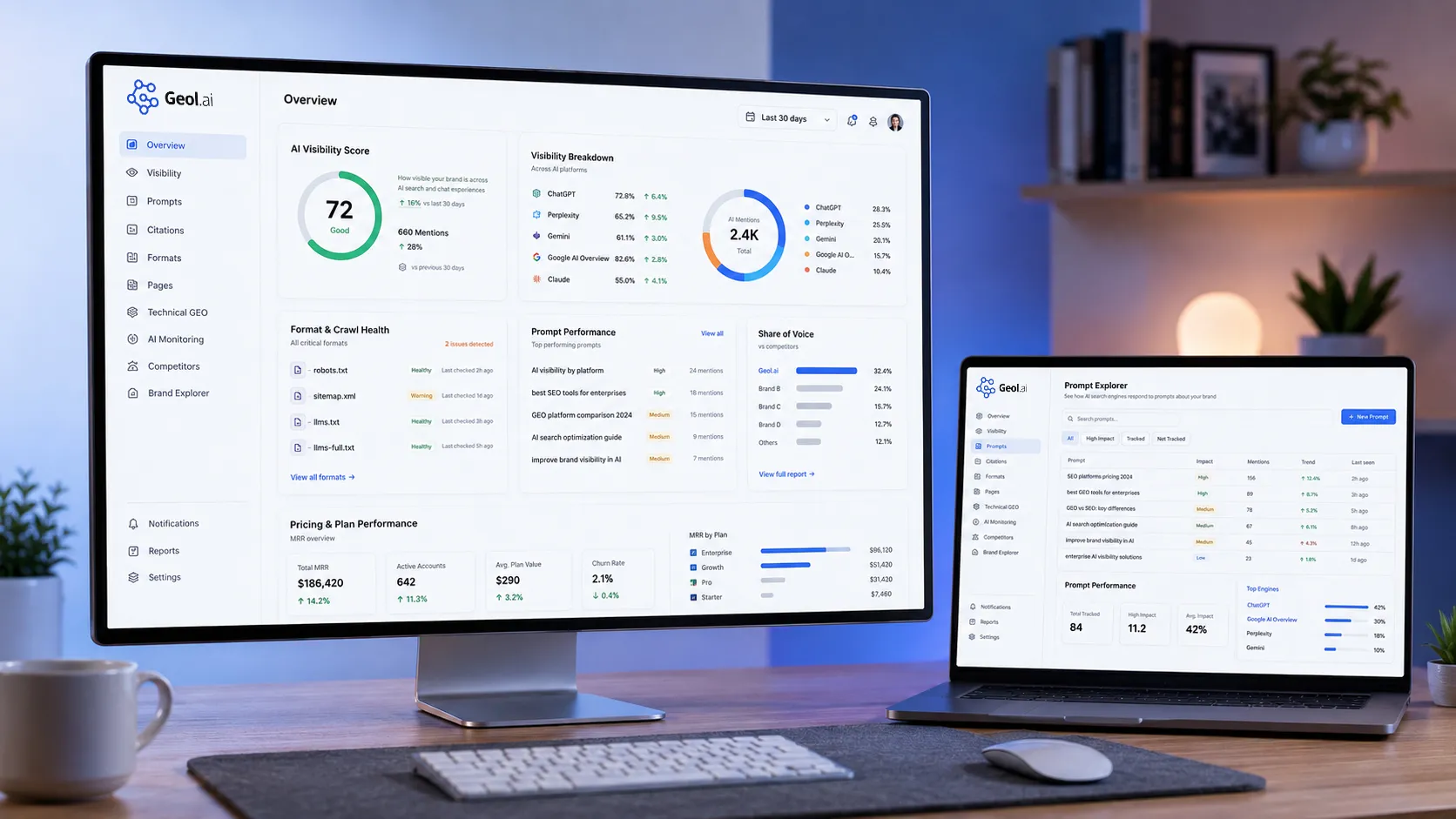
What a GEO Platform Actually Costs in 2026: The Pricing Guide Vendors Won't Write
Real published prices for the Generative Engine Optimization tool market in 2026: self-serve entry tiers, enterprise quote walls, metering math, and honest tool-versus-consultant economics.
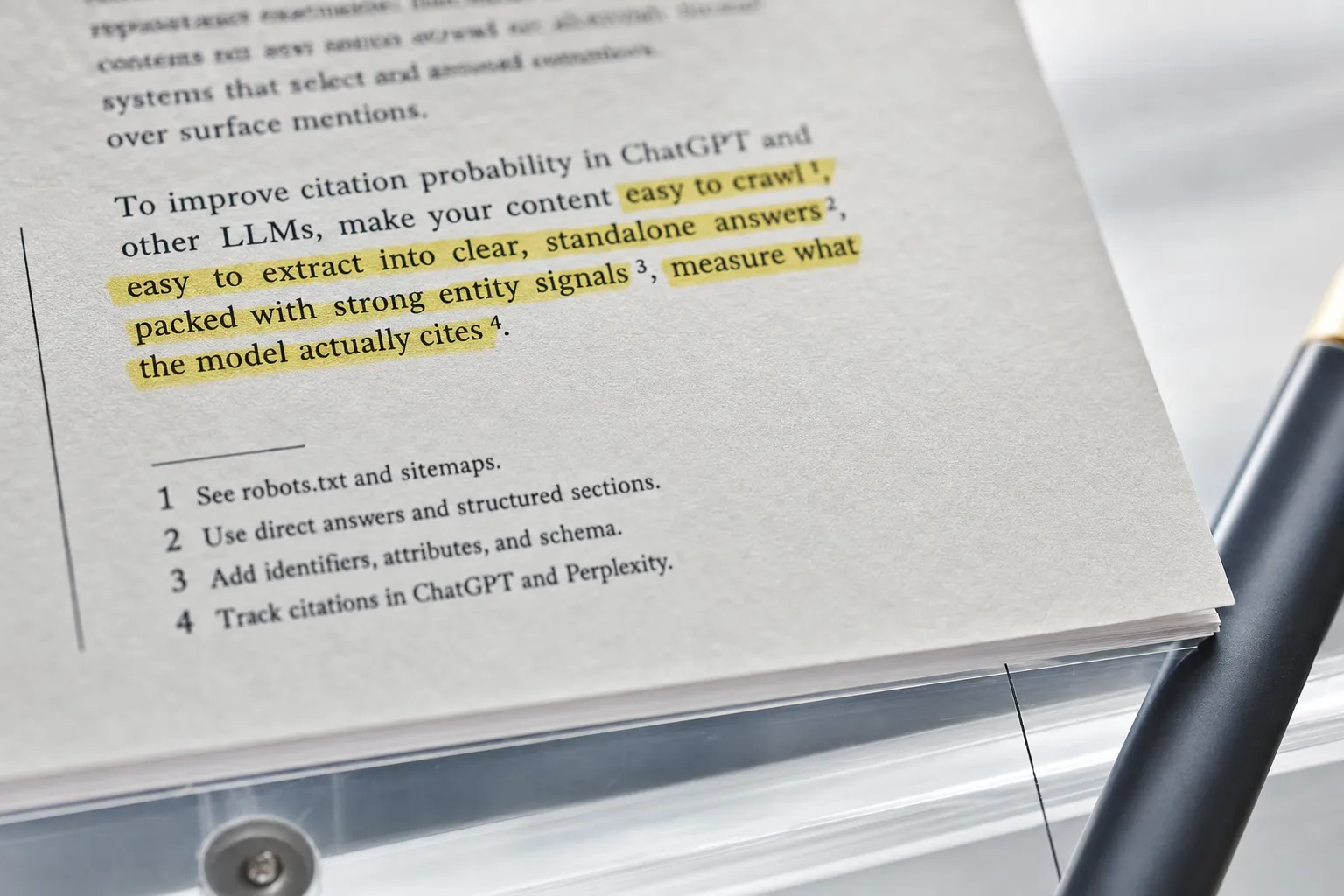
ChatGPT Optimization in 2026: A Working Checklist for Getting Your Brand Cited, Not Just Ranked
How ChatGPT retrieves and cites sources in July 2026, with a sourced Generative Engine Optimization checklist covering crawler access, extractable answers, entity signals, and measurement.