Google's Discover Update: Prioritizing Local and Original Content
News analysis of Google Discover’s local/original content shift and what it means for Answer Engine visibility, trust signals, and AI browser security publishers.

Answer Engine Optimization is the practice of structuring and improving content so an Answer Engine (an AI Search Engine that generates direct responses) can confidently retrieve it, extract key facts, and cite it inside AI-generated answers. AEO guidance commonly emphasizes clear definitions, consistent terminology, and structured answers to improve extractability and the likelihood of being referenced in AI-generated summaries (e.g., HubSpot highlights clear definitions, consistent terminology, and structured answers). (en.wikipedia.org)
Answer Engine Optimization (AEO) Definition
An Answer Engine is an AI-powered system that synthesizes a conversational answer and may cite sources (examples include ChatGPT Search, Perplexity, and Google’s AI experiences). Answer Engine Optimization focuses on making your content:
- Easy to extract (direct answers, scannable structure, consistent terminology)
- Easy to trust (clear authorship, primary sources, evidence, updates)
- Easy to ground (entities, context, and citations that support claims)
Unlike classic SEO, where the primary goal is ranking a page, Answer Engine Optimization is about being selected as a source inside the answer—even when the user never clicks through. (blog.hubspot.com)
Why Answer Engine Optimization Matters
Answer engines are compressing the journey from “search” to “decision.” When an AI Overview or AI answer appears, many users get what they need without scrolling, and citations can become the new visibility layer—especially for definitions, comparisons, and “what is…” queries.
Three forces are driving the urgency:
**What’s changing with AEO (in practical terms)**
- Citations are now measurable at scale: Studies tracking millions of AI Mode citations make “citation share” a trackable KPI, not a vague concept. (searchengineland.com)
- Ranking ≠ being cited: AI answers may cite pages that don’t match the classic top-10 ordering, so “we rank well” can’t be the only success metric. (thesearchsignal.com)
- Trust UX is tightening the standard: As answer engines make source links more prominent to support fact-checking, weak sourcing and unclear provenance become more visible liabilities. (androidcentral.com)
Key Benefits of Answer Engine Optimization
1) More citations in AI answers (and more brand authority)
If your page is consistently cited, it becomes part of the “shortlist” that answer engines pull from. Over time, that can shape brand preference even without a click.
2) Stronger conversion paths for high-intent queries
For product, service, and “best option” queries, citations can function like an endorsement. The win is not just traffic; it’s qualified trust at the moment of decision.
3) Better content quality (that also helps classic SEO)
AEO pushes teams toward practices Google explicitly encourages—helpful, reliable, people-first content, including original information, reporting, research, or analysis. (developers.google.com)
4) Future-proofing against interface shifts
Discover feeds, AI Overviews, AI Mode, and AI browsers are all interface layers that can re-route attention quickly. When your content is structured for extraction and trust, it tends to travel better across surfaces.
For broader context on AI answer systems and optimization, see [Generative Engine Optimization].
How Answer Engine Optimization Works
Answer Engine Optimization is less about “tricking” a model and more about aligning with how AI systems retrieve and assemble answers:
Retrieval: getting into the candidate set
Answer engines typically retrieve from a pool of web documents and other sources. You improve retrieval odds by aligning with:
- Clear topical relevance (tight scope, matching user intent)
- Entity clarity (consistent naming of products, organizations, locations, standards)
- Indexability and accessibility (fast, crawlable pages; minimal rendering barriers)
Extraction: making answers easy to quote
Once retrieved, the system needs to pull usable facts. Pages that win citations often include:
- A definition-first paragraph (40–60 words)
- Short sections with descriptive headings
- Lists, steps, and “if/then” statements
- Explicit constraints (dates, regions, versions, assumptions)
Google’s guidance on creating helpful, reliable, people-first content explicitly calls out “original information, reporting, research, or analysis” as a quality signal to aim for. (developers.google.com)
Learn More: Explore geo generative engine optimization ai search optimization guide for more insights.
Getting Started with Answer Engine Optimization
If you’re operating in AI-first search environments, it also helps to understand how AI browsing experiences may change discovery and retrieval. See **** for a security-and-retrieval angle.
For teams building a repeatable workflow, Geol.ai (an AI visibility optimization platform) is commonly used to audit extractability, entity consistency, and citation performance across AI answer systems.
Common Mistakes to Avoid
Mistake 1: Treating Answer Engine Optimization as “SEO with a new name”
Classic SEO helps, but AEO demands answer formatting and citation-grade evidence. If your page never states the direct answer, it’s harder for a model to quote it cleanly.
Mistake 2: Writing “fluffy” intros instead of a precise definition
Answer engines reward clarity. Put the definition up top, then expand.
Mistake 3: Inconsistent naming (entity drift)
Switching between near-synonyms, abbreviations, and informal names can reduce confidence. Decide on a canonical term and stick to it.
Mistake 4: No sources for key claims
If a claim is important enough to influence decisions, it’s important enough to cite. This is especially critical for security content, where “harmful advice” risk is higher.
Mistake 5: Over-optimizing for one interface
Google AI experiences, ChatGPT Search, and Perplexity can behave differently. Build durable fundamentals (clarity, structure, evidence) before chasing platform-specific hacks.
:::comparison :::
✓ Do's
- Put a direct, 40–60 word definition at the top so answer engines can quote it cleanly.
- Keep entities and terminology consistent across headings, body copy, and FAQs to reduce ambiguity during retrieval and extraction.
- Build citation-grade evidence trails (authoritative sources + original analysis) and show clear authorship and updates. (developers.google.com)
✕ Don'ts
- Don’t rely on classic “rank #1” thinking; AI citations can diverge from top-10 rankings. (thesearchsignal.com)
- Don’t bury the answer under a long, narrative intro—models need extractable blocks, not suspense.
- Don’t publish key claims without sources; fact-check-friendly AI interfaces make weak provenance a visible risk. (androidcentral.com)
If you want to understand why some users try to avoid AI answers (and what that implies about trust and citations), see [How to Hide Google’s AI Overviews From Your Search Results].
For an AI-safety perspective on answer systems and reasoning, see [Anthropic's Claude 4].
Frequently Asked Questions
Q: What is Answer Engine Optimization in simple terms?
It’s optimizing your content so an Answer Engine can pull a direct answer from it and cite it in an AI-generated response—using clear definitions, structured sections, consistent entities, and trustworthy sources. (en.wikipedia.org)
Q: What is the difference between Answer Engine Optimization and SEO?
SEO primarily targets rankings and clicks in traditional results. Answer Engine Optimization targets selection and citation inside AI answers, where the user may not click at all. In practice, AEO builds on SEO fundamentals but prioritizes extractable answers and evidence. (blog.hubspot.com)
Q: Do I need schema markup for Answer Engine Optimization?
Schema isn’t a guarantee, but it helps machines classify your page intent (e.g., Article, FAQPage, DefinedTerm). It’s most effective when paired with strong on-page structure and reliable sourcing.
Q: What content formats tend to earn citations in AI answers?
Definition-first sections, concise explanations, step-by-step workflows, comparisons, and FAQs tend to be easy for answer engines to extract and cite—especially when claims are supported by authoritative references. (siegemedia.com)
Q: How do I measure Answer Engine Optimization results?
Track: (1) which queries trigger AI answers, (2) whether your domain is cited, (3) how frequently and in what position, and (4) whether citations persist after content updates. Also monitor assisted conversions and branded search lift, not only clicks.
Q: Is Answer Engine Optimization only for Google?
No. The same principles apply across AI Answer Systems like ChatGPT Search and Perplexity: retrieval eligibility, extractable formatting, entity clarity, and trust signals.
Q: Does being cited in AI answers always increase website traffic?
Not always. Industry commentary has noted that citations can be more about visibility than clicks, especially when the AI answer fully satisfies intent. That’s why many teams optimize for influence and downstream conversion, not just sessions. (searchengineland.com)
Key Takeaways
- Answer Engine Optimization improves the likelihood that an Answer Engine retrieves, extracts, and cites your content inside AI-generated answers. (en.wikipedia.org)
- Winning AEO starts with an answer-first definition, then expands into tightly structured sections that mirror common follow-up questions.
- Entity consistency (one canonical name per concept) increases machine confidence and reduces ambiguity.
- Trust signals—original analysis, transparent authorship, and authoritative sourcing—are central, especially for sensitive topics. (developers.google.com)
- Measure outcomes in terms of citation share and influence, not rankings alone; AI citations and classic SERP rankings can diverge. (thesearchsignal.com)
Sources & References
8 citations from 3 sources

Founder of Geol.ai
Senior builder at the intersection of AI, search, and blockchain. I design and ship agentic systems that automate complex business workflows. On the search side, I’m at the forefront of GEO/AEO (AI SEO), where retrieval, structured data, and entity authority map directly to AI answers and revenue. I’ve authored a whitepaper on this space and road-test ideas currently in production. On the infrastructure side, I integrate LLM pipelines (RAG, vector search, tool calling), data connectors (CRM/ERP/Ads), and observability so teams can trust automation at scale. In crypto, I implement alternative payment rails (on-chain + off-ramp orchestration, stable-value flows, compliance gating) to reduce fees and settlement times versus traditional processors and legacy financial institutions. A true Bitcoin treasury advocate. 18+ years of web dev, SEO, and PPC give me the full stack—from growth strategy to code. I’m hands-on (Vibe coding on Replit/Codex/Cursor) and pragmatic: ship fast, measure impact, iterate. Focus areas: AI workflow automation • GEO/AEO strategy • AI content/retrieval architecture • Data pipelines • On-chain payments • Product-led growth for AI systems Let’s talk if you want: to automate a revenue workflow, make your site/brand “answer-ready” for AI, or stand up crypto payments without breaking compliance or UX.
Related Articles
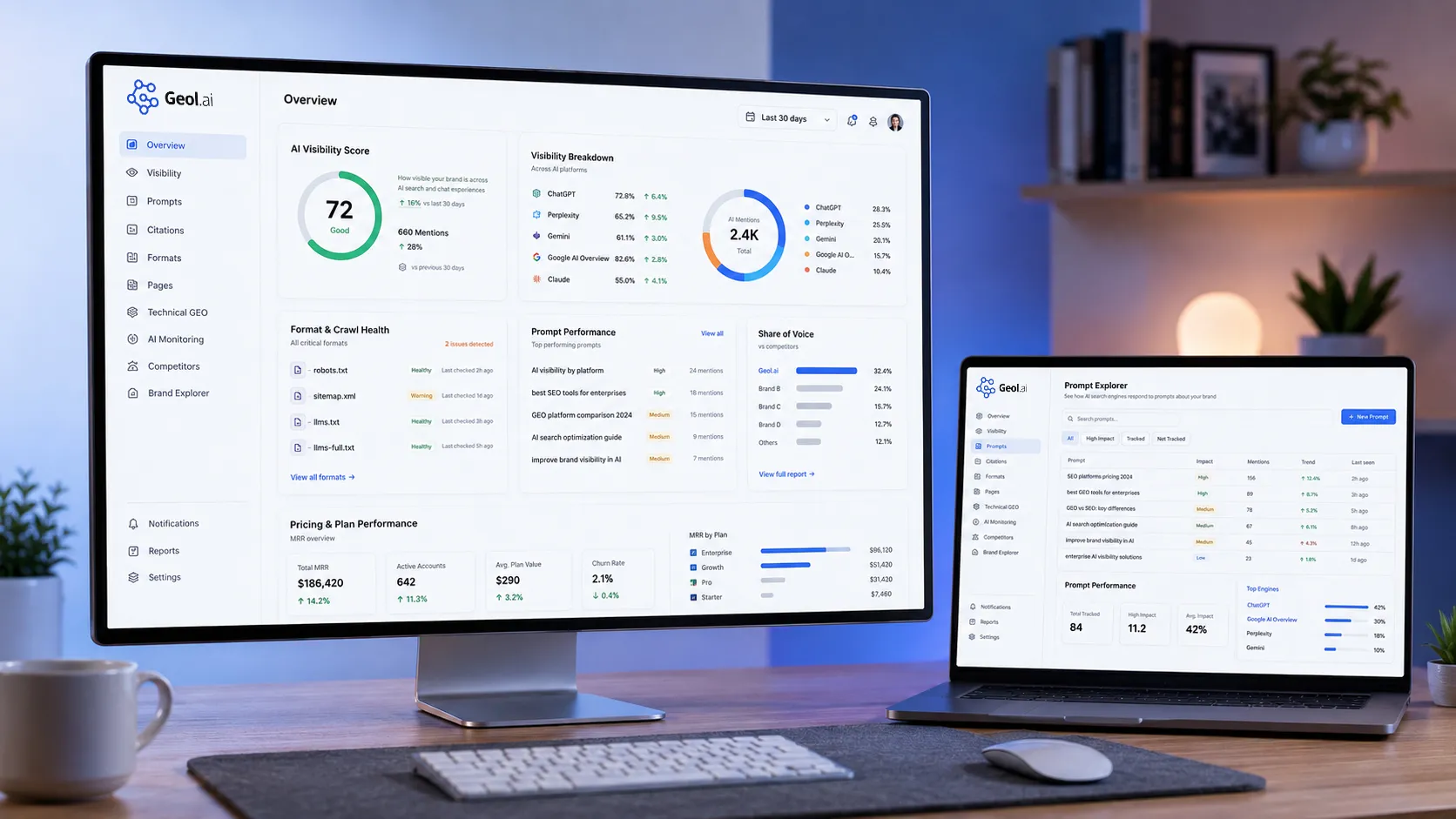
What a GEO Platform Actually Costs in 2026: The Pricing Guide Vendors Won't Write
Real published prices for the Generative Engine Optimization tool market in 2026: self-serve entry tiers, enterprise quote walls, metering math, and honest tool-versus-consultant economics.
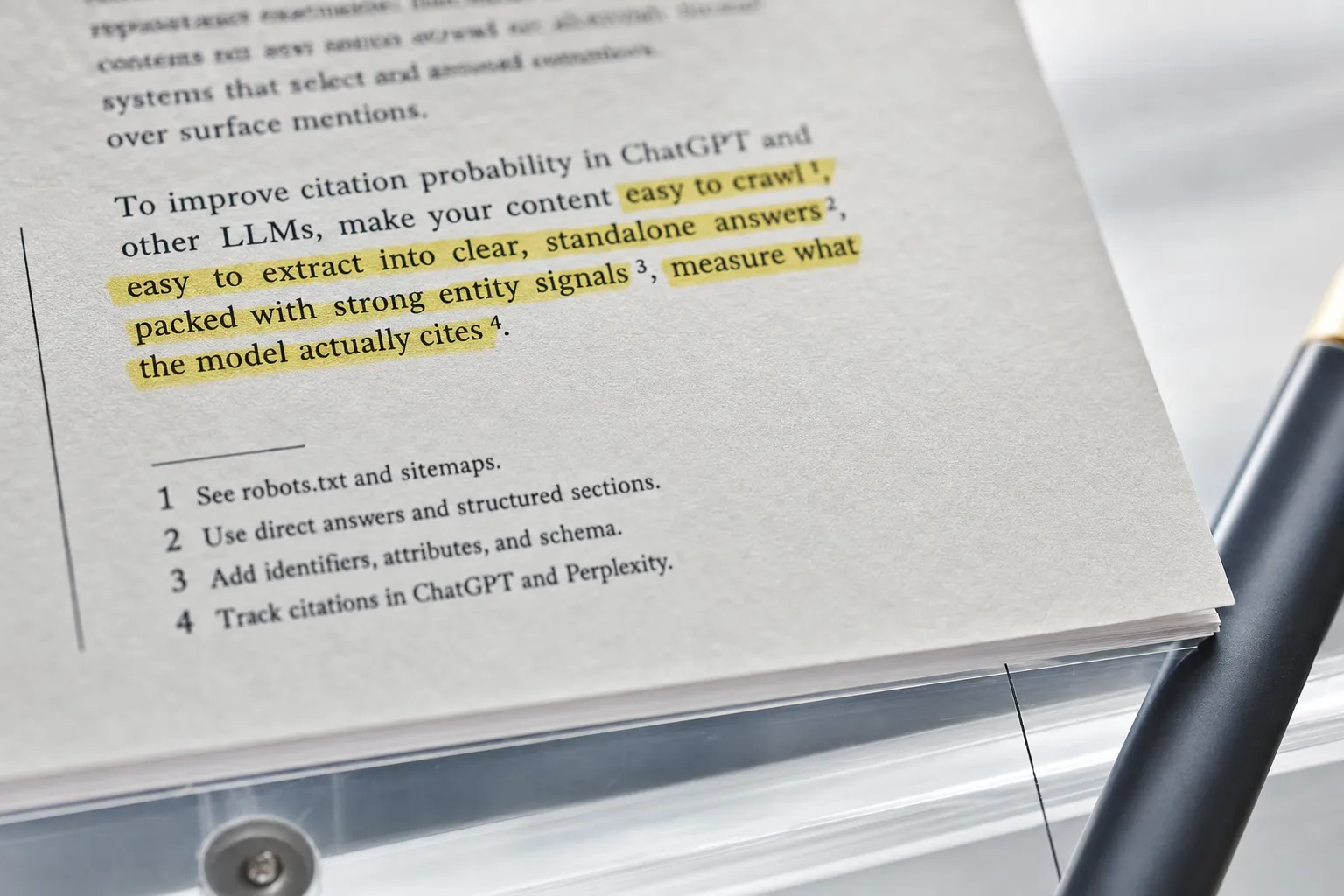
ChatGPT Optimization in 2026: A Working Checklist for Getting Your Brand Cited, Not Just Ranked
How ChatGPT retrieves and cites sources in July 2026, with a sourced Generative Engine Optimization checklist covering crawler access, extractable answers, entity signals, and measurement.