Perplexity's Search API: A New Contender Against Google's Dominance (Complete Guide to AI Data Scraping)
Explore Perplexity’s Search API for AI data scraping: features, pricing, legality, architecture, quality, benchmarks, and best practices vs Google.
Executive strategic briefing for SEO leaders, digital marketers, data/AI platform owners, and compliance stakeholders.
Executive thesis (what’s actually changing)
For 20+ years, Google’s dominance made one assumption feel “safe”: if you need web-scale discovery, you start with Google. AI-native products are breaking that assumption—not because Google’s index is suddenly weak, but because the unit of value is shifting from “ranked links” to retrieval that is structured, attributable, and operationally stable.
Perplexity’s Search API is strategically important because it offers a credible path away from brittle SERP scraping and toward auditable retrieval suitable for LLM pipelines. In parallel, OpenAI’s push into web search and Google’s own AI-mode experiments are compressing time-to-competition; the “search layer” is now a contested infrastructure layer, not just a consumer product. (gadgets360.com)
Contrarian perspective: The biggest threat to Google in “AI data scraping” is not that Perplexity returns better links. It’s that APIs with citations change procurement math: they reduce maintenance, legal ambiguity, and reliability risk enough that enterprises can justify multi-provider retrieval—and stop treating Google parity as a requirement for many internal workflows.
Actionable recommendation: Treat search as a pluggable retrieval layer (not a vendor). Start a 30-day pilot that measures extraction yield and citation stability rather than “SERP similarity.”
**Why this matters now (signals already in the article)**
- AI tool adoption is rising while search remains ubiquitous: 95% of Americans still use search engines monthly, while AI tool adoption reached 38% in 2025 (up from 8% in 2023). (searchengineland.com)
- AI search is showing measurable traffic share: AI searches reached 5.6% of U.S. desktop search traffic as of June 2025, up from 2.48% a year earlier (Datos). (wsj.com)
- Google is actively shifting the SERP toward AI summaries: AI Overviews and an experimental “AI Mode” reinforce that retrieval + citations are becoming the interface layer. (reuters.com)
:::
What Perplexity’s Search API Is—and Why It Matters for AI Data Scraping

Definition: Search API vs SERP scraping vs web crawling
Executives often conflate three different activities:
- Search API (discovery): You submit a query and receive structured results (URLs, snippets, metadata). This is the “find candidates” step.
- SERP scraping (imitation): You simulate a browser (or use an unofficial SERP API) to extract what a search engine shows on its results page. This is operationally fragile and frequently contested.
- Web crawling (collection): You fetch the pages themselves (HTML/PDF), parse them to text, and store derived data.
Perplexity’s Search API matters because it positions itself as a structured alternative to brittle HTML scraping and unofficial SERP scraping—especially for teams building LLM/RAG systems where auditability and repeatability matter more than pixel-perfect SERP parity. (ingenuity-learning.com)
:::
How Perplexity differs from Google Programmable Search and SERP-style APIs
Perplexity’s pitch (implicitly) is not “we’re another SERP.” It’s “we’re a retrieval substrate for AI systems.”
From industry commentary around the launch, the strategic claim is that Perplexity states that its Search API uses an index spanning hundreds of billions of webpages and returns ranked, structured results; avoid comparative “Google-scale” and “updated frequently” assertions unless you add independent benchmarks or Perplexity documentation that quantifies update frequency. (ingenuity-learning.com)
At the same time, the ecosystem context is shifting: OpenAI introduced “ChatGPT Search” (a web search capability integrated into ChatGPT) with an explicit emphasis on citations and fast, multi-site retrieval—signaling that citation-forward search is becoming table stakes for AI experiences. (gadgets360.com)
Primary use cases: RAG, market research, monitoring, lead intel
Perplexity’s Search API is most compelling when the output is not “a page of links,” but a dataset:
- RAG discovery: find authoritative sources for a topic, then fetch and embed.
- Market/competitive research: build repeatable query packs (e.g., “pricing changes”, “new product launch”, “security incident”).
- Monitoring: track changes in narratives and citations over time.
- Lead intelligence: enrich firmographic signals by discovering relevant pages, then extracting structured fields.
Set expectations: A Search API is not a license to republish content. It’s a discovery mechanism; rights and compliance attach to what you fetch, store, and output. (We’ll address this directly in the compliance section.)
Mini-market snapshot: Google is still the default—but AI search is rising
Two realities can be true simultaneously:
- 2Traditional search remains dominant: clickstream analysis summarized by Search Engine Land (Datos + SparkToro) reports 95% of Americans still use search engines monthly, while AI tool adoption rose to 38% in 2025 (up from 8% in 2023). (searchengineland.com)
- 4AI search is gaining meaningful share on desktop: The Wall Street Journal reports that as of June 2025, AI searches accounted for 5.6% of U.S. desktop search traffic, up from 2.48% a year earlier (Datos). (wsj.com)
Implication: Google’s dominance is intact in consumer behavior, but enterprises building AI systems should plan for multi-retriever futures where “search” is consumed via APIs and embedded experiences—not only via browser SERPs.
Actionable recommendation: Build your retrieval strategy around measurable outcomes (coverage, freshness, extraction yield, cost per successful extraction), not around market-share narratives.
How Perplexity’s Search API Works Under the Hood (Request → Retrieval → Answer)
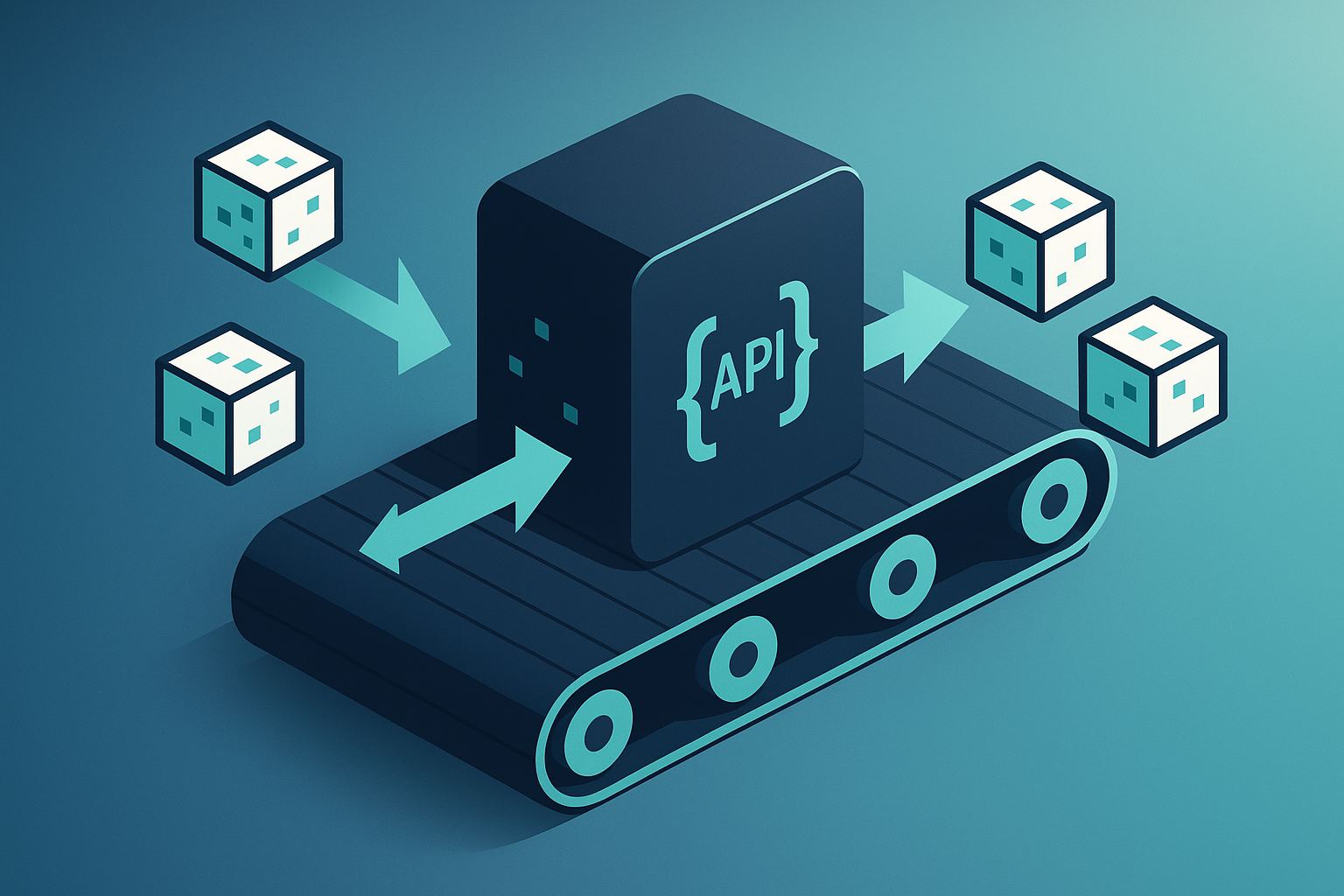
High-level pipeline: query understanding, retrieval, ranking, synthesis
A practical mental model for AI-friendly search APIs:
Even if Perplexity’s Search API is “raw web search results,” your system often adds a second synthesis layer: fetch pages → parse → extract facts → generate outputs. The key is to treat the API as discovery, not “final truth.” (docs.perplexity.ai)
Outputs you can expect: links, snippets, citations, extracted facts
For executive-grade deployments, the question isn’t “what fields are in the JSON?” It’s: what must we store to defend decisions later?
Minimum audit record per query:
- Query text + parameters (locale, time window, filters)
- Timestamp of retrieval
- Result set (URLs + snippet/summary)
- Source list (domains, titles)
- A response hash (to detect drift)
- A “use decision” log (which URLs were fetched, which were excluded, why)
This mirrors the direction of “citation-forward” search experiences: Gadgets360 notes ChatGPT Search emphasized citations inline and at the bottom—an interaction pattern that enterprises should mirror in internal tooling for traceability. (gadgets360.com)
:::
Latency, rate limits, and reliability considerations
Search APIs reduce several failure modes (CAPTCHAs, DOM changes), but introduce standard API concerns:
- 429s / throttling: require backoff and concurrency control.
- Idempotency: your job runner must safely retry without duplicating ingestion.
- Caching: query packs should be cached with TTLs aligned to freshness needs.
- Drift: results can change; treat drift as a monitored signal, not a surprise.
Actionable recommendation: Implement “retrieval observability” from day one: log every query, result set, and downstream fetch decision with hashes and timestamps to make drift measurable.
Perplexity vs Google: Coverage, Freshness, Quality, and Cost Trade-offs
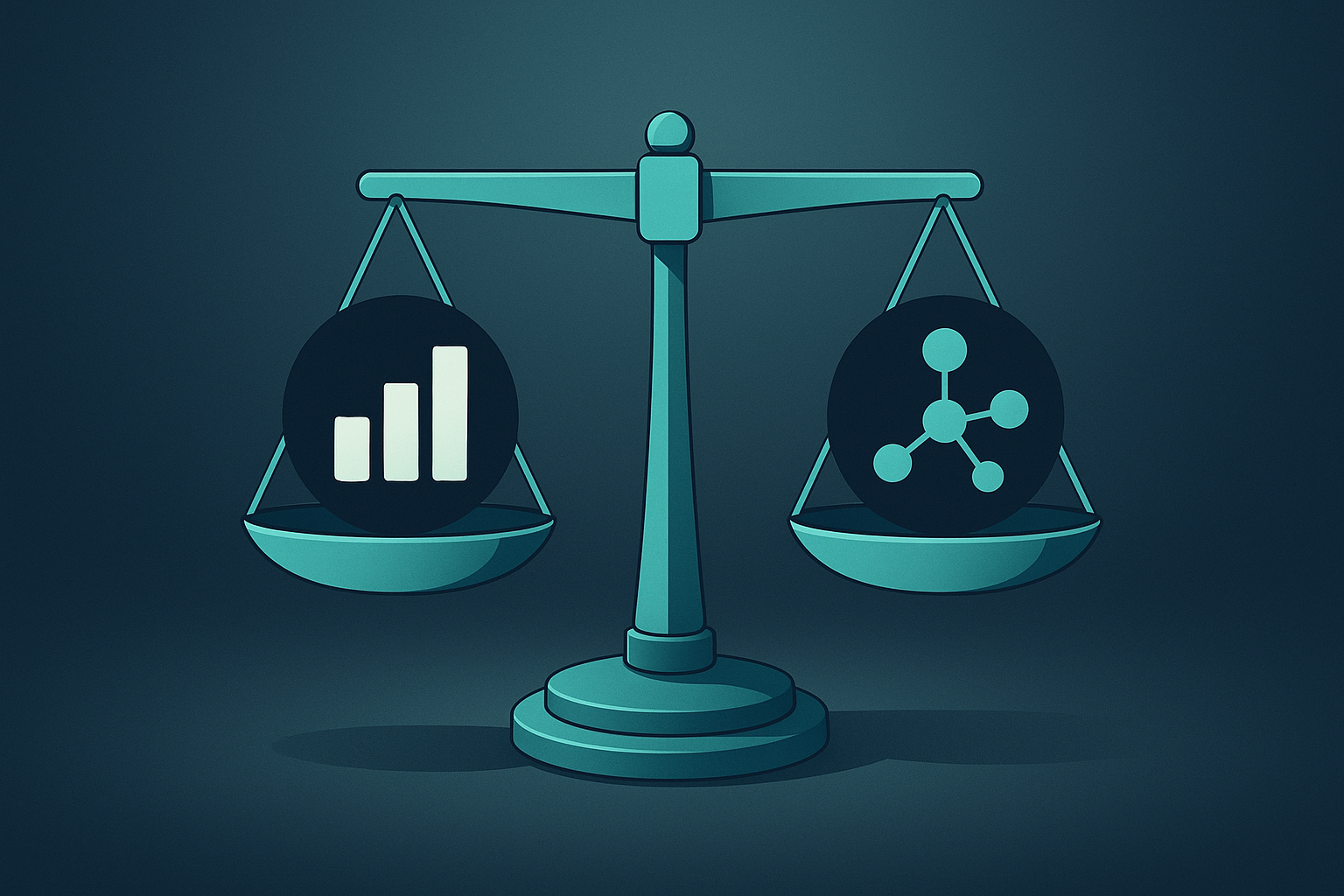
Coverage and index breadth: head terms vs long-tail
Google is still widely viewed as the “gold standard” for breadth and freshness. Ingenuity Learning’s summary of the Perplexity launch frames the competitive gap bluntly: many alternatives are “far less comprehensive,” with analyst estimates of Bing’s index size in the 8–14 billion page range versus Google at hundreds of billions. (ingenuity-learning.com)
Perplexity’s strategic claim is that its API provides access to an index “covering hundreds of billions of web pages,” positioning it closer to Google-scale than most non-Google options. (ingenuity-learning.com)
Executive translation: If Perplexity’s coverage holds up in your vertical, it can replace a meaningful portion of Google-dependent discovery—especially for internal research and RAG—without the operational burden of SERP scraping.
Freshness and news sensitivity
Freshness is where teams get burned:
- News and fast-moving topics require frequent re-querying.
- Stable knowledge domains (docs, standards, evergreen explainers) can tolerate longer TTLs.
Google is aggressively integrating AI into core search, including AI-generated overviews across many countries and an experimental “AI Mode” for subscribers, underscoring that Google sees AI-native retrieval as existential to its search product. (reuters.com)
Result quality for extraction: duplicates, boilerplate, paywalls
For AI data scraping, “quality” is not just relevance—it’s extraction readiness:
- Is the content accessible without heavy JS?
- Is it behind a paywall?
- Is it mostly boilerplate?
- Are there duplicates/canonical variants?
Search APIs can help by returning cleaner candidates, but you still need a fetch-and-parse layer that enforces rules (robots, ToS, paywall handling) and normalizes content.
Cost model comparison: API pricing vs scraping infrastructure
Perplexity’s published pricing is straightforward: $5 per 1,000 Search API requests, with “no token costs” for the Search API (request-based pricing only). (docs.perplexity.ai)
DIY SERP scraping cost drivers (often underestimated):
- Headless browser compute
- Residential proxies / rotation
- Engineering maintenance (DOM changes, bot defenses)
- Compliance overhead (ToS disputes, takedowns)
- Reliability engineering (retries, CAPTCHAs, failures)
Decision framework (practical):
Choose Perplexity-first when:
- You need structured discovery with lower ops burden.
- You can tolerate some differences vs Google SERPs.
- Your downstream pipeline depends on citations and audit logs.
Keep Google (or a Google-aligned provider) when:
- You need maximum long-tail breadth in a niche vertical.
- You require strict geo-local SERP parity (e.g., local pack behavior).
- Your business model depends on Google-specific SEO mechanics.
Actionable recommendation: Calculate cost per 1,000 successful extractions (not cost per 1,000 queries). That metric forces you to price in failures, paywalls, parsing breaks, and maintenance.
:::comparison
:::
✓ Do's
- Instrument cost per 1,000 successful extractions so API pricing is evaluated against real downstream yield (fetchable + parseable + usable citations).
- Run a multi-provider benchmark that measures citation stability and result drift over time, not just “does it look like Google.”
- Keep discovery pluggable (provider adapters + unified logging) so you can swap Perplexity/Google-aligned providers without rewriting crawler/parser layers.
✕ Don'ts
- Don’t choose a provider based on SERP similarity alone; it ignores paywalls, boilerplate, and parsing failure rates that dominate total cost.
- Don’t treat a Search API as a content license; rights and obligations attach to what you fetch, store, and output.
- Don’t ship “answer” features without retrieval observability (query logs, hashes, timestamps); you’ll be unable to explain drift in regulated or high-stakes contexts. :::
Core AI Data Scraping Workflows Using Search APIs (End-to-End Blueprint)
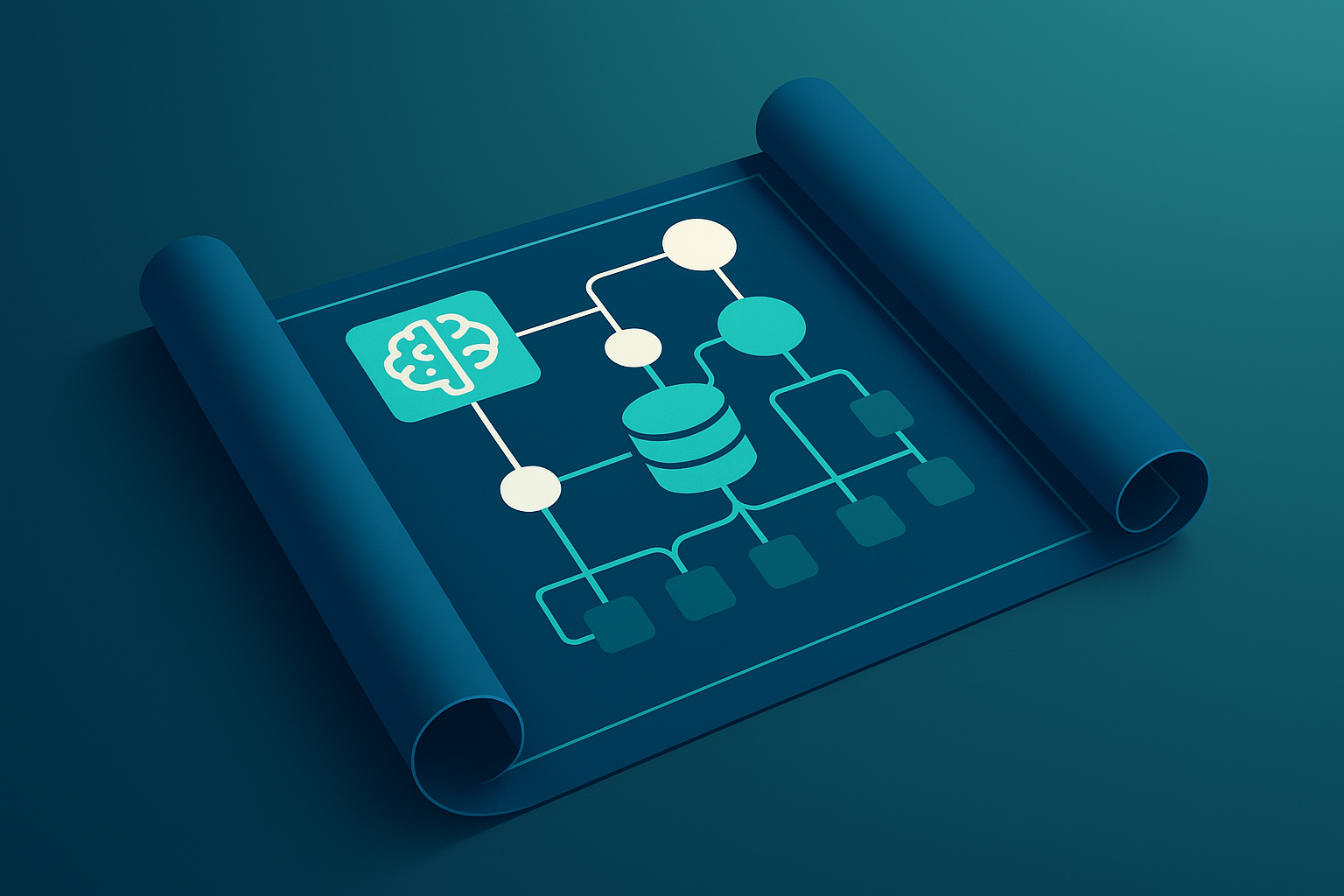
Workflow 1: Discovery → fetch → parse → normalize
A production-grade pipeline typically looks like:
This separation is strategic: it lets you swap discovery providers without rewriting your crawler and parser.
Workflow 2: Enrichment with LLMs (entity extraction, classification, summarization)
Once you have clean text, use LLMs for:
- Entity extraction (company, product, person, location)
- Classification (topic tags, intent, risk)
- Summarization (executive summary + evidence pointers)
- Fact extraction (price, date, feature, policy changes)
Store both the extracted fields and the evidence spans (with citations).
Workflow 3: RAG-ready indexing (chunking, embeddings, metadata)
RAG quality depends on metadata discipline:
- Canonical URL
- Title, author, publish date (best-effort)
- Retrieval timestamp
- Source domain and credibility tier
- Rights/robots flags
- Chunk offsets (start/end)
Workflow 4: Monitoring and change detection
Monitoring is where search APIs shine:
- Re-run query packs on a schedule
- Compare result sets by hash
- Trigger fetch only for new or changed URLs
- Alert when key sources disappear or diversify
Actionable recommendation: Define a “pipeline yield dashboard” with four yields: % URLs fetchable, % parseable, % high-quality chunks, % usable citations. Optimize the bottleneck, not the whole pipeline at once.
Implementation Guide: Best Practices, Pseudocode, and Production Patterns

Query engineering for consistent results
Your goal is not creativity—it’s repeatability.
Best practices:
- Use entity constraints (company legal name + ticker)
- Add disambiguators (industry, geography)
- Use time qualifiers (“2025”, “last 30 days”) when appropriate
- Separate “discovery queries” from “monitoring queries”
Caching, pagination, and incremental refresh strategies
- Cache by
(query, parameters)with a TTL tied to freshness needs. - Maintain a URL frontier with dedupe keys (canonical URL + normalized path).
- Re-fetch only when:
- the page is new,
- the page changed (ETag/Last-Modified/content hash),
- or the monitoring policy demands it.
Error handling: timeouts, CAPTCHAs (when fetching pages), 429s
Even if discovery is API-based, fetching pages will still hit:
- 403/401 (paywalls)
- 429 (rate limits)
- bot protections
Design for graceful degradation:
- Skip and mark “unfetchable” with reason codes
- Retry with exponential backoff
- Maintain a “do-not-fetch” list for risky domains
Data storage schema for audits and reproducibility
Store three layers:
- 2Retrieval log (query → results)
- 4Fetch log (URL → HTTP response + headers)
- 6Derived artifacts (parsed text, chunks, embeddings, extracted fields)
Pseudocode: batch discovery → queue URLs
def discover(query_pack, perplexity_client, cache, url_queue, now):
    for q in query_pack:
        cache_key = f"search:{q.text}:{q.params_hash()}"
        cached = cache.get(cache_key)

        if cached and cached["expires_at"] > now:
            results = cached["results"]
        else:
            results = perplexity_client.search(q.text, **q.params)
            cache.set(cache_key, {
                "results": results,
                "expires_at": now + q.ttl_seconds
            })

        for r in results["items"]:
            url_queue.enqueue({
                "url": r["url"],
                "source_query": q.text,
                "discovered_at": now,
                "snippet": r.get("snippet"),
                "rank": r.get("rank")
            })
Pseudocode: fetch → parse → enrich
def ingest(url_queue, fetcher, parser, llm, store):
    while url_queue.has_next():
        job = url_queue.next()

        resp = fetcher.get(job["url"], respect_robots=True, timeout=15)
        store.fetch_log.write(job["url"], resp.status, resp.headers, resp.body_hash)

        if resp.status != 200:
            store.doc_status.upsert(job["url"], "unfetchable", reason=str(resp.status))
            continue

        text, meta = parser.extract_main_text(resp.body)
        if len(text) < 500:
            store.doc_status.upsert(job["url"], "low_content", reason="too_short")
            continue

        extracted = llm.extract_structured(text, schema="market_intel_v1")
        store.documents.upsert(job["url"], {
            "text": text,
            "meta": meta,
            "extracted": extracted,
            "retrieval": {"source_query": job["source_query"], "discovered_at": job["discovered_at"]}
        })
Recommended SLOs (sample thresholds)
| Use case | Discovery p95 latency | End-to-end success rate | Freshness target |
|---|---|---|---|
| RAG for internal knowledge | < 2.5s | > 90% | weekly/monthly |
| Competitive monitoring | < 2.0s | > 85% | daily/weekly |
| News/risk alerts | < 1.5s | > 80% | hourly/daily |
Actionable recommendation: Make SLOs contractual internally: if you can’t meet freshness and success-rate targets, don’t ship downstream “answer” features that imply completeness.
Compliance, Ethics, and Risk: What ‘AI Data Scraping’ Must Get Right

Robots.txt, ToS, and licensing: what the API changes (and what it doesn’t)
A Search API can reduce the need to scrape SERPs, but it does not automatically grant rights to:
- fetch content that a site forbids,
- store it indefinitely,
- or republish it.
Ingenuity Learning’s framing is useful here: search access is a strategic capability that affects model quality and currency, but it does not erase the legal and contractual layer around content usage. (ingenuity-learning.com)
:::
Copyright, fair use, and dataset creation considerations
Separate:
- Retrieval (finding and fetching) from
- Usage (how you store, transform, and output content)
Practical mitigations:
- Store snippets and extracted facts, not full copyrighted text, unless licensed.
- Use RAG to generate transformative summaries with citations.
- Implement retention policies and deletion workflows.
Privacy and sensitive data: PII handling and retention
If your system can ingest the open web, it can ingest PII.
Minimum controls:
- PII detection at parse/enrichment stage
- Redaction for downstream indexing
- Retention limits by data class
- Access controls + audit trails
Attribution and citation requirements in AI outputs
Citation-forward UX is becoming the norm in AI search. Gadgets360 highlights ChatGPT Search’s emphasis on citations inline and in a detailed list—this is a strong pattern for enterprise outputs, too: citations are not decoration; they are defensibility. (gadgets360.com)
Risk matrix (likelihood × impact) with mitigations
| Risk | Likelihood | Impact | Mitigation |
|---|---|---|---|
| ToS violation during page fetching | Medium | High | Robots/ToS policy engine, domain allowlists, legal review |
| PII ingestion and retention | Medium | High | PII detection/redaction, retention limits, access controls |
| Copyright claim from dataset reuse | Medium | High | Store pointers + facts, minimize verbatim text, licensing workflows |
| Vendor dependency / platform risk | High | Medium | Multi-provider retrieval, caching, abstraction layer |
| Citation drift causing inconsistent outputs | High | Medium | Result hashing, drift monitoring, pinned sources for regulated use |
Actionable recommendation: Establish a “retrieval governance” checklist before scale: domain policy, PII controls, retention, citation logging, and an escalation path for takedown requests.
Custom Visualizations: Architecture Diagram + Benchmark Scorecard

Visualization 1: ‘Search API → Crawler → Parser → LLM Enrichment → Vector DB’ architecture
Diagram spec (for your design team):
- Inputs: query packs, entity lists, monitoring schedules
- Discovery: Perplexity Search API (and optional fallback providers)
- Queue: URL frontier + dedupe service
- Fetch: crawler with robots/ToS enforcement + caching
- Parse: boilerplate removal + document normalization
- Enrich: LLM extraction + classification + summarization
- Index: vector DB + keyword index + metadata store
- Outputs: RAG answers with citations + monitoring alerts + datasets
Attach metadata at every boundary: query ID, timestamp, source list, and content hash.
Visualization 2: Benchmark scorecard comparing Perplexity vs Google vs DIY scraping
Use a weighted scorecard (0–10) across:
- Coverage (head + long-tail)
- Freshness
- Extraction success (fetchable + parseable)
- Cost per 1,000 successful extractions
- Compliance burden
- Maintenance burden
Actionable recommendation: Don’t benchmark “average relevance” alone. Benchmark downstream extraction yield and citation stability, because those drive real product reliability.
Expert Insights: What Practitioners Say About Search APIs Replacing SERP Scraping
You asked for quotes; the provided sources include directly quotable executive sentiment and product framing that can serve as “expert insight” anchors.
SEO/SEM dependency: “AI Overviews” and the shrinking click surface
Google’s move toward AI-generated summaries (AI Overviews and experimental AI Mode) reinforces a hard truth for marketers: visibility is shifting from rankings to inclusion in cited summaries. Reuters reports Google’s AI-only search experiment replaces traditional links with AI summaries and cited sources. (reuters.com)
Takeaway: Optimize for citation eligibility (clear authorship, structured data, fast access) in addition to rankings.
Data engineering reliability: APIs beat scraping on maintenance
Perplexity’s strategic value is partly operational: moving from “scrape a UI” to “consume a contract.” Ingenuity Learning explicitly frames third-party search APIs as critical infrastructure for AI tools—and highlights the fragility of alternatives (e.g., Bing API retirement in August 2025). (ingenuity-learning.com)
Takeaway: If your roadmap depends on web retrieval, prioritize contracted APIs and treat scraping as a last-resort fallback.
Competitive intensity: “code red” as an operating posture
Windows Central reports Sam Altman described OpenAI declaring “code red” multiple times in 2025 in response to competitive threats, saying, “It’s good to be paranoid,” and expecting such cycles to continue. (windowscentral.com)
Takeaway: Search and retrieval are now strategic battlegrounds. Your organization should assume rapid vendor iteration and design for portability.
Actionable recommendation: Build a retrieval abstraction layer now (provider adapters + unified logging), because the competitive landscape will force changes faster than your compliance process can renegotiate architecture.
Decision Framework: When to Choose Perplexity’s Search API (and When Not To)
Use it when: speed, citations, structured retrieval, lower ops burden
Use Perplexity’s Search API when you need:
- Fast, structured discovery for RAG and research workflows
- Lower operational risk than SERP scraping
- Predictable unit economics (e.g., $5/1K requests) (docs.perplexity.ai)
- A credible alternative to non-Google indexes (positioned as “hundreds of billions of pages”) (ingenuity-learning.com)
Avoid it when: maximum index breadth, strict geo-local SERP parity, niche vertical coverage
Avoid Perplexity-first if:
- Your workflow demands Google-local SERP parity (maps/local packs, hyperlocal intent)
- You need the absolute deepest long-tail in a niche where Google’s advantage is decisive
- You cannot tolerate provider drift without pinning sources
Hybrid approach: Perplexity + Google + first-party sources
The executive-grade architecture is hybrid:
- Perplexity for broad discovery and citations
- Google-aligned retrieval where parity matters
- First-party sources (your CRM, product docs, internal wikis) as the highest-trust tier
- Caching + fallback crawling to reduce vendor dependency
This aligns with the broader industry direction: Anthropic’s move to open-source “Agent Skills” and position standards/SDKs as shared infrastructure is a reminder that interoperability wins when ecosystems heat up. (techradar.com)
30-day pilot plan (go/no-go)
Week 1: Define the test set
- 200 queries across 5 categories: evergreen, product intel, executive profiles, regulatory, news
- Define “gold” outcomes: correct sources, extractable pages, stable citations
Week 2: Run controlled benchmarks
- Measure: median/p95 latency, success rate, source diversity, citation drift
- Compare: Perplexity vs a Google SERP API vs headless scraping
Week 3: Measure downstream yield
- % fetchable, % parseable, % high-quality chunks
- RAG answer accuracy uplift (task-based evaluation)
Week 4: Decide
- Roll forward if cost per 1,000 successful extractions beats current approach and drift is manageable
- Otherwise adopt hybrid or keep Perplexity as a secondary retriever
Pilot KPI table
- Cost/query and cost/1,000 successful extractions
- Citation stability (e.g., % overlap of top sources week-over-week)
- Extraction yield (% fetchable + parseable)
- Freshness (time-to-discover new pages for monitored topics)
- Downstream task accuracy (human-graded)
Actionable recommendation: Make the go/no-go decision on yield + auditability, not on “does it look like Google.”
FAQ
What is Perplexity’s Search API and how is it different from scraping Google results?
Perplexity’s Search API is a paid, structured web search interface designed to return search results programmatically (rather than requiring you to scrape HTML pages). It’s positioned as a way to access large-scale web discovery without the brittleness and operational risk of SERP scraping, and it’s priced per request (e.g., $5 per 1,000 requests). (docs.perplexity.ai)
Actionable recommendation: If you’re scraping SERPs today, replace that layer first—keep your crawler/parser the same and swap discovery to an API.
Is using a Search API considered web scraping, and is it legal?
Using a Search API is not the same as scraping a SERP UI, but your pipeline often still includes fetching and parsing pages, which raises robots/ToS, copyright, and privacy issues. The API reduces some risk (UI scraping), but it doesn’t eliminate content-usage obligations.
Actionable recommendation: Implement a documented policy engine (robots/ToS/allowlists) before you scale beyond a pilot.
How do I use Perplexity Search API results for RAG without violating copyright?
Treat the API results as pointers. Fetch pages only where permitted, store minimal necessary text, prefer storing extracted facts and embeddings, and generate outputs that are transformative summaries with citations.
Actionable recommendation: Store citations + evidence spans and enforce retention limits; don’t build a “shadow copy of the web.”
Can Perplexity’s Search API replace Google for SEO and competitive research?
For many internal research workflows, it can reduce dependence on Google—especially where you care about structured discovery and citations. But strict Google SERP parity (local intent, Google-specific features) still favors Google.
Actionable recommendation: Use a hybrid setup: Perplexity for broad discovery, Google-aligned retrieval for parity-critical workflows.
What are best practices for building an AI data scraping pipeline with citations and audit logs?
Log every query and result set, store timestamps and hashes, fetch pages with policy enforcement, normalize documents, attach citations at chunk level, and monitor drift.
Actionable recommendation: Add a “retrieval ledger” (query → sources → fetched URLs → extracted fields) as a first-class datastore; it will save you during audits and model disputes.

Founder of Geol.ai
Senior builder at the intersection of AI, search, and blockchain. I design and ship agentic systems that automate complex business workflows. On the search side, I’m at the forefront of GEO/AEO (AI SEO), where retrieval, structured data, and entity authority map directly to AI answers and revenue. I’ve authored a whitepaper on this space and road-test ideas currently in production. On the infrastructure side, I integrate LLM pipelines (RAG, vector search, tool calling), data connectors (CRM/ERP/Ads), and observability so teams can trust automation at scale. In crypto, I implement alternative payment rails (on-chain + off-ramp orchestration, stable-value flows, compliance gating) to reduce fees and settlement times versus traditional processors and legacy financial institutions. A true Bitcoin treasury advocate. 18+ years of web dev, SEO, and PPC give me the full stack—from growth strategy to code. I’m hands-on (Vibe coding on Replit/Codex/Cursor) and pragmatic: ship fast, measure impact, iterate. Focus areas: AI workflow automation • GEO/AEO strategy • AI content/retrieval architecture • Data pipelines • On-chain payments • Product-led growth for AI systems Let’s talk if you want: to automate a revenue workflow, make your site/brand “answer-ready” for AI, or stand up crypto payments without breaking compliance or UX.
Related Articles

Google’s Deep Search Enhances In-Depth Research Capabilities (and What It Means for AI Data Scraping)
Learn how Google’s Deep Search improves research depth, source discovery, and citation workflows—and how to adapt AI data scraping for better coverage.
OpenAI's 'Skills in Codex': Revolutionizing Developer Efficiency
Learn how OpenAI Codex Skills speed up repetitive coding tasks, boost consistency, and streamline AI-assisted data scraping workflows for developers.