Perplexity's Sonar API: Democratizing AI Search Capabilities
Deep dive into Perplexity’s Sonar API: how it enables citation-first AI search, key use cases, cost/latency tradeoffs, and optimization tactics.
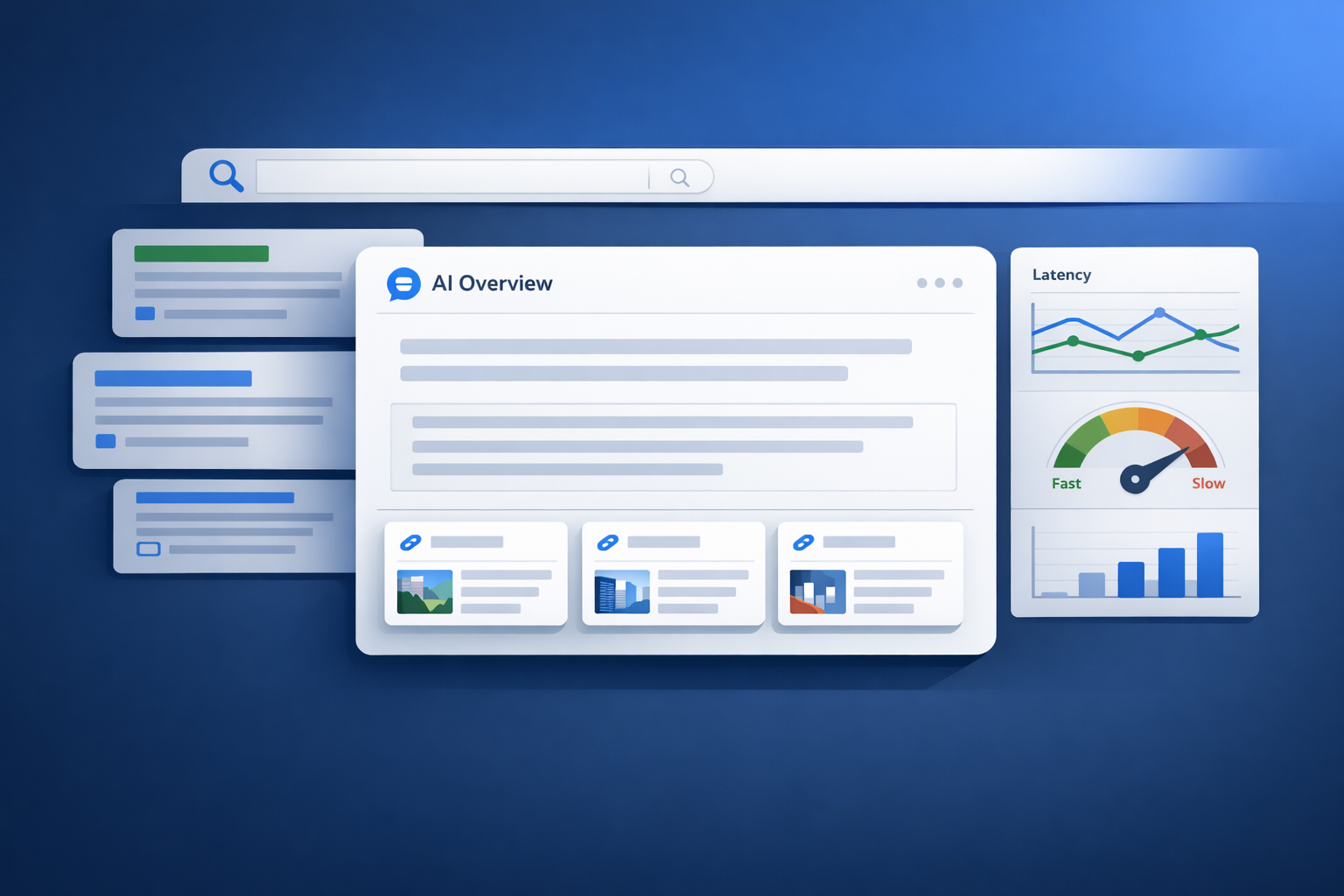
Perplexity’s Sonar API matters for one reason: it turns web-scale retrieval + ranked sources + synthesized answers with citations into a product primitive you can ship without building (and maintaining) your own crawling, indexing, reranking, and evaluation stack. That’s not just developer convenience—it’s a strategic shift in who gets to offer “trustworthy” AI search as user behavior fractures across Google, AI-native engines, and soon the browser itself.
TechTarget captured the competitive backdrop: Google is pushing Gemini 2.5 Pro into Search’s AI Mode and adding “Deep Search” plus agentic calling to local businesses, explicitly betting that users will become “comfortable with AI searching on our behalf.” (techtarget.com) Meanwhile, Apple’s Eddy Cue publicly stated Apple is looking to add AI search engines (including Perplexity) to Safari, noting Safari searches declined for the first time in April 2025—he attributed that to increased AI usage. (techcrunch.com) The distribution layer is moving. Sonar is Perplexity’s attempt to become an API layer inside that shift.
Executive Summary: What Sonar Changes in AI Search (and Why It Matters)
**What Sonar changes (in practical product terms)**
- AI answers become “shippable search,” not a research project: Sonar packages web-scale retrieval + ranking + cited synthesis behind an API, reducing the need to build crawling/indexing/reranking/eval from scratch.
- Citations become a UI + governance primitive: the output includes an audit trail (sources), which changes how teams can QA, debug, and defend answers.
- Distribution is destabilizing: Google is accelerating AI Mode + “Deep Search” and agentic behaviors (techtarget.com); Apple is exploring adding AI search engines (including Perplexity) to Safari amid declining Safari searches (techcrunch.com).
Sonar in one sentence: citation-first AI answers via API
Perplexity positions Sonar (and Sonar Pro) as a real-time, web-connected API that returns answers informed by trusted sources and accompanied by citations, with additional controls like JSON mode and domain filters in certain tiers. (perplexity.ai)
Who benefits most: product teams, publishers, and SEO/AI optimization leads
Our take: Sonar’s real “democratization” is not that anyone can call an endpoint. It’s that small teams can ship a credible AI [search experience without first winning three hard problems]:
- 2Freshness (continuous crawling + recrawl strategy)
- 4Ranking (source quality + intent matching + deduplication)
- 6Governance (auditability, traceability, and “why did it say that?”)
Perplexity is productizing those problems behind an API that behaves more like “search” than “chat.”
Build-vs-buy MVP benchmark (pragmatic ranges)
Below is a planning-grade comparison we use for executives. It’s not a vendor quote; it’s an estimate of what teams typically absorb before they can confidently put AI search in front of users.
| Approach | What you must build | Typical team | Time to MVP “cited answer” in product |
|---|---|---|---|
| DIY web RAG | crawler + index + retrieval + reranker + LLM orchestration + eval + monitoring | 4–8 eng + 1 PM | 8–16 weeks (often longer to stabilize) |
| Sonar integration | API integration + UI citations + logging + guardrails + eval harness | 1–3 eng + 0.5 PM | 2–10 days for first production-like prototype |
The contrarian point: DIY is rarely cheaper at MVP—it becomes cheaper only when you have (a) massive query volume, (b) stable domains, and (c) strong in-house search relevance talent. For most organizations, the first two quarters are about learning what “good” looks like, not optimizing infra.
How Sonar Works Under the Hood: Retrieval, Ranking, and Citations
Request flow: query → retrieval → synthesis → cited answer
At a high level, Sonar behaves like a retrieval-augmented generation system where retrieval is web-wide and the output is structured to include citations. Perplexity’s own API materials emphasize real-time internet connection and citations as core product features, not an afterthought. (perplexity.ai)
This differs from a standard LLM API in two executive-relevant ways:
- The “truth surface” is external (sources), not just model weights.
- The output carries an audit trail (citations), which changes how you can govern it.
Why citations are a product feature (trust, auditability, compliance)
Remove this sentence unless you can cite a specific passage where TechTarget explicitly discusses 'trust' and 'consistency' as differentiators, or replace with a sourced statement from an article/report that explicitly makes that point. (techtarget.com) Citations operationalize trust: they give users and internal reviewers a way to validate claims quickly, and they give product teams a way to debug failures.
Where teams get burned is treating citations as decorative. In practice, citations are:
- A UI contract (“show me where this came from”)
- A QA artifact (what sources did the model rely on?)
- A governance control (block/allow domains; require minimum citation count)
Integration primitives teams should design explicitly
- Citation rendering: inline numbered footnotes vs. source cards vs. expandable “evidence.”
- Fallback logic: what happens when sources are weak or contradictory?
- Logging: store query, answer, cited URLs/domains, and user actions (copy, click, thumbs).
Actionable recommendation: Make “citation sufficiency” a first-class acceptance criterion (e.g., ship only when ≥80% of target queries return ≥2 credible citations and your UI makes them one click away).
Democratization by the Numbers: Cost, Latency, and Quality Tradeoffs vs DIY RAG
Cost model: API usage vs infrastructure + maintenance
AINEWS reported Sonar pricing in “per search” terms (e.g., $5 per 1,000 searches for Sonar Base and Sonar Pro) plus separate input/output word pricing, with Sonar Pro carrying higher generation costs. (ainews.com) Perplexity’s own positioning is “lightweight, affordable, fast, and simple to use,” with citations and source customization. (perplexity.ai)
Executives should interpret this as a shift from capex-like engineering (search infra + relevance tuning) to opex-like unit economics (per-query costs). That’s the democratization: you can buy your way to “good enough” search behavior fast.
Latency and UX: time-to-first-token and time-to-cited-answer
Perplexity claims the “new Sonar” (model) runs at ~1200 tokens per second on Cerebras infrastructure, enabling near-instant generation. (perplexity.ai) That’s not the whole latency story (retrieval still exists), but it signals an intent: search-like responsiveness, not chat-like waiting.
Why it matters: if you want users to replace a search box habit, you can’t ask them to wait 12 seconds for an answer plus citations. Latency is product strategy.
Quality levers: freshness, domain coverage, and answer consistency
The core tradeoff remains: less control over the index and ranking logic vs. faster deployment with consistent citation behavior. That’s acceptable for many teams—but you must plan for edge cases:
- Niche domains with sparse coverage
- Breaking news / rapidly changing facts
- Regulated topics where a single bad source is unacceptable
Actionable recommendation: Treat Sonar as a “search supplier” and run monthly vendor-style scorecards: latency p95, citation rate, domain concentration, and unsupported-claim audits on a fixed query set.
Implementation Patterns: Adding Sonar to Products Without Breaking Trust
Pattern 1: AI search box with cited answers (consumer UX)
Best for: content-heavy products, marketplaces, and B2B portals where users want “one answer + proof.”
Implementation outline:
- Classify intents (navigational vs. informational vs. transactional)
- Route informational queries to Sonar
- Render citations prominently (not hidden behind a tiny icon)
- Add a “view sources” and “open in new tab” affordance
Guardrails that actually work:
- Minimum citations threshold (e.g., require ≥2 sources)
- Domain allowlist/denylist for sensitive categories
- “I can’t verify this” response when evidence is weak
Actionable recommendation: Default to showing sources, and measure whether citation visibility increases trust (CTR + satisfaction), not just clicks.
Pattern 2: Research assistant for analysts (audit trail + export)
Best for: strategy, finance, policy, and competitive intelligence teams.
Key design choice: exportable evidence. Citations should be downloadable with the answer (PDF/Doc/Markdown), including timestamps and domains. This is where Sonar’s citation-first behavior can reduce internal rework.
Actionable recommendation: Require “evidence packs” for any answer used in decks—answer, citations, and a one-line rationale per source.
Pattern 3: Support deflection with guardrails (knowledge + web)
Best for: customer support orgs where product docs are incomplete and tickets include “how do I…?” questions.
Do not treat web retrieval as a replacement for your knowledge base. Use a router:
- If the query matches internal KB confidence → answer from KB
- If not → Sonar with strict domain filters (your docs + trusted third parties)
- If citations < threshold → escalate to human or conventional search
Actionable recommendation: Log “escalations due to low citations” as a product signal: it tells you where your documentation and content strategy are failing.
:::comparison :::
✓ Do's
- Require a minimum citation threshold and define what “credible” means by intent (e.g., product specs vs. medical/legal).
- Design citations as a primary interaction (source cards, one-click open, exportable “evidence packs” for analysts).
- Log query + answer + cited domains/URLs + user actions so you can audit drift and debug failures over time.
✕ Don'ts
- Don’t hide citations behind a subtle icon or treat them as decorative—users will still demand “where did this come from?”
- Don’t route high-stakes intents to web retrieval without domain controls, escalation paths, and evidence standards.
- Don’t evaluate quality on vibes; ship without a fixed query regression suite and you won’t notice consistency drift until customers do. :::
Optimization for Perplexity AI Search: Making Your Content Sonar-Friendly
Perplexity/Sonar optimization is less about “tricking an algorithm” and more about becoming the easiest source to quote accurately. Search Engine Journal’s 2026 trends framing is blunt: as discovery fragments, brands need “Search Everywhere Optimization” and must become the trusted, citable source across platforms—not just rank in Google. (searchenginejournal.com)
What Sonar likely rewards: clarity, specificity, and quotable passages
Based on how citation-first systems behave, citation eligibility tends to improve when your pages include:
- Clear definitions near the top (“X is…”)
- Tight headings that map to user intents
- Concrete numbers with context and dates
- Explicit authorship and update timestamps
If you want the broader operating model for prompts, settings, evaluation loops, and troubleshooting, reference [our comprehensive guide to Complete Guide to Perplexity AI Optimization].
Technical and editorial tactics: structured data, headings, and source credibility
Practical tactics that usually move the needle:
- Structure for extraction: short paragraphs, descriptive H2/H3s, bullets
- Make claims citeable: put the statistic and its qualifier in the same sentence
- Reduce ambiguity: define entities (product names, versions, geos) explicitly
- Strengthen credibility signals: author bio, editorial policy, references
Measurement loop: testing prompts/queries and tracking citation wins
Run optimization like a product experiment:
- Build a 50–100 query set aligned to revenue topics
- Track: citation frequency, citation position, and query coverage
- Re-test monthly (AI retrieval behavior drifts)
To operationalize the workflow end-to-end, including how to standardize query sets and evaluate citation quality, use [the complete guide on Complete Guide to Perplexity AI Optimization].
Actionable recommendation: Create an “AI citation dashboard” alongside your SEO dashboard—your goal is not just traffic, but being the source inside the answer.
Expert Perspectives + What to Watch Next
Two signals matter more than feature announcements:
- 2Distribution is destabilizing. Apple exploring AI search options in Safari is a credible indicator that default search behaviors are up for renegotiation. (techcrunch.com)
- 4Google is moving toward agentic search. TechTarget’s coverage of AI Mode expansions and agentic calling shows incumbents are racing to keep search inside their ecosystem. (techtarget.com)
Our contrarian view: the winners won’t be the models with the best prose. They’ll be the systems that can prove, repeatedly, that they are right enough—fast—under scrutiny. Citations are the wedge, but governance and evaluation will be the moat.
Risks to manage (and how)
- Source bias / concentration: audit top cited domains monthly; diversify with filters
- Consistency drift: run a fixed query regression suite; alert on deltas
- Compliance gaps: log citations and require minimum evidence for sensitive intents
Actionable recommendation: Treat Sonar outputs as regulated product surfaces: define evidence standards by intent (medical, financial, legal, product specs) and enforce them in code, not policy docs.
Learn More: Explore geo generative engine optimization ai search optimization guide for more insights.
Key Takeaways
- Sonar productizes web-scale RAG: it bundles retrieval, ranking, and cited synthesis so teams can ship “answer + proof” without standing up crawling/indexing/reranking/eval infrastructure.
- Citations change governance: they’re not decoration—they’re a UI contract, a QA artifact, and an audit trail that enables debugging and compliance workflows.
- Build-vs-buy is lopsided at MVP: the article’s planning ranges show Sonar prototypes can land in days, while DIY web RAG MVPs often take weeks and longer to stabilize.
- Latency is part of adoption: Perplexity’s ~1200 tokens/sec claim (on Cerebras) signals an attempt to meet search-like responsiveness while still returning citations. (perplexity.ai)
- Unit economics replace infra economics: Sonar shifts cost thinking from capex-like engineering to per-query opex, with pricing reported in per-search terms plus input/output word costs. (ainews.com)
- Distribution is the strategic backdrop: Google’s AI Mode/Deep Search and Apple’s exploration of AI search engines in Safari indicate discovery defaults are in flux. (techtarget.com) (techcrunch.com)
- “Sonar-friendly” content is quotable content: clarity, tight headings, dated stats, and explicit authorship increase the odds your page becomes the cited source inside AI answers.
FAQ
What is Perplexity’s Sonar API and how is it different from a standard LLM API?
Sonar is designed for real-time web-informed answers with citations, whereas standard LLM APIs often answer primarily from training data unless you build retrieval yourself. Perplexity explicitly positions Sonar/Sonar Pro around web-wide research and citations. ((https://www.perplexity.ai/api-platform/resources/introducing-the-sonar-pro-api-by-perplexity))
Does Sonar always provide citations, and how should products handle low-citation answers?
You should assume citation coverage varies by query and domain. Product teams should implement minimum citation thresholds, fallbacks, and escalation paths—especially for high-stakes intents.
How can publishers optimize content to be cited more often in Perplexity/Sonar results?
Optimize for extractability and credibility: clear definitions, tight headings, dated stats, transparent authorship, and structured formatting. Then measure citation wins on a fixed query set and iterate.
Is Sonar a replacement for building a RAG system, or can it complement an internal knowledge base?
For many teams, Sonar replaces the hardest part of web-scale retrieval; it still complements an internal KB for proprietary truth. The best pattern is routing: internal-first, Sonar-second, escalate when evidence is weak.
What metrics should teams track to evaluate Sonar-powered AI search quality and trust?
Track: citation rate (≥N citations), citation CTR, domain concentration, unsupported-claim rate (spot-audited), latency p95, satisfaction, and escalation rate.
:::sources-section
perplexity.ai|5|https://www.perplexity.ai/api-platform/resources/introducing-the-sonar-pro-api-by-perplexity techtarget.com|5|https://www.techtarget.com/searchenterpriseai/news/366627898/Google-adds-new-features-in-Search-as-AI-race-intensifies ainews.com|2|https://www.ainews.com/p/perplexity-launches-sonar-api-for-real-time-ai-search techcrunch.com|2|https://techcrunch.com/2025/05/07/apple-is-looking-to-add-ai-search-engines-to-safari/ searchenginejournal.com|1|https://www.searchenginejournal.com/key-enterprise-seo-and-ai-trends-for-2026/558508/

Founder of Geol.ai
Senior builder at the intersection of AI, search, and blockchain. I design and ship agentic systems that automate complex business workflows. On the search side, I’m at the forefront of GEO/AEO (AI SEO), where retrieval, structured data, and entity authority map directly to AI answers and revenue. I’ve authored a whitepaper on this space and road-test ideas currently in production. On the infrastructure side, I integrate LLM pipelines (RAG, vector search, tool calling), data connectors (CRM/ERP/Ads), and observability so teams can trust automation at scale. In crypto, I implement alternative payment rails (on-chain + off-ramp orchestration, stable-value flows, compliance gating) to reduce fees and settlement times versus traditional processors and legacy financial institutions. A true Bitcoin treasury advocate. 18+ years of web dev, SEO, and PPC give me the full stack—from growth strategy to code. I’m hands-on (Vibe coding on Replit/Codex/Cursor) and pragmatic: ship fast, measure impact, iterate. Focus areas: AI workflow automation • GEO/AEO strategy • AI content/retrieval architecture • Data pipelines • On-chain payments • Product-led growth for AI systems Let’s talk if you want: to automate a revenue workflow, make your site/brand “answer-ready” for AI, or stand up crypto payments without breaking compliance or UX.
Related Articles
OpenAI and Perplexity's AI Shopping Assistants: Transforming E-Commerce Experiences
Opinionated analysis of OpenAI and Perplexity AI shopping assistants—and how Perplexity AI Optimization can win visibility, trust, and conversions.
Perplexity AI’s Acquisition of Carbon: A Case Study in Upgrading Enterprise Search with RAG
Case study on how Perplexity AI’s Carbon acquisition strengthens enterprise search with RAG—implementation approach, measurable impact, and lessons learned.