LLMs' Citation Practices: Bridging the Gap Between AI Answers and Traditional Search Rankings
Learn how LLM citation behavior differs from Google rankings and how to structure scraped, source-rich data so your brand is cited in AI answers.

LLM “citations” are becoming a new kind of visibility: not a blue-link position you can track in a rank tool, but a source endorsement embedded inside the answer layer. That endorsement is increasingly where decisions get made—especially as Google pushes deeper into AI-first experiences with AI Overviews and its experimental AI Mode. (blog.google)
This spoke briefing focuses on one question executives should care about: How do we make our content and scraped datasets “source-ready” so LLMs reliably cite us—even when we’re not top-ranked in Google? For architecture, pricing, and compliance considerations around Perplexity’s Search API, refer to our comprehensive guide on Perplexity’s Search API and AI data scraping.
:::
What “citation” means in LLM answers vs. traditional search rankings
LLM citations: attribution, not necessarily ranking
In LLM interfaces (ChatGPT, Gemini, Perplexity), a “citation” is typically a supporting link attached to a claim. It’s closer to attribution than position. The user doesn’t see a ranked list first; they see a synthesized response where a handful of sources are “blessed” as evidentiary.
Recent third-party analysis summarized by Search Engine Journal shows this misalignment is structural, not anecdotal: across 18,377 matched queries, LLM-cited sources often diverged from Google’s results. (searchenginejournal.com)
SERP rankings: relevance + authority + UX signals
Google rankings are an ordered marketplace: relevance, authority, and a long tail of UX/quality signals determine placement. Even when Google adds AI layers, it still operates on a retrieval-and-ranking spine.
Google’s AI Mode reinforces the shift: it can run multiple related searches concurrently and synthesize results into an answer with links, which changes how users “consume” sources (fewer clicks, more answer-layer trust). (pymnts.com)
Why this gap matters for AI data scraping strategies
If your scraping strategy is “rank higher → get cited,” you’ll underperform. The SEJ-covered dataset suggests:
- Perplexity is closest to Google (median domain overlap ~25–30%, median URL overlap ~20%). (searchenginejournal.com)
- ChatGPT overlap is much lower (median domain overlap ~10–15%, URL matches typically <10%). (searchenginejournal.com)
- Gemini can be inconsistent; the study reports very low domain overlap with Google in aggregate. (searchenginejournal.com)
**What the SEJ-covered dataset implies (in practice)**
- Perplexity behaves “more Google-adjacent”: domain overlap around ~25–30% suggests traditional SEO improvements may translate more often than in other LLMs.
- ChatGPT citations diverge more sharply: ~10–15% domain overlap and <10% URL matches means “ranking well” is a weaker predictor of being cited.
- Citation optimization has different failure modes: paywalls, ambiguous claims, missing provenance, and unstable URLs can block citations even when content is strong.
This implies a contrarian but practical position: citation optimization is not a subset of SEO; it’s a parallel discipline with different failure modes (paywalls, ambiguity, weak provenance, unstable URLs).
Actionable recommendation: Run a mini-benchmark in your niche (20–50 queries). Compare (1) top-3 Google URLs vs (2) cited URLs in 2–3 LLM experiences. Track overlap rate and median Google rank position of cited sources. Use this to prioritize “citation readiness” work where the gap is largest. (If you’re building this using Perplexity retrieval, our comprehensive guide to Perplexity’s Search API provides the implementation baseline.)
:::
How LLMs choose sources: common patterns you can influence
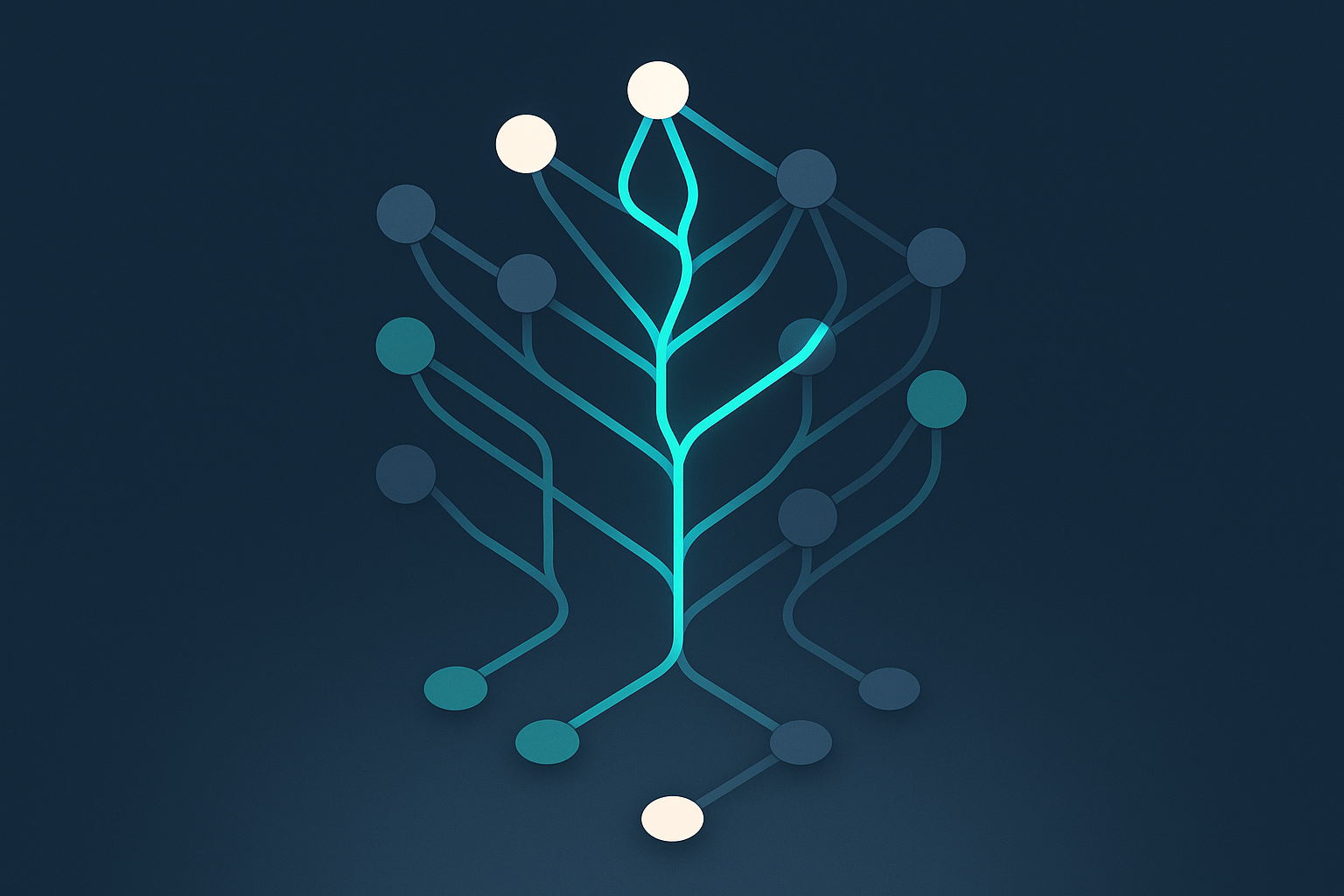
Source accessibility: crawlability, paywalls, and stable URLs
LLMs disproportionately cite what they can reliably access and re-access. That sounds obvious, but many teams sabotage themselves with:
- rotating URLs (query params, session IDs)
- gated PDFs without HTML equivalents
- “soft paywalls” that render content but block extraction
This matters more as AI-first search expands. Google’s AI Mode is explicitly designed to pull from web content and integrate it into an answer flow with follow-ups. If your best material is difficult to retrieve, you’re effectively invisible in the answer layer. (pymnts.com)
:::
Information density: tables, definitions, and quotable passages
LLMs cite sources that are easy to quote without distortion:
- definitional paragraphs (“X is…”)
- labeled tables (metrics, comparisons, timelines)
- explicit “how we measured” sections
This is why many mid-authority pages get cited over “brand heavy” pages: they have extractable facts.
Consensus and corroboration: multiple sources that agree
LLMs often behave like consensus engines: if your claim is corroborated by other reputable sources, you’re safer to cite. If you publish novel metrics without methodology, you’re riskier—even if you’re authoritative.
Actionable recommendation: For each priority topic, create a citation-first content block: a 40–80 word definition, a small labeled table of key metrics, and a short methodology/reference section. Then ensure it’s on a stable URL with a canonical tag. (For broader scraping-to-publishing workflows, our comprehensive guide covers how to source and structure the upstream data feed.)
:::comparison
:::
✓ Do's
- Publish stable, canonical URLs for assets you want cited (and keep them re-accessible over time).
- Add definition blocks + labeled tables + methodology so claims can be quoted precisely without losing context.
- Design for reproducibility and corroboration: make it easy to see how a metric was produced and what it’s based on.
✕ Don'ts
- Don’t rely on “rank higher → get cited” as your only strategy; the SEJ-reported overlap gaps show it’s not reliable across LLMs.
- Don’t ship PDF-only or extraction-hostile pages as your primary “source of truth” if you need answer-layer visibility.
- Don’t publish novel metrics without methodology; it increases perceived risk and can reduce citation likelihood. :::
Scraped data + citations: designing “source-ready” datasets that LLMs can attribute
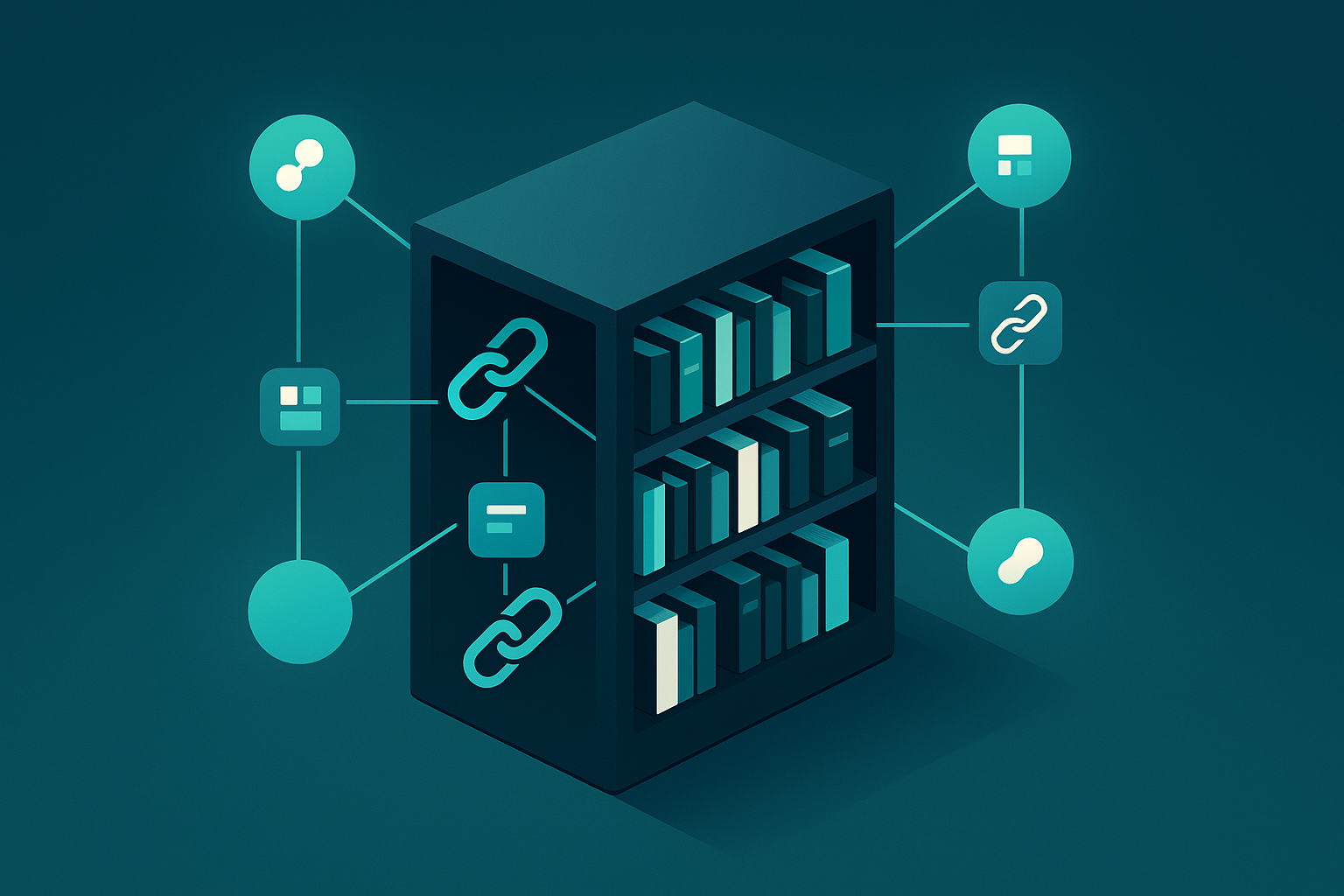
Scraped datasets fail in LLM environments for one recurring reason: provenance is missing at the row level. LLMs can’t confidently attribute a fact to your dataset landing page if the dataset itself doesn’t preserve where the fact came from.
Provenance fields to include in scraped datasets
At minimum, embed these fields in every row (or every entity record):
- source_url (the exact page)
- retrieved_at (timestamp)
- publisher (normalized domain / org)
- license_or_terms_hint (what you believe governs reuse; link to terms if applicable)
- transformation_notes (e.g., “currency converted using X,” “deduped by Y rule”)
- dataset_version (semantic versioning)
This is not bureaucracy—this is citation fuel. When an LLM (or retrieval system) sees a clean landing page plus a dataset with explicit provenance, it has a single, stable thing to cite.
:::
Publishing formats that improve citation pickup (HTML tables, CSV, JSON, schema)
A pragmatic publishing stack that tends to work:
- a human-readable landing page with a short definition + top-line table
- a download section with CSV and JSON
- consistent headings and field names
- optional structured data (where appropriate) to describe dataset metadata
Google’s AI Mode is designed to provide AI-powered responses with follow-up questions and helpful web links; Google also describes AI Mode’s “query fan-out” approach that runs multiple related searches to assemble responses. Structuring your dataset pages for machine parsing is increasingly aligned with how answers are assembled. (blog.google)
Internal linking and canonicalization to prevent citation dilution
If the same dataset is reachable via multiple URLs, citations and references may be split across those URLs; using a single canonical URL can reduce fragmentation.
Actionable recommendation: Publish one canonical dataset URL per topic, enforce canonical tags, and maintain a changelog. Then expose the dataset through stable, versioned download links. Treat provenance completeness as a KPI (score each dataset 0–10). Track whether higher scores correlate with more citations in your monitoring set.
Bridging to traditional rankings: aligning citation optimization with SEO fundamentals

The temptation is to treat “being cited” as a separate, shiny discipline. The better executive posture: citation readiness is an E‑E‑A‑T amplifier—if you implement it correctly.
E‑E‑A‑T signals that translate into citations
Even in the SEJ-reported gap, trust still matters. Clear authorship, editorial standards, and update cadence reduce the risk that an LLM will avoid your source.
On-page structures that serve both SERPs and LLMs
Design pages so both systems can lift content cleanly:
- definition block near the top
- “key takeaways” bullets that don’t require context
- labeled sections with consistent terminology
- reference list with outbound citations where appropriate
Avoiding conflicts: duplicate pages, thin summaries, and over-aggregation
Programmatic pages can backfire if they become thin wrappers around scraped data. LLMs may still cite you, but Google may demote you—reducing overall discoverability, including in Perplexity (which the SEJ data suggests is more Google-overlap sensitive than other LLMs). (searchenginejournal.com)
Actionable recommendation: Consolidate near-duplicate dataset pages into fewer, stronger canonical hubs. If you must create variants (regions, segments), ensure each variant has unique analysis, methodology notes, and a distinct top-line table.
:::
Measurement and monitoring: how to track LLM citations as a new visibility metric

Build a repeatable citation monitoring workflow
A lightweight workflow that works in practice:
- 2Define a stable prompt set (25–100 queries)
- 4Test across environments (e.g., Perplexity + Gemini + ChatGPT)
- 6Log: cited domains, cited URLs, and whether your canonical URL was used
- 8Re-run weekly and flag deltas
This becomes more urgent as distribution shifts into AI-native surfaces. Perplexity’s Comet browser, for example, bakes AI assistance into browsing—summarizing pages and automating tasks—meaning citations may increasingly happen inside the browser workflow, not just in a search UI. (nogood.io)
KPIs: citation share, citation quality, and URL consolidation
Track three executive-friendly metrics:
- Citation share: % of prompts where your brand/domain is cited
- Citation quality: are you cited for core facts or incidental mentions?
- URL consolidation: % of citations pointing to your canonical dataset/page
Expert insights: what to ask SEO and data provenance specialists
Two questions to operationalize immediately:
- To SEO lead: “Which 10 pages can we restructure to maximize extractable facts without creating thin content?”
- To data governance/provenance owner: “Can we trace every published metric back to a URL + retrieval timestamp + transformation rule?”
Actionable recommendation: Build a “citation dashboard” that pairs weekly LLM citations per URL with the same URL’s Google top-10 visibility. Use it to identify pages that are citation-strong but rank-weak (SEO opportunity) and rank-strong but citation-weak (structure/provenance opportunity). For implementation patterns that start with retrieval, our comprehensive guide to Perplexity’s Search API is the best on-ramp.
Key Takeaways
- LLM citations function like embedded endorsements, not rankings: they’re attached to claims inside synthesized answers, so “position tracking” alone won’t explain visibility.
- The Google–LLM source gap is measurable: the SEJ-reported matched-query analysis (18,377 queries) shows LLM-cited sources often diverge from Google’s results. (searchenginejournal.com)
- Perplexity appears more Google-overlap sensitive than ChatGPT: Perplexity’s median domain overlap (~25–30%) is materially higher than ChatGPT’s (~10–15%), implying different levers by platform. (searchenginejournal.com)
- Citation readiness is often blocked by access issues: unstable URLs, soft paywalls, and PDF-only publishing can prevent consistent retrieval—and therefore citation.
- “Extractable facts” increase citation likelihood: definition blocks, labeled tables, and explicit methodology make it easier to quote accurately without context loss.
- Row-level provenance turns scraped data into cite-able assets: source_url + retrieved_at + transformation_notes + versioning reduce ambiguity and give systems a stable object to cite.
- Canonicalization is a citation KPI: multiple URLs for the same dataset can fragment citations (“citation dilution”), weakening authority signals across LLMs and search.
FAQ
Do LLM citations come from the top Google results?
Not reliably. A large matched-query analysis reported by Search Engine Journal found substantial divergence, with Perplexity closer to Google than ChatGPT or Gemini. (searchenginejournal.com)
How can scraped datasets be published so LLMs can cite them correctly?
Publish a canonical landing page plus machine-friendly downloads, and embed row-level provenance (source URL, retrieval timestamp, versioning, transformation notes). This creates a single stable object to cite.
What page elements increase the chance an LLM will cite my site?
Accessible pages with stable URLs, definition blocks, labeled tables, and explicit methodology/reference sections—i.e., content that can be quoted precisely without context loss.
How do I track and measure LLM citations over time?
Use a fixed prompt set, test across multiple LLM environments weekly, and log cited domains/URLs. Track citation share, citation quality, and canonical URL consolidation.
Can optimizing for LLM citations hurt my traditional SEO rankings?
Yes—if you generate thin, duplicative programmatic pages or fragment canonical URLs. Consolidation and unique analysis reduce that risk, and Perplexity’s higher overlap with Google makes this especially relevant. (searchenginejournal.com)

Founder of Geol.ai
Senior builder at the intersection of AI, search, and blockchain. I design and ship agentic systems that automate complex business workflows. On the search side, I’m at the forefront of GEO/AEO (AI SEO), where retrieval, structured data, and entity authority map directly to AI answers and revenue. I’ve authored a whitepaper on this space and road-test ideas currently in production. On the infrastructure side, I integrate LLM pipelines (RAG, vector search, tool calling), data connectors (CRM/ERP/Ads), and observability so teams can trust automation at scale. In crypto, I implement alternative payment rails (on-chain + off-ramp orchestration, stable-value flows, compliance gating) to reduce fees and settlement times versus traditional processors and legacy financial institutions. A true Bitcoin treasury advocate. 18+ years of web dev, SEO, and PPC give me the full stack—from growth strategy to code. I’m hands-on (Vibe coding on Replit/Codex/Cursor) and pragmatic: ship fast, measure impact, iterate. Focus areas: AI workflow automation • GEO/AEO strategy • AI content/retrieval architecture • Data pipelines • On-chain payments • Product-led growth for AI systems Let’s talk if you want: to automate a revenue workflow, make your site/brand “answer-ready” for AI, or stand up crypto payments without breaking compliance or UX.
Related Articles

Google's 'AI Mode' in Search: A Paradigm Shift for SEO Strategies
Learn how Google’s AI Mode changes SERP visibility and what SEOs should do now: optimize entities, citations, and structured data for AI answers.

Perplexity's Search API: A New Contender Against Google's Dominance (Complete Guide to AI Data Scraping)
Explore Perplexity’s Search API for AI data scraping: features, pricing, legality, architecture, quality, benchmarks, and best practices vs Google.