SelfCite: Enhancing LLM Citation Accuracy Through Self-Supervised Learning
Learn how SelfCite improves LLM citation accuracy using self-supervised training—reducing hallucinated sources and strengthening AI data scraping workflows.
Citation quality is no longer a “nice-to-have” in AI data scraping—it’s becoming the product. As answer engines and scraping-driven RAG systems move from research tooling into revenue-critical workflows ([search], shopping, competitive intel, market monitoring), the weakest link is often the same: the model’s citations don’t reliably prove what the model just claimed.
SelfCite is a pragmatic response to that gap: a self-supervised technique that trains (and can also guide at inference time) an LLM to produce fine-grained, verifiable citations without depending on expensive human labeling. (arxiv.org)
For teams evaluating Perplexity-style “answer engines” and Search APIs, SelfCite is best understood as the missing layer between “retrieval happened” and “auditability exists.” (For the broader platform, pricing, and legal landscape around Perplexity’s Search API, see our comprehensive guide to Perplexity’s Search API for AI data scraping.)
What SelfCite Is (and Why Citation Accuracy Breaks in Scraped-Data Pipelines)
Definition: Self-supervised citation verification for LLM outputs
SelfCite (“Self-Supervised Alignment for Context Attribution”) is an approach that aligns LLMs to generate sentence-level citations by using a self-generated reward signal based on context ablation: if a citation is truly necessary/sufficient, removing the cited text should change the model’s ability to reproduce the answer; keeping only the cited text should preserve it. (arxiv.org)
This matters because it reframes citation from “formatting” to causal evidence dependency—a much higher bar than “the URL looks plausible.”
:::
Where citations fail: retrieval gaps, formatting drift, and source mismatch
In real scraping + RAG pipelines, citation failure usually isn’t one bug—it’s a chain reaction:
- Retrieval gaps: the right page exists, but you didn’t fetch it (or you fetched it yesterday and it changed today).
- Chunking/ID drift: the model cites the right document but the wrong section because chunk boundaries moved after re-scrape.
- Source mismatch: the model cites a URL that is topically related but does not entail the claim (the most common “looks right” failure).
- Attribution laundering: the model cites a reputable domain while the actual supporting statement came from a lower-quality mirror or SEO page.
SelfCite targets the third and fourth issues directly—support vs. plausibility—and indirectly pressures better engineering discipline around the first two.
Why this matters for AI data scraping: auditability and compliance
Citation accuracy is now tied to legal and reputational exposure, not just UX. Reddit’s lawsuit against Perplexity and others explicitly frames “industrial-scale” scraping and downstream commercial use as a contested battleground, including claims about bypassing protections and sourcing content indirectly via search results. (apnews.com)
Even if your company isn’t the one scraping at that scale, your outputs can still become discoverable evidence of weak provenance: a wrong citation can look like misattribution, and misattribution can look like misconduct.
Actionable recommendation: Treat citation accuracy as a governance KPI, not a model KPI. Put it on the same dashboard as crawl scope, dedupe rate, and retrieval coverage—and define “citation failure” as an incident class for high-risk categories.
:::
How Self-Supervised Learning Can Train Better Citations (SelfCite Mechanism)
Self-supervised signals: entailment, span grounding, and negative sampling
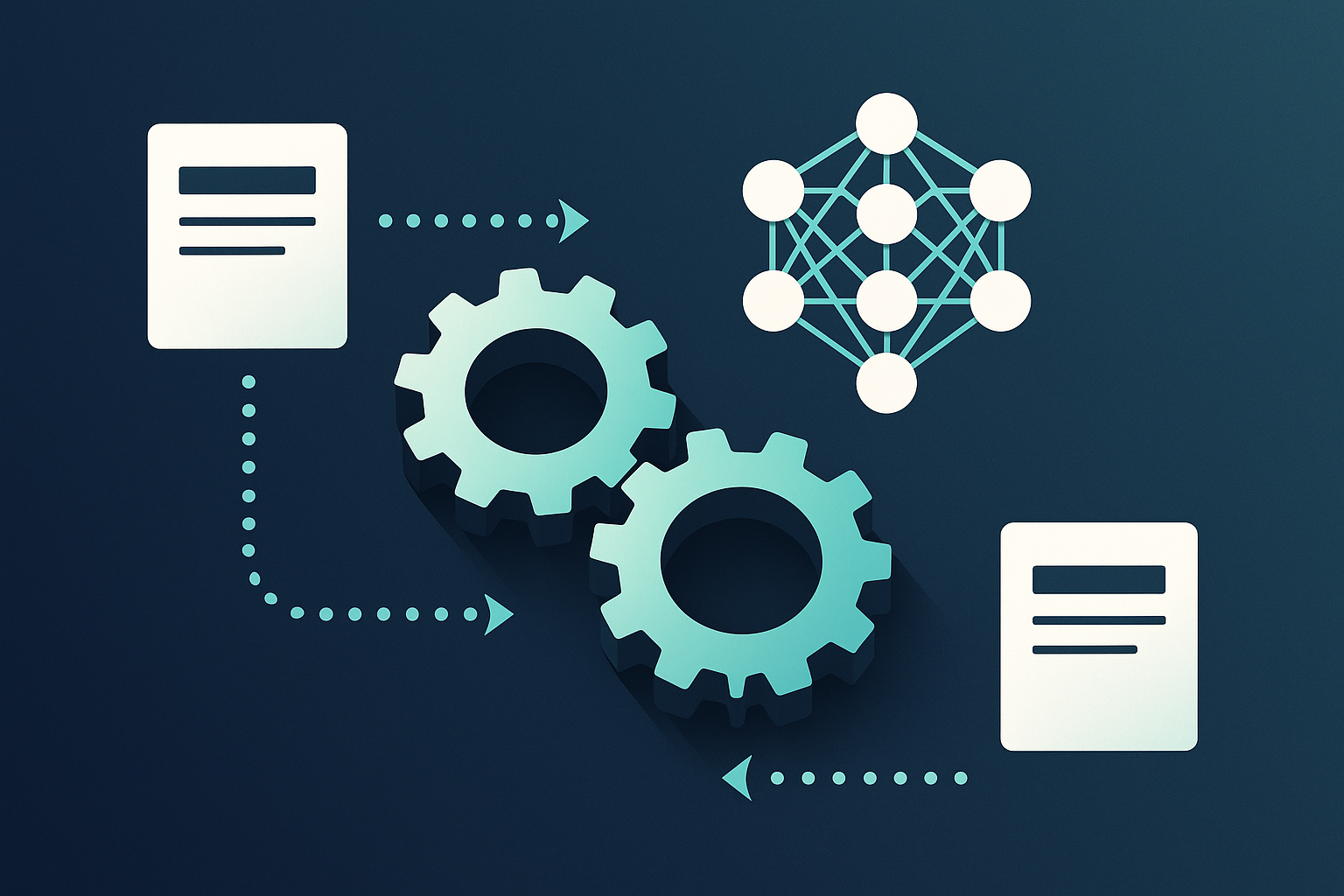
SelfCite’s key move is using the model itself to generate a training signal through context ablation—a form of self-supervision that reduces reliance on human-annotated citation datasets. (arxiv.org)
In practice, teams can extend this with two additional self-supervised ingredients:
- Span grounding: require the model to point to which chunk(s) support each sentence.
- Hard negatives: deliberately include near-miss chunks (similar topic, wrong claim) to teach discrimination.
This is where most citation systems fail today: they reward “found something related,” not “proved the statement.”
Training loop: generate → verify → revise citations
A practical SelfCite-style loop for scraped-data RAG looks like this:
SelfCite shows that this can be used both for inference-time best-of-N sampling and for preference optimization fine-tuning to improve citation quality. (arxiv.org)
What “citation accuracy” should mean: claim-level vs document-level
Executives often get misled by a vanity metric: “the answer includes links.” What you actually want is:
| Metric | What it means | How to compute (scraped corpora) |
|---|---|---|
| Citation precision | Cited sources truly support the claim | Claim-level entailment vs cited chunk(s) |
| Citation recall | Supported claims are cited | % sentences with evidence above threshold that include citations |
| Citation localization | Correct section/chunk, not just domain | Chunk-ID match + snippet overlap |
SelfCite reports citation F1 gains up to 5.3 points on LongBench-Cite across five long-form QA tasks—useful as directional evidence that “citation alignment” can be improved without gold labels. (arxiv.org)
**What to measure (so “links included” doesn’t become your KPI)**
- Up to +5.3 citation F1 (LongBench-Cite): Evidence that self-supervised citation alignment can move the needle without gold citation labels. (arxiv.org)
- Claim-level precision over URL-level presence: A sentence can include a reputable URL and still be unsupported; precision forces “support vs. plausibility.”
- Localization (chunk/section correctness): In scraped corpora, “right domain, wrong chunk” is a common failure mode—especially after re-scrapes and re-chunking.
Actionable recommendation: Stop evaluating citations at the URL level. Move to sentence-level, chunk-ID-level scoring, and require localization for any claim that could trigger legal/compliance review.
:::
Implementation Blueprint: Adding SelfCite to an AI Data Scraping + RAG Stack
Pipeline placement: after retrieval, before final answer
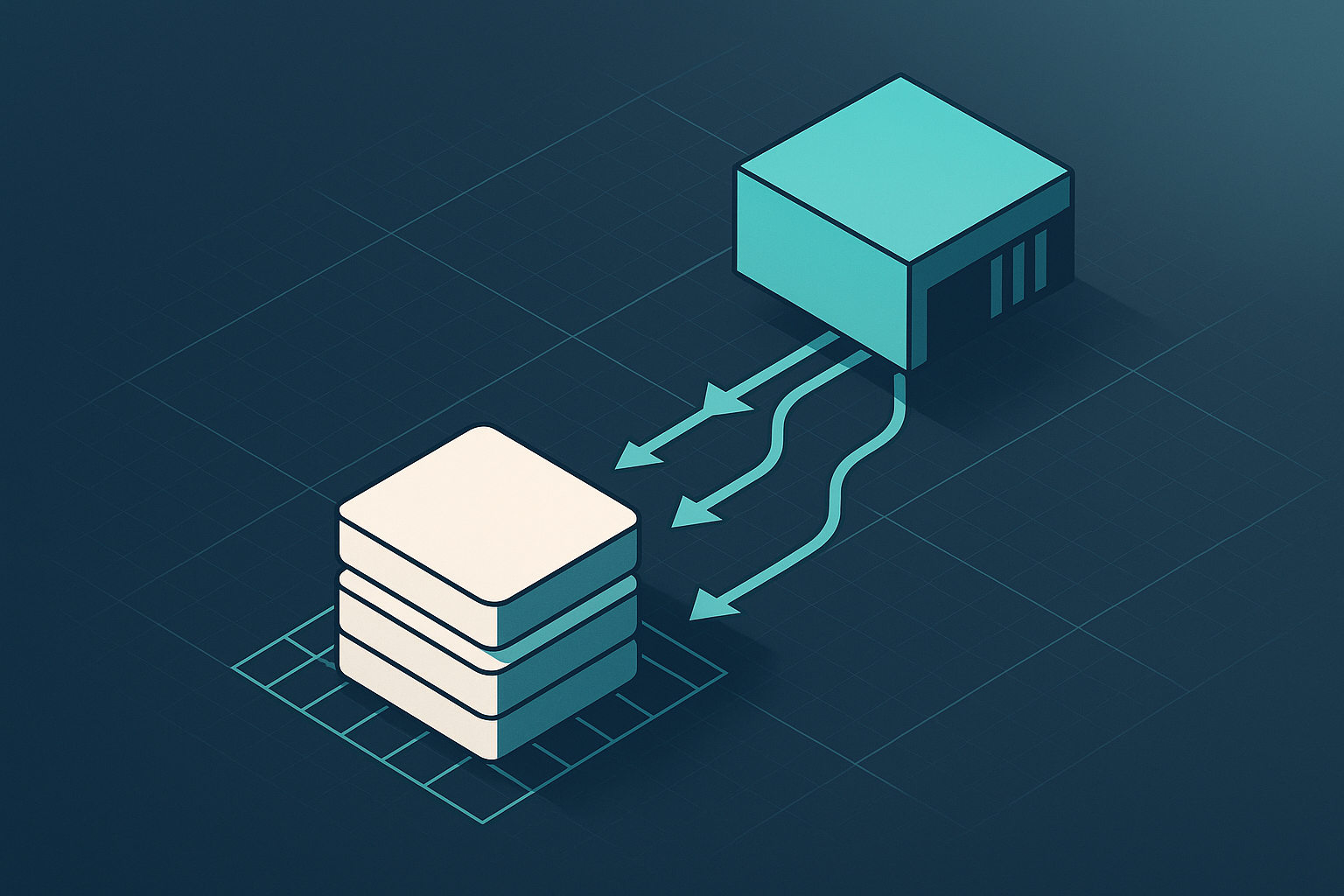
The highest-ROI placement is post-retrieval, pre-response:
scrape → clean/dedupe → chunk → embed/index → retrieve → draft → SelfCite verify/revise → publish
This keeps SelfCite focused: it’s not a crawler, not a retriever—it’s a claim-to-evidence auditor.
If you’re building on Perplexity-like answer infrastructure, this layer is what turns “answers with sources” into “answers you can defend.” (This complements our comprehensive guide to Perplexity’s Search API for AI data scraping, which covers broader architectural choices and benchmarking.)
Data requirements: scraped page snapshots, passage chunking, and stable IDs
SelfCite only works if your evidence objects are stable. Minimum viable data model:
- Raw HTML snapshot (or rendered text) stored with a hash
- Canonical URL + fetch timestamp
- Chunk IDs that persist across reprocessing (or a mapping layer)
- Normalization rules (boilerplate removal, dedupe fingerprints)
This directly reduces “citation rot,” where a citation was correct at generation time but becomes unverifiable later.
Evaluation harness: automated checks + spot human audits
A lightweight harness should include:
- Link validation (HTTP status, redirects, canonicalization)
- Chunk existence checks (chunk ID referenced must exist in snapshot)
- Grounding tests (entailment/ablation score above threshold)
- Stratified human audits (high-stakes topics, long-tail queries, new domains)
Actionable recommendation: Build a “citation gate” in CI/CD: any release that drops citation precision (claim-level) below threshold fails—just like a security regression.
:::comparison
:::
✓ Do's
- Require stored snapshots + fetch timestamps so citations remain reproducible after pages change.
- Score citations at sentence-level with chunk IDs, not just “has a URL.”
- Use a verify/revise/abstain loop so unsupported claims get downgraded instead of “source-washed.”
✕ Don'ts
- Don’t treat citation as a formatting problem (“add links at the end”) when the real issue is evidence dependency.
- Don’t accept “topically related” sources as support; that’s the core source mismatch failure mode.
- Don’t re-chunk/re-scrape without a stable ID strategy—it turns correct citations into broken ones (“citation rot”). :::
Custom Visualization: SelfCite Verification Loop (Diagram) + What to Measure

Diagram: draft → evidence check → citation repair → final answer
Your custom diagram should show artifacts, not just arrows:
- Draft answer (sentences labeled S1…Sn)
- Retrieved evidence set (chunks C1…Cm with IDs)
- Candidate citations per sentence
- Verification decision (supported / unsupported / ambiguous)
- Revised answer + revised citations
- Audit log (what changed, why, confidence)
This makes SelfCite legible to non-ML stakeholders: it’s a control system, not a “model improvement.”
Measurement points: where errors are introduced and caught
Map each stage to a metric:
- Retrieval: coverage rate (% queries with at least K high-similarity chunks)
- Grounding: supported-sentence rate
- Citation: precision / localization
- SelfCite impact: revision rate (% sentences changed, % citations swapped)
A funnel view is especially executive-friendly:
% queries with sufficient retrieval → % answers fully grounded → % citations verified
Expert quote opportunities: what “good citations” look like in practice
Two quote prompts worth sourcing internally (or from advisors):
- NLP research lead: “A citation is only useful if it’s counterfactual-sensitive—remove the evidence and the model can’t say the same thing.”
- Governance leader: “If we can’t reproduce the exact page state, we don’t have provenance—we have vibes.”
Actionable recommendation: Treat “revision rate” as a leading indicator. If SelfCite revises too often, retrieval/chunking is unstable; if it revises too rarely, your verifier is too weak.
Limitations and Guardrails for SelfCite in Scraping Contexts

When SelfCite won’t help: missing evidence and low-quality sources
SelfCite cannot create evidence. If your retrieval didn’t capture the relevant page—or your scraped corpus is thin—SelfCite will either fail silently or (worse) overfit to weak support.
This is where many teams get the causality backwards: they blame the model for hallucinated citations when the real issue is coverage.
Adversarial or ambiguous pages: near-duplicate content and SEO spam
Scraped corpora are full of traps:
- Near-duplicate republishers that change one sentence
- SEO pages that paraphrase without primary sourcing
- Dynamic pages where the “same URL” serves different content
This is not hypothetical. The commercial incentives around answer engines are accelerating (e.g., Perplexity’s in-app shopping and “Instant Buy” flow via PayPal), which increases the stakes of citation errors in monetized contexts—wrong attribution can become a customer harm issue, not just a trust issue. (tomsguide.com)
Guardrails: confidence thresholds, abstentions, and citation formatting standards
Implement guardrails that force epistemic humility:
- Minimum evidence threshold per sentence (no threshold, no claim)
- Mandatory citations for regulated/high-stakes assertions
- Abstention policy (“insufficient evidence in retrieved sources”)
- Citation schema standard: URL + title + fetch date + chunk ID + snippet
Finally, connect guardrails to your legal posture. Reddit’s framing of “industrial-scale” scraping and the broader disputes around content rights mean your organization should assume provenance will be challenged—by platforms, publishers, or regulators. (apnews.com)
Actionable recommendation: Adopt a “defensible citation” standard: every high-stakes sentence must be reproducible from a stored snapshot and localized to a chunk ID. If not, the system must abstain or downgrade the claim.
:::
FAQs
What is SelfCite in LLMs?
A self-supervised approach that aligns LLMs to produce higher-quality, sentence-level citations using a reward signal based on context ablation. (arxiv.org)
How does self-supervised learning improve citation accuracy?
By generating synthetic supervision signals (e.g., “remove cited text and see if the answer still holds”), reducing dependence on human-labeled citation datasets. (arxiv.org)
Can SelfCite prevent hallucinated citations in RAG systems?
It can materially reduce unsupported citations, but it cannot fix missing retrieval or low-quality sources; it needs strong evidence inputs and stable chunking.
What metrics should I use to evaluate citation accuracy for scraped data?
Claim-level citation precision, citation recall, and citation localization (chunk/section correctness), plus operational metrics like link-rot rate and reproducibility from stored snapshots.
Do I need human labeling to train a SelfCite-style citation verifier?
Not necessarily—SelfCite is designed to reduce reliance on human labels via self-supervised signals, though targeted human audits remain essential for governance and calibration. (arxiv.org)
Key Takeaways
- SelfCite reframes citation as causal dependency: A “good” citation is one the model actually needs to produce the claim under context ablation—not just a plausible-looking link. (arxiv.org)
- Most real-world failures are “support vs. plausibility”: Source mismatch and attribution laundering are common in scraped-data pipelines, even when retrieval “worked.”
- Measure citations at the claim + chunk level: URL-level evaluation is a vanity metric; localization (chunk/section correctness) is what makes citations auditable.
- Put SelfCite post-retrieval, pre-response: Treat it as a claim-to-evidence auditor that verifies, revises, or forces abstention before publishing.
- Stability is a prerequisite: Snapshots, timestamps, and stable chunk IDs reduce citation rot and make verification reproducible.
- Governance pressure is rising: In a landscape where scraping provenance is contested, weak citations can become legal/reputational exposure—not just a UX defect. (apnews.com)
If you’re evaluating Perplexity-style retrieval as an input layer, SelfCite is the discipline that makes outputs auditable. For the broader competitive and operational context—where Perplexity fits, what “AI scraping” really means in 2025, and how to architect the full pipeline—refer back to our comprehensive guide to Perplexity’s Search API for AI data scraping.

Founder of Geol.ai
Senior builder at the intersection of AI, search, and blockchain. I design and ship agentic systems that automate complex business workflows. On the search side, I’m at the forefront of GEO/AEO (AI SEO), where retrieval, structured data, and entity authority map directly to AI answers and revenue. I’ve authored a whitepaper on this space and road-test ideas currently in production. On the infrastructure side, I integrate LLM pipelines (RAG, vector search, tool calling), data connectors (CRM/ERP/Ads), and observability so teams can trust automation at scale. In crypto, I implement alternative payment rails (on-chain + off-ramp orchestration, stable-value flows, compliance gating) to reduce fees and settlement times versus traditional processors and legacy financial institutions. A true Bitcoin treasury advocate. 18+ years of web dev, SEO, and PPC give me the full stack—from growth strategy to code. I’m hands-on (Vibe coding on Replit/Codex/Cursor) and pragmatic: ship fast, measure impact, iterate. Focus areas: AI workflow automation • GEO/AEO strategy • AI content/retrieval architecture • Data pipelines • On-chain payments • Product-led growth for AI systems Let’s talk if you want: to automate a revenue workflow, make your site/brand “answer-ready” for AI, or stand up crypto payments without breaking compliance or UX.
Related Articles

Google's 'AI Mode' in Search: A Paradigm Shift for SEO Strategies
Learn how Google’s AI Mode changes SERP visibility and what SEOs should do now: optimize entities, citations, and structured data for AI answers.

LLMs' Citation Practices: Bridging the Gap Between AI Answers and Traditional Search Rankings
Learn how LLM citation behavior differs from Google rankings and how to structure scraped, source-rich data so your brand is cited in AI answers.