The Model Context Protocol (MCP): Standardizing AI Integration for Data Scraping Workflows Across Platforms
Learn how the Model Context Protocol (MCP) standardizes AI-to-tool connections for scraping workflows, improving portability, governance, and reliability.
AI-powered search is fragmenting into an ecosystem of search-as-a-service providers (e.g., Perplexity’s Sonar) and conversational search experiences (e.g., OpenAI’s SearchGPT prototypes and Google’s emerging “AI Mode”). (techcrunch.com) In that environment, the strategic question for scraping teams isn’t just “Which API is best?”—it’s “How do we avoid rebuilding integrations every time the model, agent framework, or search provider changes?”
That’s where Model Context Protocol (MCP) earns executive attention: it turns tool access into an enterprise standard rather than a per-project workaround. And it’s the missing layer between “we can call a [search] API” and “we can operationalize AI scraping across teams with auditability.”
You’ll see Perplexity’s Search API positioned in our comprehensive guide on AI data scraping; this spoke goes deeper on MCP as the integration standard that keeps those search/data tools portable and governable across platforms. (See our comprehensive guide to Perplexity’s Search API and AI scraping for provider comparisons and benchmarks.)
What is the Model Context Protocol (MCP) and why it matters for scraping teams
Featured snippet: MCP definition in 2–3 sentences
Model Context Protocol (MCP) is a standardized way for AI models/agents to discover and use external tools and data sources through a consistent interface. It formalizes “what tools exist, what they do, what inputs they accept, and what outputs they return,” so AI systems can plug into real-world capabilities without bespoke glue code. (en.wikipedia.org)
How MCP differs from one-off plugin integrations
Most “agent tool” integrations today are effectively one-off plugins: tightly coupled to a specific agent framework, prompt format, auth method, and tool schema. When you change any variable—LLM provider, orchestrator, proxy vendor, or extraction library—you pay the integration tax again.
MCP’s contrarian value proposition is that it’s not about making agents smarter. It’s about making tooling boring—repeatable, standardized, and transferrable. That’s the difference between a demo and a durable scraping capability.
Where MCP fits in a modern AI scraping stack (LLM + tools + data)
In practice, MCP sits at the boundary where the agent stops “thinking” and starts “doing”:
- LLM/agent runtime decides what to do next.
- MCP tool gateway defines how to do it (contracts, schemas, permissions).
- Scraping/extraction services perform the work (fetch, browser, parse, validate, store).
This matters even more as search becomes API-embedded. Perplexity’s Sonar is explicitly positioned as an API to embed “generative AI search” with real-time web information and citations into applications. (techcrunch.com) OpenAI’s SearchGPT prototype similarly frames “timely answers” sourced from the web with attribution and follow-ups. (techcrunch.com) If your “scraping” increasingly begins with an AI search call, your integration layer becomes the long pole.
Integration overhead: what MCP is trying to delete (table)
Below is a realistic order-of-magnitude view of why teams feel constant integration drag (not a universal benchmark—use it to baseline your own environment).
| Maintenance task (custom connectors) | Typical trigger | Frequency (per connector) | Why it’s costly |
|---|---|---|---|
| Auth refresh / token flow changes | Provider security update | Quarterly | Breaks production silently; hard to test end-to-end |
| Schema drift (inputs/outputs) | Model/tool version update | Monthly | Agents fail at runtime from mismatched fields |
| Rate-limit tuning | Traffic growth / anti-bot changes | Weekly | Requires per-tool logic; inconsistent behavior across teams |
| Logging/audit retrofits | Compliance request / incident | Ad hoc | Usually bolted on late; incomplete data |
| Provider swap (search/proxy/browser) | Cost/perf/legal shift | 1–2×/year | Rebuilds glue code, QA, and runbooks |
Actionable recommendation: Quantify your own “connector tax” in engineering hours per quarter. If it’s non-trivial, MCP is a cost-control lever—not a developer toy.
How MCP enables portable AI scraping workflows across platforms
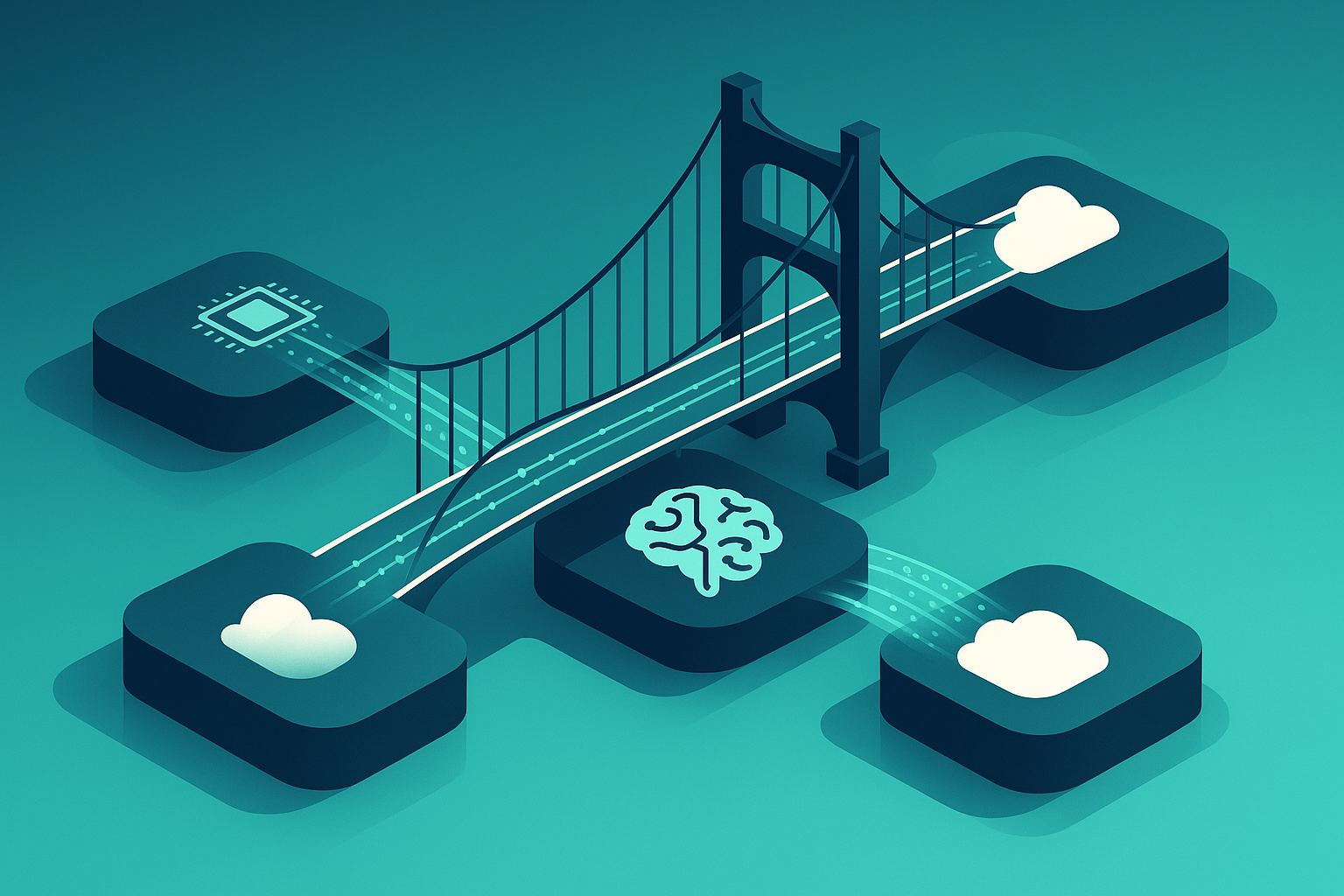
Tool discovery and capability descriptions (what an agent can do)
MCP standardizes how tools are described and discovered, which is more important than it sounds. In scraping, subtle capability differences matter: “fetch URL” vs “fetch with JS rendering,” “extract schema” vs “extract with confidence score,” “validate” vs “normalize + dedupe.”
Without a standard tool description layer, agents hallucinate capabilities or call tools incorrectly—creating reliability issues that look like “LLM problems” but are actually contract problems.
Consistent inputs/outputs for scraping steps (fetch, parse, extract, validate)
A portable workflow becomes feasible when every step has:
- a stable schema,
- predictable error modes,
- and machine-readable metadata.
A representative MCP-driven scraping workflow:
This structure is what lets you swap “Perplexity Sonar for discovery” or “SearchGPT-like search entry points” without rewriting the rest of the pipeline. (Our comprehensive guide covers how Perplexity’s Search API fits into end-to-end scraping architectures.)
Swapping LLMs or agent frameworks without rewriting connectors
The executive-level payoff: vendor optionality.
- Perplexity’s Sonar offers two tiers (Sonar and Sonar Pro) and positions itself as a low-cost search API option. (techcrunch.com)
- OpenAI’s SearchGPT is explicitly a prototype with plans to integrate features into ChatGPT over time. (techcrunch.com)
- Google is reportedly exploring an “AI Mode” tab for conversational answers in Search, implying ongoing UX and API surface evolution. (pymnts.com)
In a market where product surfaces are changing, MCP is your insulation layer.
Actionable recommendation: Build a “provider swap drill.” Pick one workflow (e.g., lead-gen SERP discovery → extraction) and measure how many code changes it takes to move between two agent runtimes with MCP vs without it.
Governance and compliance benefits: auditing AI tool use in data collection
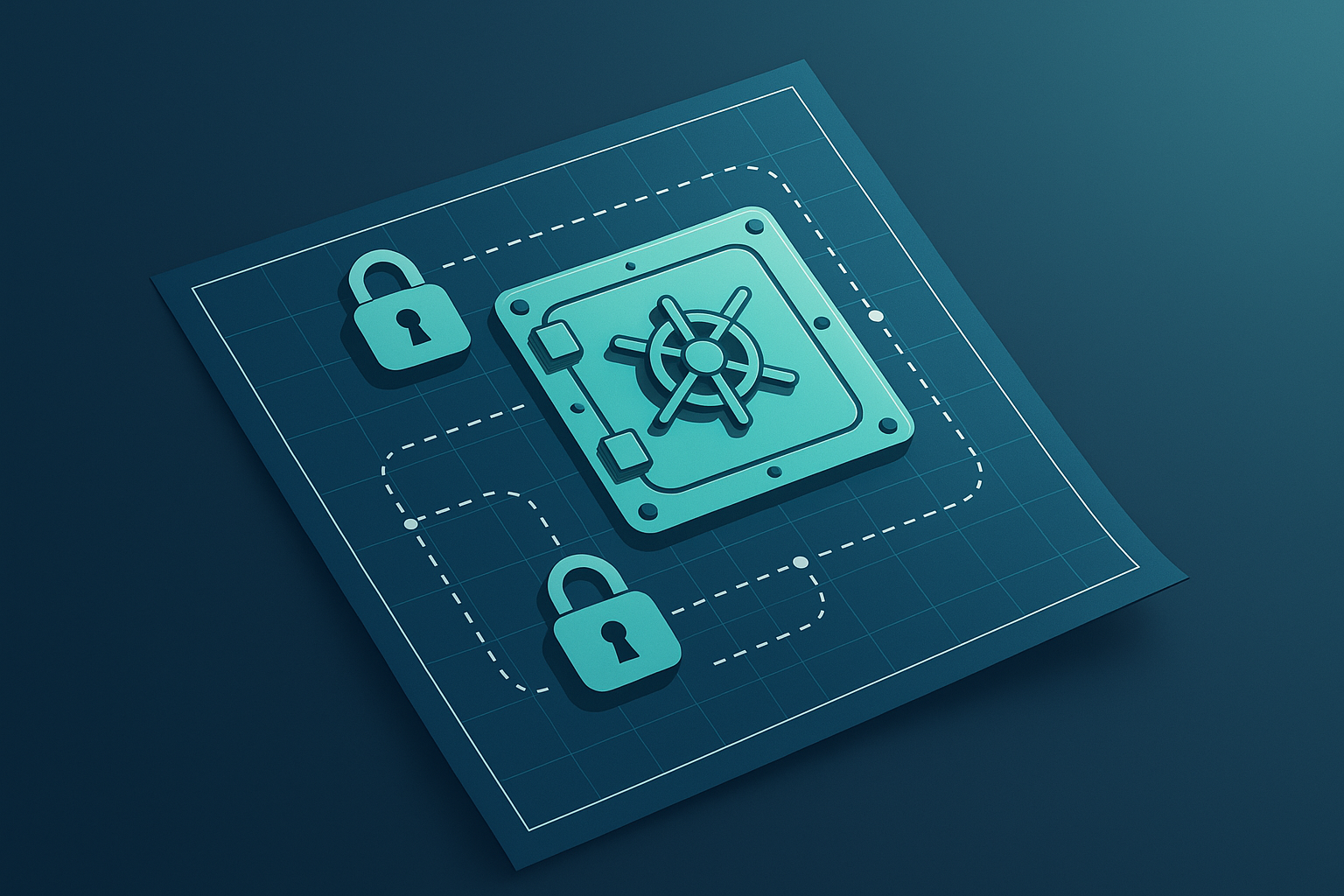
Centralized policy enforcement (auth, rate limits, allowed domains)
Scraping compliance fails most often due to inconsistency: one team respects robots.txt and rate limits; another bypasses them “temporarily”; a third stores raw pages longer than policy allows.
MCP can function as a control point where you enforce:
- domain allow/deny lists,
- rate limits and concurrency ceilings,
- PII redaction rules,
- and approved egress paths (proxy pools, regions).
This is especially relevant as conversational search expands. OpenAI’s SearchGPT support materials note that some searches consider location and that general location info may be shared with third-party search providers to improve accuracy. (techcrunch.com) That’s a governance issue: location handling needs policy, not prompt suggestions.
Audit trails for tool calls and data access
The most underappreciated MCP advantage is standardized logging: every tool call can be recorded with consistent fields (who/what/when/inputs/outputs/errors). That’s the difference between “we think the agent did X” and “we can prove it.”
This becomes existential when AI search answers are criticized for inaccuracies. Google had to implement multiple fixes after AI-generated search summaries produced outlandish answers, underscoring that AI-mediated retrieval can fail in ways that look authoritative. (apnews.com) If you’re using AI to drive data collection decisions, you need post-hoc traceability.
Reducing risk in regulated or sensitive scraping contexts
MCP doesn’t magically make scraping legal or ethical. But it can make your enforcement consistent and provable—often the difference between passing and failing internal review.
Actionable recommendation: Require that 100% of scraping-related tool calls (fetch, browser, proxy, extraction, storage) go through the MCP gateway so you can measure log coverage and enforce policy centrally.
Implementation pattern for scraping: MCP server as a “tool gateway”
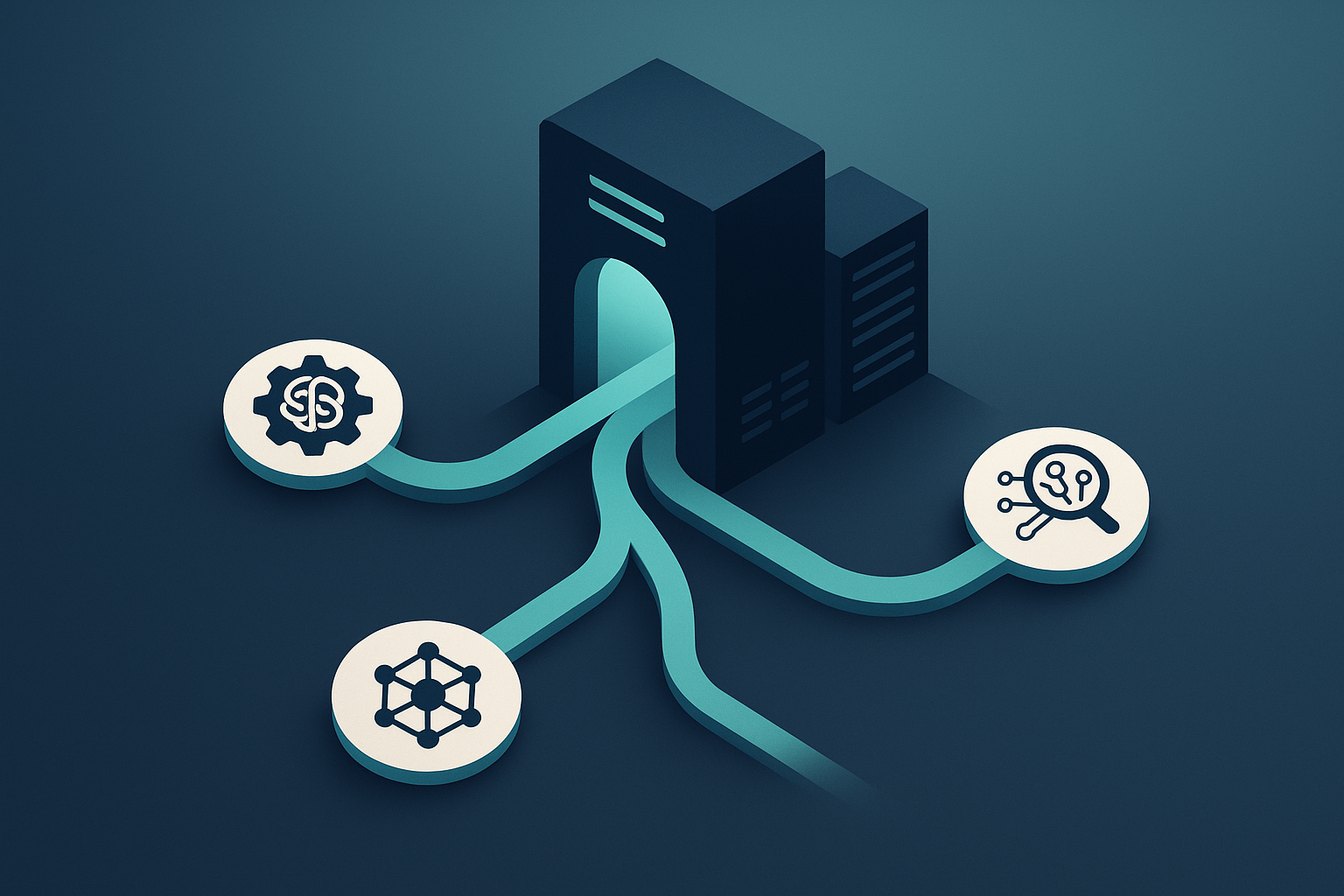
Reference architecture: agent client → MCP server → scraping services
The simplest production pattern is:
- Agent clients (internal apps, notebooks, IDE assistants) connect to
- MCP server (tool gateway) which routes to
- scraping services (fetch/render), extraction services, and data stores.
Wikipedia notes MCP’s goal of standardizing integration across platforms and mentions SDK availability and adoption in AI-assisted development contexts. (en.wikipedia.org) For scraping teams, the translation is straightforward: one gateway, many clients.
What to expose as MCP tools (HTTP fetcher, browser automation, extractor, deduper)
A minimal viable tool set that still supports real workflows:
- 2Fetcher (HTTP + caching + robots/rate policy)
- 4Renderer (headless browser for JS-heavy pages)
- 6Extractor (structured extraction to a schema)
- 8Validator/Normalizer (QA gates, dedupe, canonicalization)
- 10Writer (warehouse/object store write with idempotency)
This is deliberately not “everything.” MCP succeeds when tools are composable and stable, not when the gateway becomes a monolith.
Operational checklist: secrets, sandboxing, retries, and observability
Production MCP for scraping lives or dies on operational hygiene:
- Secrets: never expose proxy creds or API keys to the agent; keep them server-side.
- Sandboxing: restrict network egress; prevent arbitrary URL fetch without policy.
- Retries/backoff: standardize retry semantics by tool type (429 vs 5xx vs timeouts).
- Idempotency: every write should be replay-safe.
- Observability: track tool success rate, p95 latency, policy blocks, and cost per 1,000 pages.
Perplexity’s Sonar pricing model (per 1,000 searches plus token-like word pricing) is a reminder that “tool calls” have real unit economics. (techcrunch.com) Centralizing calls through MCP makes cost allocation and throttling feasible.
:::comparison :::
✓ Do's
- Instrument the MCP gateway like a product (SLOs, dashboards, error budgets) before expanding beyond fetch/render, as the article recommends.
- Keep secrets server-side so agent clients never see proxy credentials or API keys; broker access through the gateway and log usage.
- Standardize schemas and error modes for each scraping step (fetch → extract → validate → write) so provider swaps don’t cascade into rewrites.
✕ Don'ts
- Don’t let teams ship “temporary” direct-to-tool integrations that bypass the MCP gateway; it breaks audit coverage and policy enforcement.
- Don’t treat schema drift as an LLM quality problem when it’s often a contract problem (mismatched fields, undocumented tool changes).
- Don’t expand the gateway into a monolith by exposing everything at once; start with one stable tool (fetch) and build outward. :::
Actionable recommendation: Start with a single MCP “fetch” tool and instrument it like a product: SLOs, dashboards, and error budgets. Don’t roll out extraction tools until fetch is stable.
When MCP is (and isn’t) the right choice for AI scraping integration
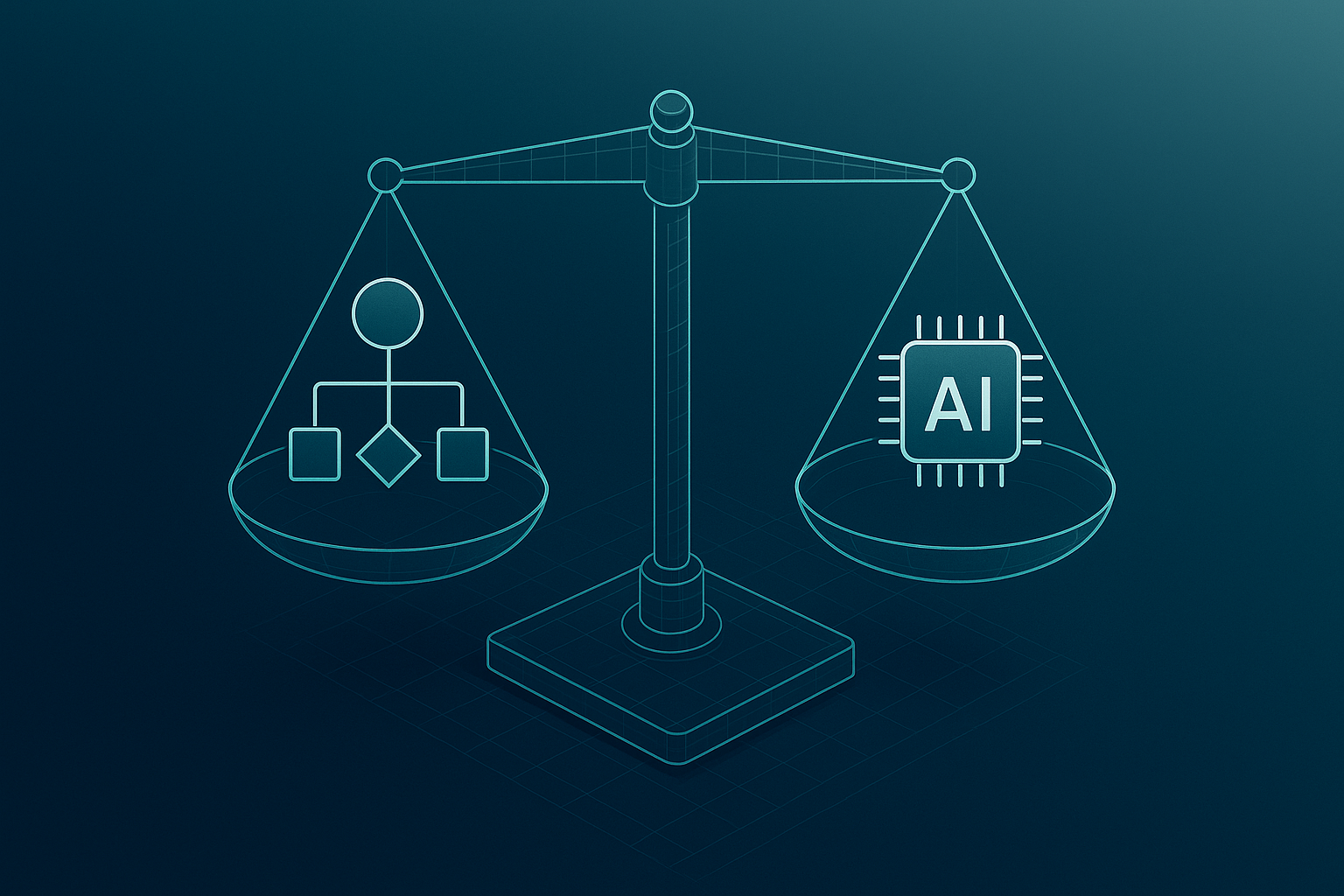
Best-fit scenarios (multi-team, multi-tool, multi-model environments)
MCP is highest ROI when you have:
- multiple teams shipping scraping workflows,
- more than one agent surface (chat, internal UI, pipelines),
- frequent provider churn (models, search APIs, proxy vendors),
- or meaningful compliance requirements.
Given the competitive pressure in AI search—Perplexity pushing Sonar as embeddable search, OpenAI prototyping SearchGPT, and Google moving toward conversational answers—churn is not hypothetical. (techcrunch.com)
Potential limitations (tooling maturity, security review, added layer)
MCP introduces a new layer you must own:
- versioning and schema governance,
- security review of tool exposure,
- and operational on-call for the gateway.
For a one-off script or a single analyst workflow, MCP can be overkill.
Pragmatic adoption roadmap (pilot → expand → standardize)
A practical rollout that avoids “platform theater”:
(For a broader view of where search APIs like Sonar fit into an AI scraping program, see our comprehensive guide.)
Actionable recommendation: Use a simple threshold rule: if you maintain 3+ scraping integrations or expect 2+ provider swaps per year, prioritize MCP now; otherwise, keep it on the roadmap.
FAQ
What is the Model Context Protocol (MCP) in simple terms?
A standard way for an AI agent to connect to tools/data with consistent schemas and discovery, so integrations are reusable across platforms. (en.wikipedia.org)
How does MCP help with AI-powered web scraping?
It makes scraping steps (fetch, render, extract, validate, store) portable and auditable, reducing brittle one-off connectors and improving governance.
Is MCP a replacement for scraping frameworks like Scrapy or Playwright?
No—those are execution frameworks. MCP is the interface layer that exposes those capabilities to agents reliably.
How do MCP servers handle authentication and secrets for scraping tools?
Best practice is server-side secret management: the agent never sees keys; the MCP gateway brokers access and logs usage.
What’s the difference between MCP and building a custom API for an AI agent?
A custom API solves one integration. MCP is intended to be a reusable standard across multiple tools, clients, and teams—reducing long-term integration debt. (en.wikipedia.org)
Key Takeaways
- MCP’s value is integration durability, not “smarter agents”: It standardizes tool discovery and contracts so scraping workflows survive model/provider churn.
- AI search fragmentation makes the integration layer the bottleneck: With Sonar, SearchGPT prototypes, and Google’s “AI Mode” evolving, portability becomes a strategic requirement. (techcrunch.com)
- Standard schemas reduce failures that masquerade as LLM issues: Many runtime breakdowns come from schema drift and mismatched tool expectations—not reasoning quality.
- Governance works best when centralized: MCP can enforce allow/deny lists, rate limits, egress constraints, and PII rules consistently across teams.
- Auditability is a first-class requirement for AI-mediated retrieval: Standardized tool-call logs provide post-hoc traceability when AI outputs are contested or wrong. (apnews.com)
- Adopt MCP incrementally: Start with a single “fetch” tool, operationalize it (SLOs/observability), then expand to extraction/validation once stable.

Founder of Geol.ai
Senior builder at the intersection of AI, search, and blockchain. I design and ship agentic systems that automate complex business workflows. On the search side, I’m at the forefront of GEO/AEO (AI SEO), where retrieval, structured data, and entity authority map directly to AI answers and revenue. I’ve authored a whitepaper on this space and road-test ideas currently in production. On the infrastructure side, I integrate LLM pipelines (RAG, vector search, tool calling), data connectors (CRM/ERP/Ads), and observability so teams can trust automation at scale. In crypto, I implement alternative payment rails (on-chain + off-ramp orchestration, stable-value flows, compliance gating) to reduce fees and settlement times versus traditional processors and legacy financial institutions. A true Bitcoin treasury advocate. 18+ years of web dev, SEO, and PPC give me the full stack—from growth strategy to code. I’m hands-on (Vibe coding on Replit/Codex/Cursor) and pragmatic: ship fast, measure impact, iterate. Focus areas: AI workflow automation • GEO/AEO strategy • AI content/retrieval architecture • Data pipelines • On-chain payments • Product-led growth for AI systems Let’s talk if you want: to automate a revenue workflow, make your site/brand “answer-ready” for AI, or stand up crypto payments without breaking compliance or UX.
Related Articles
Google's 'AI Mode' in Search: A Paradigm Shift for SEO Strategies
Learn how Google’s AI Mode changes SERP visibility and what SEOs should do now: optimize entities, citations, and structured data for AI answers.

LLMs' Citation Practices: Bridging the Gap Between AI Answers and Traditional Search Rankings
Learn how LLM citation behavior differs from Google rankings and how to structure scraped, source-rich data so your brand is cited in AI answers.