Google's Gemini 3.1 Pro: Redefining AI Search with 1M Token Context Windows (How to Adapt Your Knowledge Graph Strategy)
Learn how to adapt Knowledge Graph and structured data for Gemini 3.1 Pro’s 1M-token context—improve grounding, retrieval, and AI search visibility.

Google's Gemini 3.1 Pro: Redefining AI Search with 1M Token Context Windows (How to Adapt Your Knowledge Graph Strategy)
Gemini 3.1 Pro’s 1M-token context window changes AI search optimization from “rank a page” to “win the synthesis.” When an AI system can ingest far more surrounding material (docs, policies, changelogs, product catalogs, and third-party references), your visibility depends on whether your facts are (1) unambiguous at the entity level, (2) consistently identified across sources, and (3) packaged in citeable, provenance-rich formats. The practical adaptation is a Knowledge Graph strategy built for long-context retrieval: compact entity packets, stable IDs, explicit relationships, and structured data that matches what’s on the page—so the model can ground answers and attribute correctly.
Long-context systems can “see” more, but they can also merge more. If your entity IDs, naming, and relationship statements aren’t consistent, the model may blend near-duplicate entities or pick the wrong source. Treat every important concept as an entity with a stable identifier and provenance, not as a keyword on a page.
Prerequisites: What You Need Before Optimizing for 1M-Token AI Search
Before changing markup or publishing new “AI-friendly” pages, define what your system is optimizing toward: clear entity scope, complete structured data coverage, and measurable AI retrieval outcomes. This reduces ambiguity when Gemini-style systems synthesize across large contexts and multiple sources.
Define your Knowledge Graph scope (entities, relationships, sources)
- List your top entity types (products, people, orgs, locations, concepts) and the relationships that matter (e.g., worksFor, offers, isPartOf).
- Decide which sources are authoritative for each entity (primary site, docs, databases) to support grounding and reduce hallucinations in long-context prompts.
Inventory content + structured data coverage (Schema.org, feeds, APIs)
- Audit existing structured data and confirm entity IDs are stable (sameAs links, canonical URLs) to reduce ambiguity in long-context synthesis.
- Confirm that structured data reflects visible content (no “markup-only” facts). This is a common cause of mismatched extraction and trust downgrades.
Set up measurement for AI retrieval and citations
- Establish baselines: branded vs non-branded AI search visibility, citation frequency, and answer accuracy for priority queries.
- Track whether citations are real and correctly attributed—fabricated or misattributed citations are a known failure mode in LLM outputs (see “GhostCite” research). (Source)
| Baseline metric (20–50 target queries + key page set) | How to measure | Why it matters in 1M-token synthesis |
|---|---|---|
| Structured data coverage (% key pages with valid Schema.org) | Validator + crawl sample; count “valid items” / total key pages | More context increases collision risk; clean markup helps disambiguate entities and relationships. |
| Entity duplication rate (near-identical entities / total entities) | Cluster by canonical URL + name + external IDs; count duplicates | Long context makes it easier for models to “blend” duplicates into one incorrect entity. |
| AI citation share-of-voice (your domain cited / total citations) | Manual capture + automated logging of citations per query; normalize by query | AEO/GEO is increasingly about being the chosen evidence in multi-source answers. |
Industry coverage suggests Gemini’s large context can improve synthesis quality when the model has enough reliable evidence, but it also raises the bar for source clarity and grounding. (External perspective)
Step 1: Design a Long-Context-Friendly Knowledge Graph for Gemini-Style Retrieval
A Knowledge Graph that performs in long-context environments is less about “having triples” and more about making facts portable: every important claim should be attachable to an entity, backed by provenance, and easy to insert into a context window without duplicating fluff.
Model entities and typed relationships for AI content processing
- Use a consistent entity schema: entity type, attributes, provenance, and relationship edges with timestamps (e.g.,
Organization → offers → Product,Product → isPartOf → Suite). - Treat relationships as first-class objects when needed (edge-level provenance, start/end dates, confidence). This is crucial when models reconcile conflicting statements across sources.
Create “entity packets” for long-context ingestion
An entity packet is a compact, repeatable bundle you can publish (and internally reuse) so retrieval systems can pull high-signal facts without dragging entire pages into the context window.
- Definition (1–2 sentences) + canonical name + aliases
- Key facts (5–12 bullets) written as atomic, citeable claims
- Relationships (top edges only) + the “why it matters” context
- Citations: source URL(s), last updated date, and optional confidence score
Align identifiers across web pages, docs, and databases
- Normalize IDs: each entity resolves to one canonical URL and one internal ID; add sameAs links to authoritative external IDs (e.g., Wikidata, official registries) where appropriate.
- Add provenance fields (source URL, date, confidence) so retrieval pipelines can prioritize trustworthy facts when synthesizing across large contexts.
Knowledge Graph completeness metrics to track (example targets)
Illustrative targets for long-context readiness: more relationships, better provenance, and stable external IDs typically correlate with fewer entity collisions and higher citation reliability.
For deeper context on why knowledge graph transparency and provenance are becoming non-negotiable in AI search ecosystems, explore Industry Debates: The Ethics and Future of AI in Search—Why Knowledge Graph Transparency Must Be Non‑Negotiable.
Step 2: Implement Structured Data That Maps Cleanly to Your Knowledge Graph
Structured data is your “public interface” for entities. In a long-context world, it’s less about triggering a rich result and more about ensuring the model can reconcile: entity identity, relationships, and page-level evidence without guessing.
Choose Schema.org types that match your entity model
- Map each Knowledge Graph entity type to Schema.org (e.g., Organization, Person, Product, Article, Dataset) and ensure properties reflect typed relationships, not just keywords.
- Prefer explicit properties (e.g.,
manufacturer,isPartOf,knowsAbout) over generic text fields, so extraction remains stable when pages change.
Embed disambiguation signals (sameAs, identifier, about)
- Use sameAs and identifier consistently to reduce entity collisions—critical when Gemini can consider much more surrounding context and may merge similar entities.
- Add about/mentions relationships on content pages to explicitly connect documents to entities in your Knowledge Graph (e.g., an Article page that is about a Product and mentions a Person).
Validate, monitor, and version structured data changes
- Set up automated validation (Rich Results Test/Schema validators + CI checks) and versioning so changes don’t silently break AI retrieval & content discovery.
- Alert on identity regressions: missing canonical, changed @id patterns, removed sameAs, or sudden spikes in validation errors.
Structured data health score over 8 weeks (example monitoring view)
Track validation error rate and property completeness after releases; correlate with crawl/index coverage and AI citation share-of-voice.
In long-context settings, contradictions are easier to detect because the model can compare your markup to surrounding text, other pages, and third-party sources. If you add structured data claims (pricing, availability, authorship, capabilities) that aren’t clearly supported on-page, you increase the chance of being ignored as evidence—exactly the opposite of what you want for AI citations.
Broader GEO/AEO research and practitioner datasets show that brands are cited more often when their pages present concise, verifiable claims with clear entity anchors and supporting evidence. (External)
Step 3: Publish “Context Packs” That Gemini Can Consume Without Third-Party Agent Harnesses
Even if a model can process huge contexts, the delivery mechanism matters. In some environments, third-party agent harnesses and external toolchains can be constrained—so your safest strategy is to publish first-party, crawlable context packs that are easy to retrieve, parse, and cite.
For related implications on how agentic workflows and access constraints can shift GEO tactics, see Anthropic Blocks Third‑Party Agent Harnesses for Claude Subscriptions (Apr 4, 2026): What It Changes for Agentic Workflows, Cost Models, and GEO.
Create first-party context endpoints (docs hub, datasets, changelogs)
- Prioritize crawlable context packs: a public docs hub, dataset pages, and machine-readable changelogs (release notes, deprecations, version history).
- Expose stable URLs for entity packets and for “evidence pages” (policies, benchmarks, compatibility matrices) that can be cited directly.
Optimize for grounding: citations, freshness, and source hierarchy
- Design each context pack to be skimmable and citeable: short claims + bullet evidence + links to primary sources; avoid burying key facts in unstructured prose.
- Include freshness cues (lastUpdated, release notes, deprecation notices) so AI systems can prefer current facts during long-context synthesis.
Package long-form evidence without bloating tokens
- Keep token efficiency in mind: deduplicate repeated boilerplate, move legal/marketing fluff to separate pages, and use consistent headings for extraction.
- Use “claim blocks” (1–2 sentences) followed by “evidence links” so retrieval can pull the minimal unit needed for a grounded answer.
Context pack structure (token-efficient, citeable layout)
A practical layout that reduces redundancy while improving grounding and citation: claims first, evidence second, then details.
Multi-model AI search products are also training users to expect consolidated answers across many systems, which increases the importance of standardized, portable evidence pages. (External)
Step 4: Test, Troubleshoot, and Iterate for AI Search Outcomes (Common Mistakes Included)
Long context doesn’t remove the need for evaluation—it increases it. Your job is to prove that the system selects the correct entity, uses your authoritative evidence, and produces answers that match your expected facts under different query intents.
Define a query set + expected fact list
Build a representative set across intents: definition (“What is X?”), comparison (“X vs Y”), troubleshooting (“Why is X failing?”), and policy (“Is X compliant?”). For each query, list 3–10 expected facts and the preferred source URLs to cite.
Score three outcomes: accuracy, citations, disambiguation
For each run, record: (a) factual accuracy (% expected facts present and correct), (b) citation rate (% answers that cite your sources), and (c) entity confusion rate (% answers that pick the wrong entity or blend entities).
Investigate failures by tracing entity → source → conflict
When an answer is wrong, trace: (1) which entity was selected, (2) which source was used, (3) whether structured data conflicts with visible content, and (4) whether freshness signals are outdated.
Iterate: tighten edges, improve packets, add disambiguation
Fix root causes: consolidate duplicates, add sameAs/identifier, improve provenance, and restructure context packs so the most citeable claims appear early and are backed by primary evidence.
Common mistakes with long-context optimization
- Duplicate entity pages (same thing described in multiple places with different canonicals).
- Inconsistent naming (product names vs internal code names vs marketing names without aliases).
- Missing provenance (no “where this fact came from” and no last-updated).
- Overlong pages with repeated sections that waste tokens and reduce retrieval precision.
- Schema.org that doesn’t match on-page content (causes trust issues and extraction conflicts).
Before/after AI search scorecard (example reporting view)
Track improvements after Knowledge Graph cleanup + context pack publishing. Segment by intent if possible.
In long-context AI search, the winning strategy is to make the correct answer easy to extract and hard to misattribute: stable entity IDs, explicit relationships, and citeable evidence blocks.
Model performance differences also matter—some systems are stronger at reasoning or code, which can influence how they interpret technical documentation and structured evidence. (External comparison context)
Key Takeaways
A 1M-token context window rewards entity clarity: stable IDs, sameAs links, and typed relationships reduce blending and misattribution.
Publish token-efficient “entity packets” and first-party context packs (docs, datasets, changelogs) so AI systems can retrieve and cite high-signal evidence quickly.
Structured data should map directly to your Knowledge Graph and to visible content; contradictions or unstable identifiers are long-context failure amplifiers.
Measure outcomes like citation share-of-voice, accuracy, and entity confusion rate; iterate with a repeatable query harness and a provenance-first troubleshooting workflow.
FAQ

Founder of Geol.ai
Senior builder at the intersection of AI, search, and blockchain. I design and ship agentic systems that automate complex business workflows. On the search side, I’m at the forefront of GEO/AEO (AI SEO), where retrieval, structured data, and entity authority map directly to AI answers and revenue. I’ve authored a whitepaper on this space and road-test ideas currently in production. On the infrastructure side, I integrate LLM pipelines (RAG, vector search, tool calling), data connectors (CRM/ERP/Ads), and observability so teams can trust automation at scale. In crypto, I implement alternative payment rails (on-chain + off-ramp orchestration, stable-value flows, compliance gating) to reduce fees and settlement times versus traditional processors and legacy financial institutions. A true Bitcoin treasury advocate. 18+ years of web dev, SEO, and PPC give me the full stack—from growth strategy to code. I’m hands-on (Vibe coding on Replit/Codex/Cursor) and pragmatic: ship fast, measure impact, iterate. Focus areas: AI workflow automation • GEO/AEO strategy • AI content/retrieval architecture • Data pipelines • On-chain payments • Product-led growth for AI systems Let’s talk if you want: to automate a revenue workflow, make your site/brand “answer-ready” for AI, or stand up crypto payments without breaking compliance or UX.
Related Articles
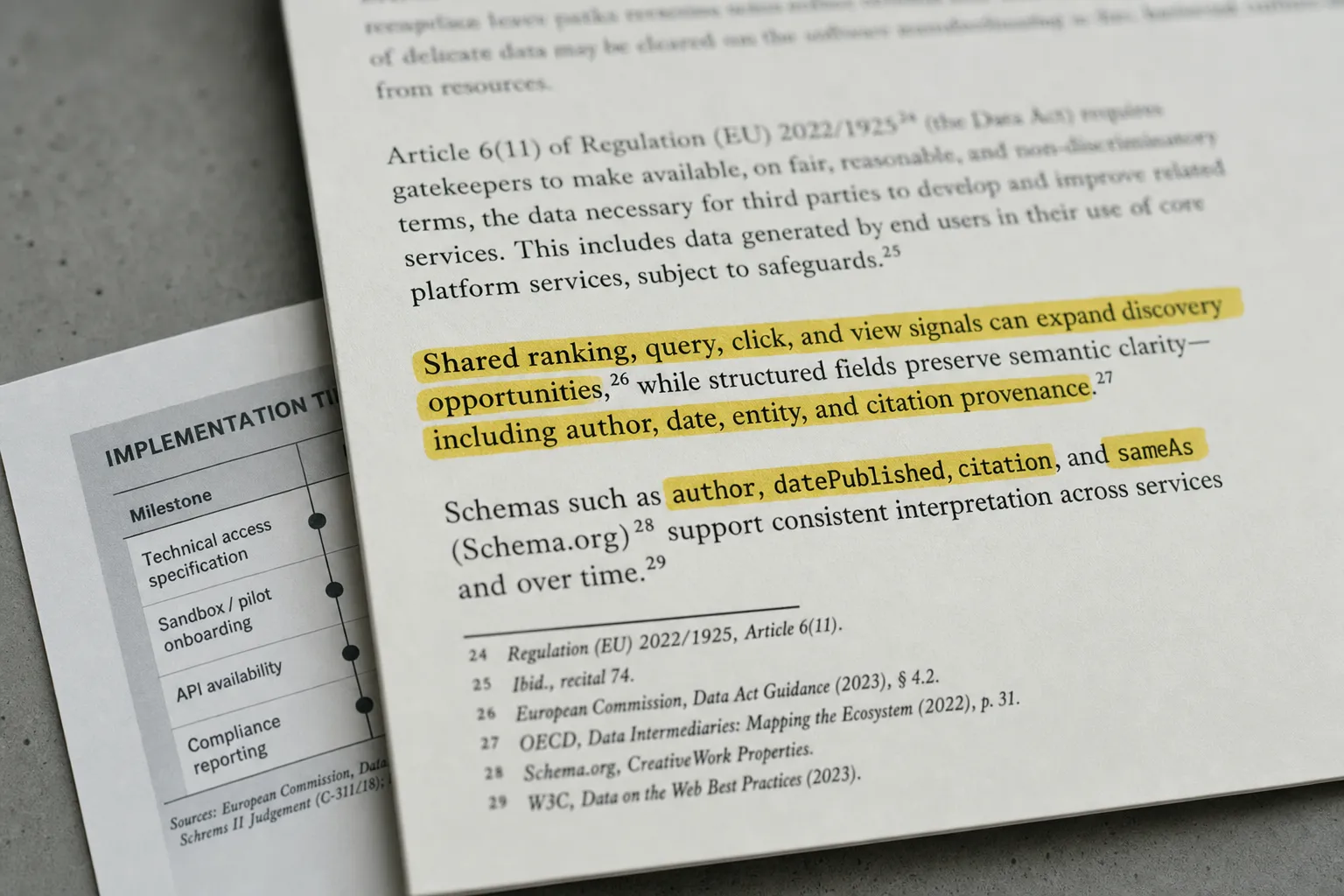
The EU Wants Google to Open Up Search Data to Rival AI Engines
EU plans to open Google Search data to rival AI engines. Learn why Structured Data—not raw click logs—will determine who can retrieve and cite the web.
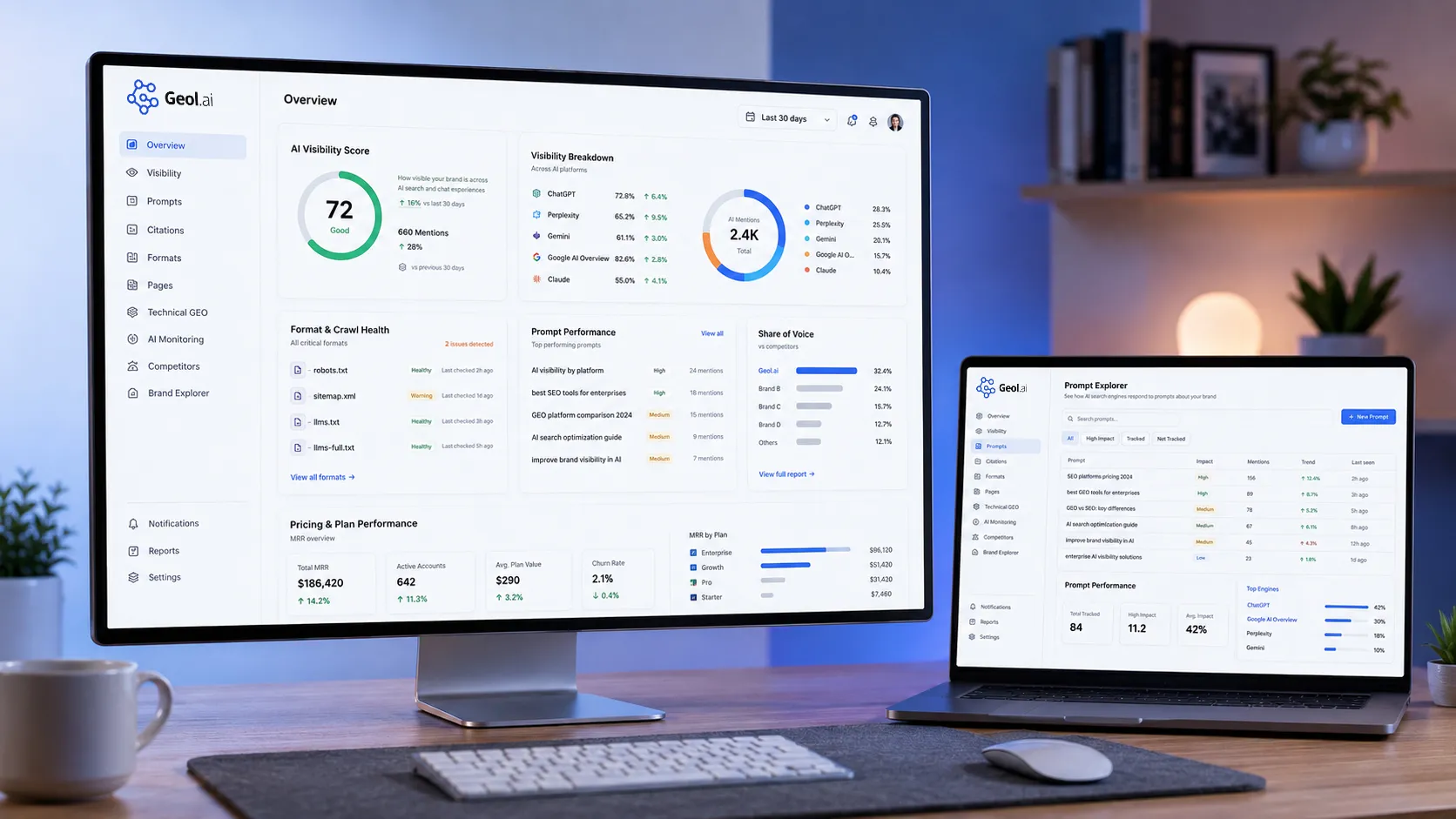
What a GEO Platform Actually Costs in 2026: The Pricing Guide Vendors Won't Write
Real published prices for the Generative Engine Optimization tool market in 2026: self-serve entry tiers, enterprise quote walls, metering math, and honest tool-versus-consultant economics.