Perplexity’s New Search Stack: Why Citation Pricing, Recency Filters, and Agentic Search Matter for GEO
Perplexity's new search stack adds citation pricing, recency filters, and agentic search. What GEO teams should change about earning visibility and measuring impact.
Perplexity’s New Search Stack: Why Citation Pricing, Recency Filters, and Agentic Search Matter for GEO
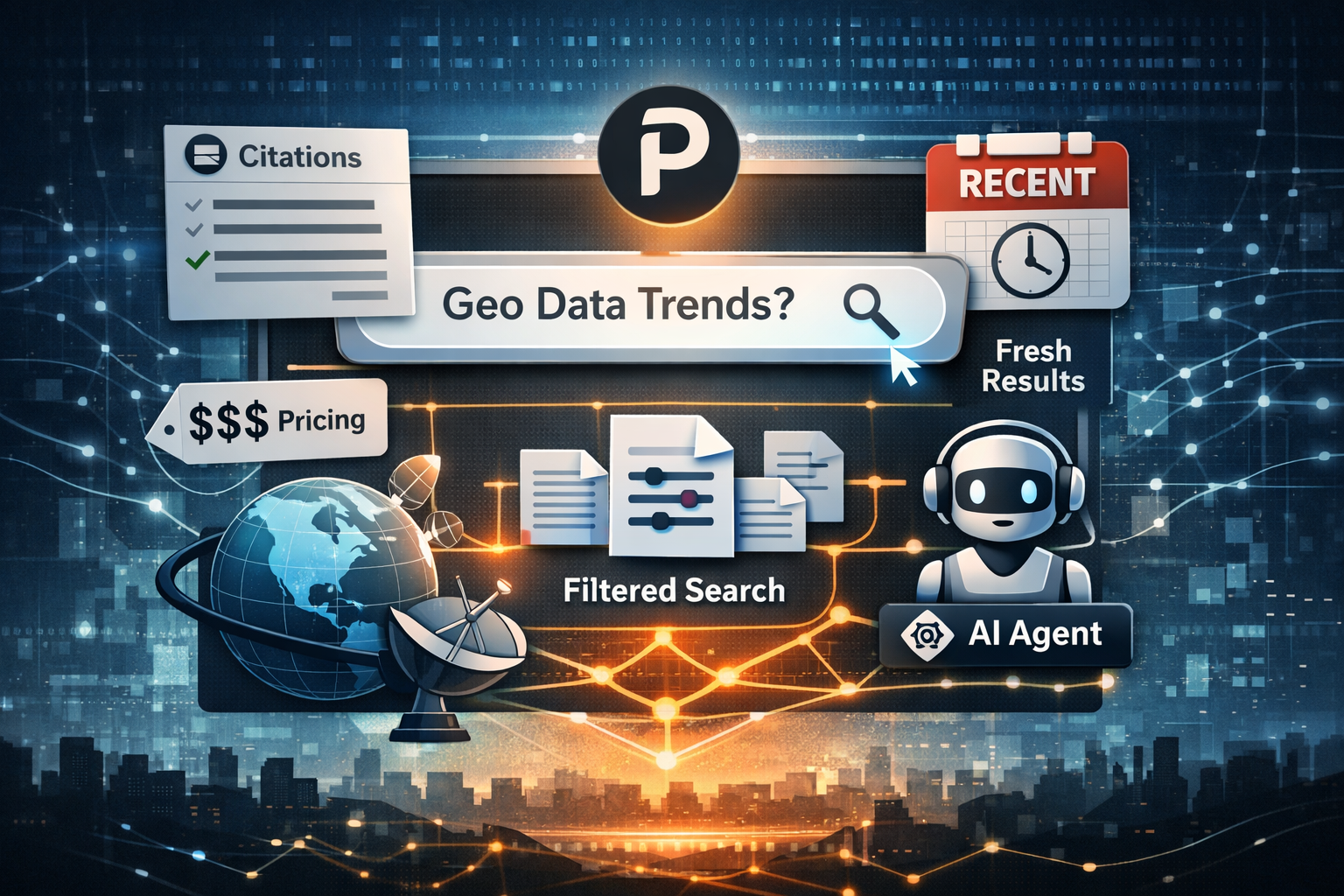
Perplexity’s new search stack matters for GEO because it changes three variables at once: citation pricing, recency filters, and agentic search. When those levers sit in the same product layer, AI visibility stops being a simple ranking problem. It becomes a coordination problem across content, publishing operations, PR, and measurement.
For publishers and marketers, that shift is practical, not theoretical. The page that wins a citation in AI search may not be the page that wins a blue link, and the page that is useful today can lose tomorrow if the engine applies a freshness filter or runs a deeper multi-step investigation. GEO now has to optimize for citation likelihood, evidence quality, and timing.
The short version
Perplexity is helping define an AI search model in which citations can be monetized, freshness can be tuned, and agents can do deeper research before answering. That combination raises the bar for what gets cited.
If citations become more measurable, freshness becomes more explicit, and research becomes more agentic, then thin evergreen copy is no longer enough. Winning pages need clear facts, visible dates, trustworthy sourcing, and supporting mentions beyond the brand site.
Understanding the fundamentals
The clearest signal comes from Perplexity’s changelog: the company is not just tweaking answers; it is building a search stack that is more controllable for developers, publishers, and marketers. That matters because controllable systems create new optimization levers.
Citation pricing turns references inside AI answers into something closer to media inventory. Even if the exact buying models keep evolving, the strategic implication is immediate: marketers can start treating answer-surface visibility as a budget and attribution question, not just an earned outcome.
Recency filters make freshness a first-class signal for time-sensitive queries. Product updates, price changes, regulations, security guidance, and industry news can all trigger a preference for newer evidence. GEO teams should stop thinking in terms of a generally fresh site and start thinking in terms of page-level freshness policies.
Agentic search is the third shift. Instead of answering in one pass, the system can search, compare, refine, and revisit sources across multiple steps. OpenAI’s GPT-5.4 announcement points in the same direction: better tool orchestration, more persistent browsing, and more efficient retrieval. In that environment, pages win when agents can quickly extract verifiable facts from them.
| Feature | What it changes | GEO implication |
|---|---|---|
| Citation pricing | Makes citations feel more measurable and closer to inventory on answer surfaces. | Track citation share, source contribution, and downstream conversion value. |
| Recency filters | Allows fresher sources to outrank older but still relevant pages for certain intents. | Publish updates with visible dates, revision notes, and fast recrawl signals. |
| Agentic search | Enables multi-step retrieval, comparison, and synthesis before an answer is finalized. | Structure pages so agents can extract claims, evidence, dates, and definitions quickly. |
Key findings and insights
This is not happening in isolation. Search Engine Land’s reporting on Google AI Overviews frames AI answer visibility as a revenue issue, not just an SEO issue. When a brand or publisher is cited in an answer layer, that visibility can influence both organic attention and high-intent commercial behavior.
Research also suggests that generative engines do not reward owned pages in the same way classic search does. The earned-media GEO study on arXiv argues that third-party authority and corroboration can outperform brand-controlled pages in citation-heavy systems. That means PR, analyst coverage, reviews, and expert mentions are now part of the optimization stack.
At the same time, trust remains fragile. The citation hallucination paper on arXiv highlights a quieter risk: models can cite confidently but incorrectly. For GEO teams, that means success cannot be measured only by presence. It must also be measured by citation accuracy, brand attribution quality, and whether the cited evidence actually supports the answer.
- Citation visibility is becoming a media and measurement problem, not only a ranking problem.
- Freshness is increasingly query-specific, so update cadence should follow intent, not a generic content calendar.
- Agents favor pages with clean facts, explicit dates, and easy-to-extract structure.
- Third-party mentions often strengthen citation likelihood more than brand copy alone.
- AI-search reporting must include citation accuracy to avoid mistaking bad attribution for success.
More citations do not automatically mean better outcomes. If an engine cites the wrong page, misstates a fact, or attributes a claim poorly, visibility can rise while trust falls. GEO needs quality control, not just impression growth.
Strategic implementation
A workable GEO response is to treat AI search readiness like a cross-functional operating model. Editorial, SEO, communications, and analytics teams should align around source quality, freshness thresholds, and citation measurement instead of working as separate channels.
Audit citation-ready pages
Identify the pages most likely to be used as evidence: comparisons, explainers, pricing pages, policy pages, research summaries, and update hubs.
Add extractable evidence
Make claims easy to verify with clear headings, concise definitions, dated statements, supporting data, and transparent source references.
Set freshness rules by query type
Map which topics need weekly, monthly, or event-driven updates so recency-sensitive queries do not rely on stale assets.
Build corroboration outside owned media
Support key claims through earned media, expert commentary, partnerships, and third-party references that agents can discover independently.
Measure beyond clicks
Track citation frequency, cited URL mix, answer context, brand mention quality, and the business impact of appearing in AI-generated results.
What good GEO pages now look like
The strongest pages in this environment are usually not the most promotional. They are the most legible to a machine researcher: specific title, obvious topic framing, recent timestamp, direct answer near the top, supporting sections below, and external proof that the page’s claims are echoed elsewhere on the web.
Common challenges and solutions
Most teams struggle because they still organize around old SEO habits. The common failure modes are predictable: publishing generic evergreen content, updating pages without visible evidence, ignoring off-site validation, and reporting only traffic instead of citation outcomes.
- Challenge: stale but authoritative pages. Solution: add revision dates, changelogs, and modular updates for volatile topics.
- Challenge: brand pages sound self-serving. Solution: pair owned content with independent reviews, analyst notes, or expert commentary.
- Challenge: answers cite the wrong URL. Solution: consolidate overlapping pages and make canonical evidence pages unmistakable.
- Challenge: reporting stops at impressions. Solution: log which pages are cited, for which intents, and whether attribution is accurate.
If a page would confuse a junior analyst doing fast research, it will probably confuse an agentic search system too. Simplify structure before adding more content.
Future outlook
The broader direction is clear: AI search platforms are moving from simple retrieval toward orchestrated research. Perplexity’s controls, OpenAI’s retrieval improvements, and Google’s answer-layer monetization all point to the same market shift. Search is becoming a blended system of discovery, synthesis, citation, and monetization.
For GEO, that means competitive advantage will come from being both discoverable and defensible. The brands and publishers that win will not just publish more. They will publish cleaner evidence, update faster, earn more corroboration, and monitor citations with the same discipline they once reserved for rankings.
Conclusion and key takeaways
Perplexity’s new search stack matters because it makes AI visibility more controllable and more accountable. Citation pricing pushes teams to think about answer-surface economics. Recency filters raise the cost of stale content. Agentic search rewards pages that can survive multi-step scrutiny. GEO is no longer just about being found. It is about being selected as evidence.
Key takeaways
Citation pricing turns AI-answer visibility into a measurement and budget conversation.
Recency filters make page-level freshness critical for volatile query spaces.
Agentic search favors content that is structured for verification and extraction.
Earned media and third-party corroboration often improve citation likelihood more than brand claims alone.
GEO measurement should include citation share, attribution accuracy, and business impact, not just traffic.
Frequently asked questions

Founder of Geol.ai
Senior builder at the intersection of AI, search, and blockchain. I design and ship agentic systems that automate complex business workflows. On the search side, I’m at the forefront of GEO/AEO (AI SEO), where retrieval, structured data, and entity authority map directly to AI answers and revenue. I’ve authored a whitepaper on this space and road-test ideas currently in production. On the infrastructure side, I integrate LLM pipelines (RAG, vector search, tool calling), data connectors (CRM/ERP/Ads), and observability so teams can trust automation at scale. In crypto, I implement alternative payment rails (on-chain + off-ramp orchestration, stable-value flows, compliance gating) to reduce fees and settlement times versus traditional processors and legacy financial institutions. A true Bitcoin treasury advocate. 18+ years of web dev, SEO, and PPC give me the full stack—from growth strategy to code. I’m hands-on (Vibe coding on Replit/Codex/Cursor) and pragmatic: ship fast, measure impact, iterate. Focus areas: AI workflow automation • GEO/AEO strategy • AI content/retrieval architecture • Data pipelines • On-chain payments • Product-led growth for AI systems Let’s talk if you want: to automate a revenue workflow, make your site/brand “answer-ready” for AI, or stand up crypto payments without breaking compliance or UX.
Related Articles
The EU Wants Google to Open Up Search Data to Rival AI Engines
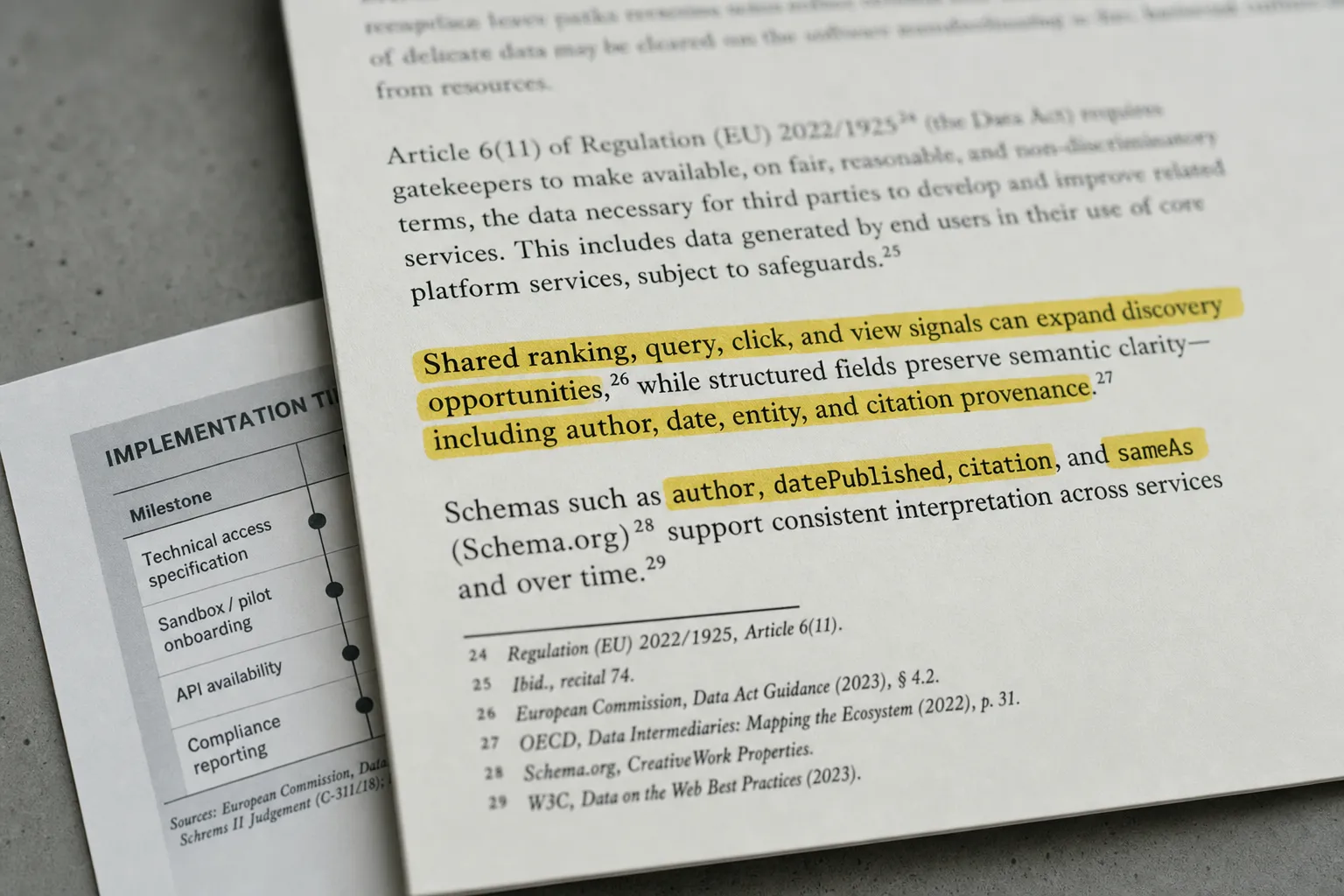
EU plans to open Google Search data to rival AI engines. Learn why Structured Data—not raw click logs—will determine who can retrieve and cite the web.
What a GEO Platform Actually Costs in 2026: The Pricing Guide Vendors Won't Write
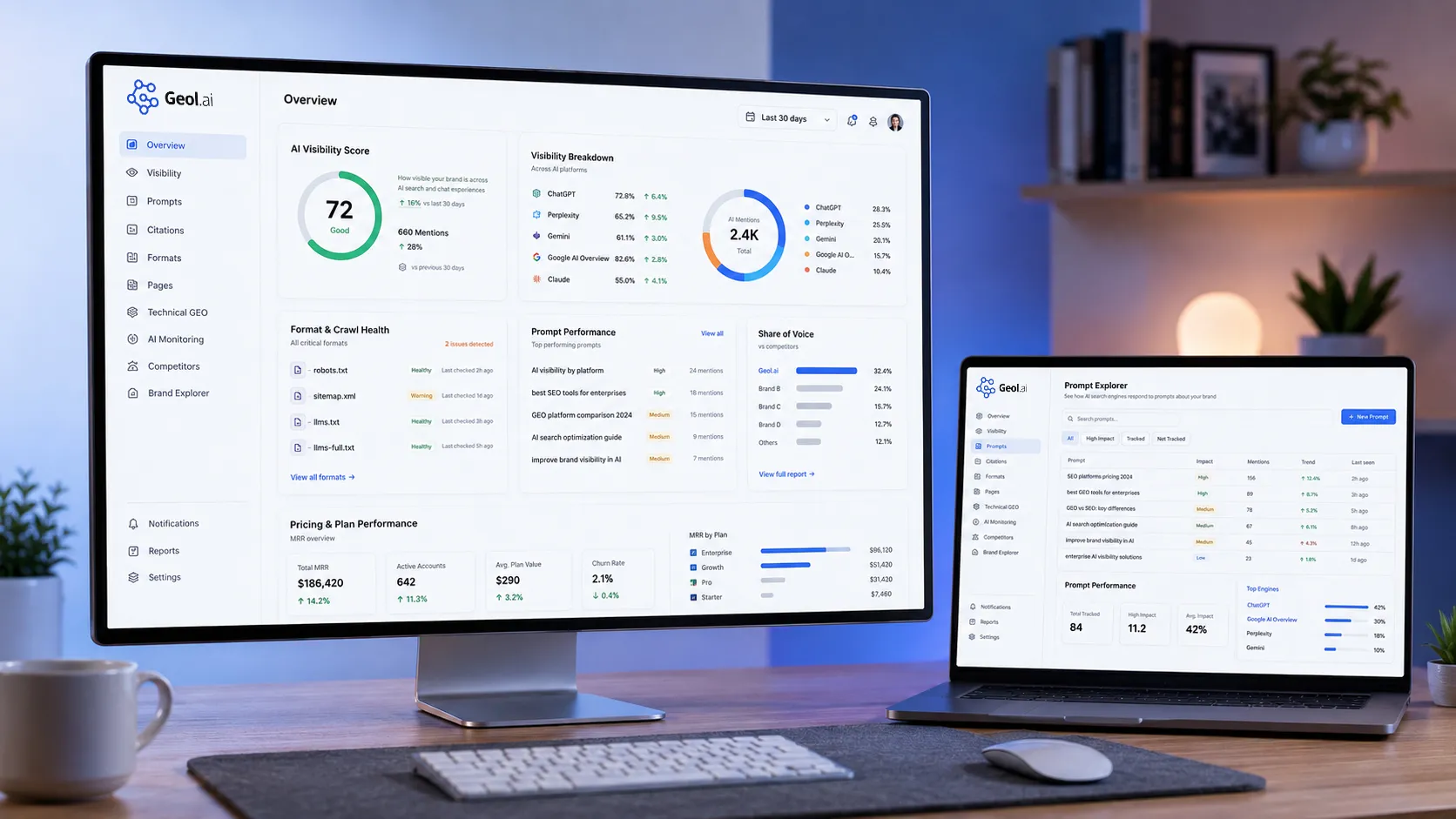
Real published prices for the Generative Engine Optimization tool market in 2026: self-serve entry tiers, enterprise quote walls, metering math, and honest tool-versus-consultant economics.