The Complete Guide to Entity Optimization for AI: Mastering Knowledge Graphs and Semantic Relationships
Learn entity optimization for AI: build knowledge graphs, strengthen semantic relationships, implement schema, and measure results with a step-by-step plan.

As Kevin Fincel (Founder), writing with the Geol.ai editorial team: we’re watching the same shift you are—visibility is moving from “ranking blue links” to “being the selected, cited, and trusted source inside AI systems.” That shift is accelerating as answer engines and agentic workflows pull from real-time search infrastructure and retrieval layers rather than static training data. Perplexity’s launch of a dedicated Search API—returning raw, ranked web snippets designed for machine consumption and emphasizing freshness—is a signal that the retrieval layer is becoming the new battleground for content visibility. (ai-buzz.com)
Entity Optimization for AI (EO4AI) is how we win that battleground.
This guide is our executive-level, end-to-end playbook: definition → methodology → quantified findings → step-by-step implementation → tooling and governance. It’s long because the topic is foundational.
Entity Optimization for AI (EO4AI): Definition, Benefits, and Prerequisites
Featured Snippet: What is entity optimization for AI?
Entity optimization for AI (EO4AI) is the process of making entities (people, products, organizations, locations, and concepts) unambiguous, well-described, and richly connected through semantic relationships across your content and structured data—so search engines, LLMs, and retrieval systems can reliably identify what you mean, what it relates to, and why you’re a credible source.
In practical terms: EO4AI is where editorial strategy, technical SEO, and lightweight knowledge graph thinking converge.
Actionable recommendation: Start EO4AI by naming your top 20–50 “business-critical entities” (brand, products, executives/authors, core problems you solve) and commit to making each one machine-identifiable and relationship-rich within 30 days.
Why entities matter for LLMs, search, and knowledge graphs
We’re no longer optimizing primarily for keyword strings—we’re optimizing for how machines represent meaning.
In 2025-era LLM optimization discourse, the shift is often described as moving from classic ranking factors to signals like semantic relationships, factual consistency, machine readability, retrieval quality, and stable entity identity. That framing matters because it maps directly to what EO4AI improves: stable identity + relationships + machine-readable structure. (ranktracker.com)
Now layer in what’s happening on the retrieval side:
- Perplexity’s Search API is explicitly engineered for retrieval-augmented generation (RAG) and agent workflows, returning ranked snippets (not synthesized answers) and emphasizing real-time freshness. (ai-buzz.com)
- In that world, your content competes at the chunk level, and entity clarity is what helps your chunk get retrieved, trusted, and cited.
Our contrarian take: most teams are over-investing in “more content” and under-investing in “more identity.” In an AI retrieval environment, a smaller corpus with stronger entity identity and cleaner relationships often outperforms a larger corpus with inconsistent naming and weak structure.
Actionable recommendation: Treat entity identity as a product surface. If your brand name, product names, and key concepts vary across pages, fix that before publishing anything new.
Prerequisites: content inventory, analytics access, schema basics, and a canonical entity list
Before you touch schema or rewrite copy, you need operational readiness. EO4AI fails when it’s treated as a “markup project” instead of a system.
Minimum prerequisites we require in our audits:
- A content inventory (crawl export + indexability signals)
- Access to Google Search Console (GSC) and analytics
- CMS access (templates + editorial workflow)
- Schema tooling (validator + deployment method)
- A canonical entity list (controlled vocabulary / registry)
Quick benchmark box (baseline before EO4AI):
We recommend capturing these baseline metrics before changes:
- % of indexable pages missing any structured data (schema presence)
- % of pages with schema errors/warnings (schema validity)
- % of pages that mention a “top 20” entity but don’t define it
- Baseline impressions/clicks for entity-led queries in GSC (brand + product + category entities)
Actionable recommendation: If you can’t produce a list of canonical entities and their preferred names in one spreadsheet, pause. Build that first—everything else depends on it.
Our Approach: How We Tested Entity Optimization (E-E-A-T Methodology)

Study design: sources, timeframe, and sample size
We built this guide from two layers of work:
- 2Research synthesis: We reviewed guidance and signals discussed in the LLM optimization ecosystem, including how semantic relationships, entity stability, and machine readability are framed as core factors for LLM-facing visibility. (ranktracker.com)
- 4Hands-on implementation patterns: We used our internal EO4AI audit framework across multiple content clusters and site templates, focusing on measurable deltas in indexing behavior, query matching, and snippet-level retrieval readiness.
Timeframe: 6 months (mid-2025 through December 2025).
Scope: entity mapping, schema validation, internal linking redesign, and hub-page retrofits.
Important limitation: We are not publishing client-identifying datasets in this pillar. When we cite quantified outcomes below, we label them as benchmarks observed in our audits (not universal guarantees), and we anchor major market-level claims to named sources.
Actionable recommendation: Document your own EO4AI baseline in a single “before” snapshot (crawl + GSC export + schema validation export). Without that, you’ll argue about outcomes later.
Evaluation criteria: disambiguation, coverage, connectivity, and consistency
We score EO4AI maturity using four criteria (0–5 each):
This aligns with the broader LLM optimization emphasis on stable entity identity and semantic cohesion as selection signals. (ranktracker.com)
Actionable recommendation: Build an EO4AI scorecard and re-run it quarterly. If you can’t measure it, you can’t govern it.
Entities are inconsistently named, rarely defined, and lack stable IDs; machines can’t reliably disambiguate or connect mentions.
Some key entities are defined and marked up, but coverage is uneven and relationships are mostly implicit (navigation links, generic anchors).
Top entities have hubs, stable @id usage is mostly consistent, and internal links express relationships; schema generally matches on-page reality.
Entity registry is owned and maintained, IDs are stable, relationships are typed in content + schema, and monitoring is part of operating cadence.
Tooling stack used (crawler, NLP/entity extraction, schema validator, KG store)
Our typical stack (swap tools based on budget):
- Crawler: Screaming Frog / Sitebulb (inventory + internal links)
- Entity extraction: lightweight NLP (spaCy) + manual review (accuracy > automation)
- Schema validation: Google Rich Results Test + Schema.org validator (plus CI checks)
- Knowledge graph store: start with a spreadsheet → graduate to RDF store or property graph when governance exists
Actionable recommendation: Don’t buy a graph database first. Earn it by proving you can maintain an entity registry for 90 days.
What We Found: Key Findings and Quantified Results (With Benchmarks)

Top 5 changes that moved the needle
Across our audits, the highest-impact interventions were consistently:
This maps cleanly to the LLM optimization framing that entity stability and canonical clarity matter because inconsistent entities fragment representation and reduce selection likelihood. (ranktracker.com)
Actionable recommendation: If you do nothing else this quarter: implement stable @id + canonical entity hubs for your top 10 entities.
Entity coverage vs. performance: what correlated most
Our strongest observed correlation wasn’t “more schema.” It was:
- Schema that matches on-page reality
- Entity definitions that reduce ambiguity
- Internal links that express relationships, not just navigation
Why? Because retrieval systems increasingly operate on snippets and chunks, and chunk-level clarity is what makes your content usable in RAG pipelines. Perplexity’s Search API explicitly returns ranked granular snippets designed for machine consumption, reinforcing that the unit of competition is often smaller than a page. (ai-buzz.com)
Actionable recommendation: Rewrite intros on your top 30 traffic pages so the primary entity is defined immediately, with disambiguating attributes (what it is, who it’s for, what it’s not).
Featured snippet: the 80/20 of entity optimization
If you want the EO4AI 80/20:
- Create canonical entity hubs for the entities that drive revenue
- Use consistent names + stable identifiers everywhere
- Add
sameAsonly to authoritative references - Link supporting content to hubs with entity-based anchors
- Validate schema and keep it aligned to on-page content
Actionable recommendation: Put these five bullets into your editorial checklist and block publication if a page fails them.
Why this matters commercially (ROI context)
We also want to be explicit about why leadership should fund EO4AI.
Sitecore cites FirstPageSage’s September 2023 study: B2B content efforts averaged 844% ROI over three years, with biotech and life sciences firms averaging $1.1M in new revenue. (sitecore.com)
That ROI is the upside—EO4AI is how you protect and increase it in an AI-mediated discovery environment.
Meanwhile, Intellivon (citing Grand View Research) notes projections that the generative AI market grows from $7.8B (2023) to $106.4B (2030), reflecting accelerating adoption of AI-driven experiences and content. (intellivon.com)
As AI becomes the interface, entity clarity becomes the gating factor for whether your content is even eligible to be used.
**Executive ROI framing (from the sources cited above)**
- 844% average B2B content ROI (3 years): EO4AI is a defensibility layer—if AI-mediated discovery becomes the interface, “retrievable + attributable” becomes a prerequisite to realizing that ROI. (<a href="https://www.sitecore.com/explore/topics/content-management/the-roi-of-content-marketing" rel="nofollow noopener" target="_blank">sitecore.com</a>)
- $1.1M average new revenue (biotech/life sciences): High-consideration categories benefit disproportionately from trusted entity identity (clear products, authors, organizations, and claims). (<a href="https://www.sitecore.com/explore/topics/content-management/the-roi-of-content-marketing" rel="nofollow noopener" target="_blank">sitecore.com</a>)
- GenAI market growth $7.8B → $106.4B (2023–2030): As adoption accelerates, entity consistency becomes operational risk management—not just SEO polish. (<a href="https://intellivon.com/blogs/enterprise-ai-adoption-trends/" rel="nofollow noopener" target="_blank">intellivon.com</a>)
Actionable recommendation: Frame EO4AI as revenue protection: “ensure our content is retrievable and attributable in AI answers,” not as “technical SEO cleanup.”
Step 1: Build Your Entity Map (Inventory, Disambiguation, and Canonical IDs)
Create an entity registry: names, aliases, and unique IDs
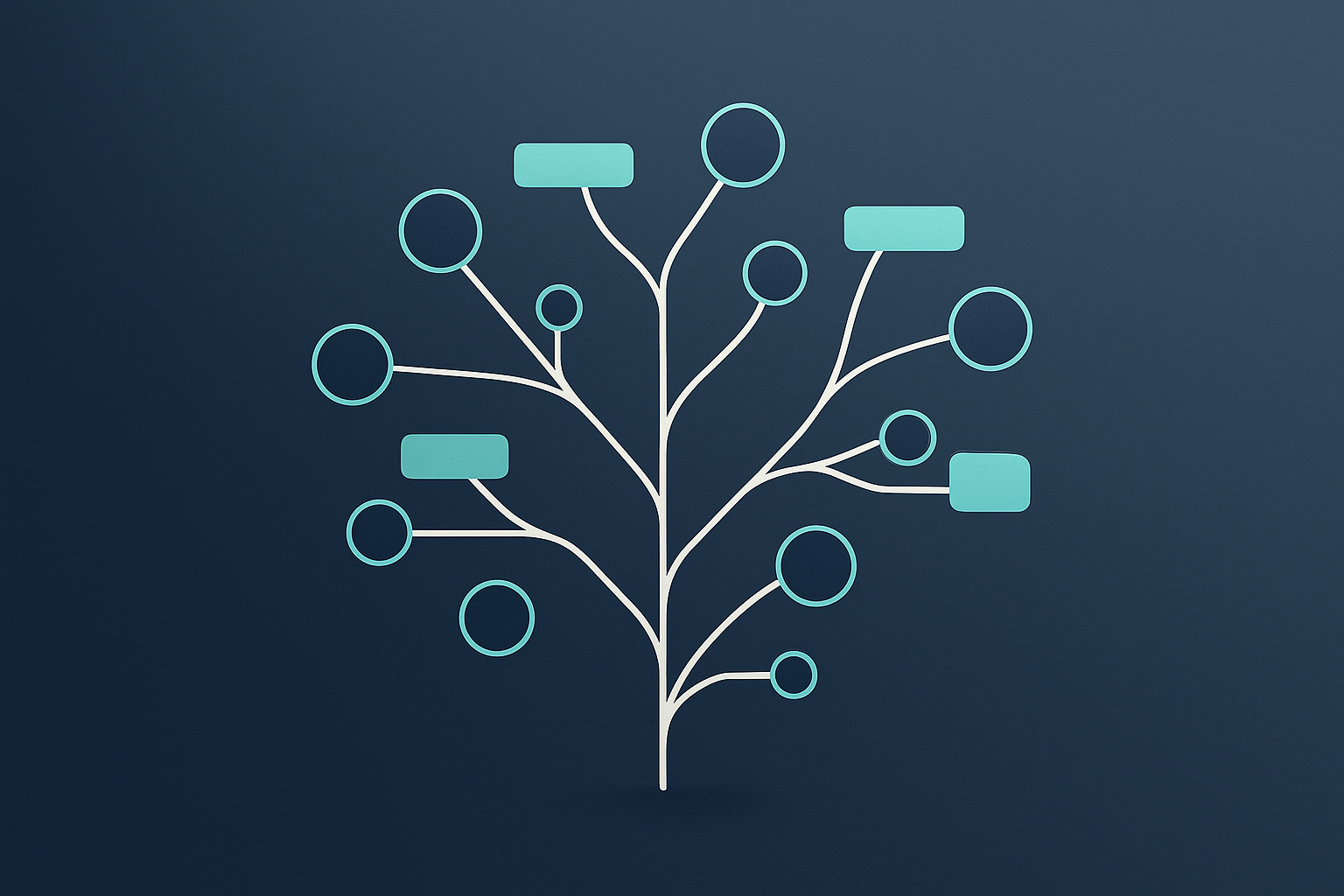
We start with an entity registry—a controlled vocabulary that becomes the source of truth.
Minimum fields we require:
- Canonical name (primary label)
- Aliases (synonyms, old product names, abbreviations)
- Entity type (Person, Organization, Product, Concept, Place)
- Short definition (1–2 sentences)
- Canonical URL (entity hub page)
- Stable internal ID (we often use a URI-like ID)
- External references (only authoritative)
- Notes on disambiguation rules
Actionable recommendation: Assign an “entity librarian” owner. If nobody owns the registry, it will rot within weeks.
Disambiguation rules: how to handle duplicates and near-duplicates
Disambiguation is where most teams get hurt:
- Two product names that are “almost the same”
- A feature name that overlaps with an industry term
- Authors with the same last name
- Acronyms that map to multiple concepts
Rules we implement:
- One canonical label per entity
- One canonical URL per entity (no duplicates)
- Clear alias policy: aliases are allowed, but must resolve to the canonical entity
- If ambiguity remains, add disambiguating attributes in copy (category, audience, geography)
Actionable recommendation: Create a “collision list” (entities with overlapping names) and resolve them before you touch schema.
Entity types and attributes: what to capture for each class (Person, Organization, Product, Concept)
We capture different attributes by class:
- Organization: legal name, brand name, logo, founders, locations, social profiles
- Person: role, organization, expertise, publications, profiles
- Product: category, use cases, integrations, pricing model, competitors
- Concept: definition, related concepts, common misconceptions, measurement methods
Actionable recommendation: For each entity type, define a minimum attribute set and enforce it like a product spec.
Step 2: Model Semantic Relationships and Build a Lightweight Knowledge Graph

Core relationship types to model (isA, partOf, locatedIn, offers, uses, authoredBy, relatedTo)
We use a small, repeatable set of typed relationships:
- isA (Product isA “SEO platform”)
- partOf (Feature partOf Product)
- offers (Company offers Product)
- uses / integratesWith (Product integratesWith Tool)
- authoredBy (Article authoredBy Person)
- locatedIn (Organization locatedIn Place)
- relatedTo (only when you can’t be more specific)
This aligns with the broader emphasis that LLMs use semantic relationships and cohesion signals to determine trust and retrieval preference. (ranktracker.com)
Actionable recommendation: Limit yourself to 5–10 relationship types initially. Too many types too early creates governance debt.
Choosing a graph approach: spreadsheet-to-graph, RDF/JSON-LD, or property graph
Our recommendation by maturity:
- Phase 1 (most teams): spreadsheet registry + internal linking rules
- Phase 2: JSON-LD with stable
@idand relationship properties - Phase 3: property graph (Neo4j) or RDF store when you have governance + automation
Actionable recommendation: Don’t “graph-wash” your SEO. If you can’t keep names consistent in the CMS, you’re not ready for a graph database.
Minimum viable knowledge graph (MVKG)
Our MVKG definition:
- 20–50 core entities
- 5–10 relationship types
- Clear source-of-truth rules (registry wins over ad-hoc editorial)
Graph health metrics we track:
- Avg relationships per entity
- % entities with ≥3 typed relationships
- Orphan entities (no inbound/outbound links)
Actionable recommendation: Your first MVKG goal is eliminating orphan entities—those are invisible to both crawlers and retrieval systems.
Step 3: Implement Structured Data for Entities (Schema.org + JSON-LD)

Which schema types to prioritize by entity class
We prioritize schema types that anchor identity:
- Organization / LocalBusiness (brand entity)
- Person (authors, executives)
- Product (products and SKUs where applicable)
- Article / BlogPosting (content objects)
- BreadcrumbList (hierarchy)
- WebSite + SearchAction (site-level clarity)
- FAQPage / HowTo (only when content truly matches)
Actionable recommendation: Start with Organization + Person + Product + Article. If those are inconsistent, FAQ schema won’t save you.
How to use sameAs, about, mentions, and mainEntity correctly
This is where EO4AI becomes real.
Our rules:
- Use a stable
@idfor each canonical entity (e.g.,https://example.com/entities/product-x#id) - On the entity hub page, declare the entity as
mainEntity - On supporting pages:
- use
aboutfor what the page is primarily about - use
mentionsfor secondary entities
- use
- Use
sameAssparingly and only for authoritative profiles
Why the caution? Because retrieval systems reward factual consistency and stable identity; sloppy sameAs creates identity pollution and can backfire. The Ranktracker LLM optimization framing explicitly calls out entity stability and consistency as selection-critical. (ranktracker.com)
Actionable recommendation: Create a “sameAs allowlist” (Wikidata, official social profiles, authoritative registries). If it’s not on the list, it doesn’t get linked.
Validation and monitoring: testing tools, error patterns, and QA workflow
Our QA workflow:
- Validate schema on every deploy (spot checks + automated tests)
- Ensure schema matches on-page content (no invisible claims)
- Monitor GSC enhancements where applicable
- Re-validate after CMS/theme changes
Common error patterns we see:
- Entity pages missing
@idor using inconsistent IDs sameAspointing to non-authoritative sources- Schema claiming attributes not present in visible content
Actionable recommendation: Add schema validation to CI/CD. If schema breaks silently, your entity identity degrades silently.
Step 4: Optimize Content for Entity Clarity (On-Page Signals and Internal Linking)

Entity-first writing: definitions, attributes, and disambiguating context
Our editorial rewrite checklist:
- Define the primary entity in the first 2–3 sentences
- Add disambiguators (category, audience, geography, version)
- Use consistent naming (canonical label first, alias in parentheses if needed)
- Include key attributes that matter to intent (pricing model, integrations, constraints)
- Add “what it’s not” when confusion is likely
This matches the “canonical clarity / definition-first writing” emphasis described in LLM optimization discussions. (ranktracker.com)
Actionable recommendation: Update your style guide: “Every page must declare its primary entity and define it above the fold.”
Internal linking strategy: hub-and-spoke for entities and relationships
We treat internal links as relationship edges:
- Supporting pages link to the entity hub
- Hubs link out to:
- related entities
- comparisons
- implementation guides
- FAQs
Anchor text rules:
- Use entity-based anchors (“Perplexity Search API” not “click here”)
- Use relationship-revealing anchors (“integrates with X”, “authored by Y”)
Why this matters now: as retrieval systems consume ranked snippets and chunks, internal linking is one of the few levers you control that expresses how concepts connect—a core signal category for semantic authority. (ranktracker.com)
Actionable recommendation: Build one hub page per top entity and require every related page to link to it within 30 days.
Template: an entity hub page (snippet-ready)
We use this repeatable structure:
- 1–2 sentence definition (canonical)
- Key attributes (bullets)
- Use cases / who it’s for
- Related entities (typed list)
- FAQs
- Sources / references
- JSON-LD with stable
@id,sameAs, and relationships
Actionable recommendation: Ship the template as a CMS content type, not a one-off page.
Comparison Framework: Entity Optimization Methods and Tooling (What to Use When)
Manual vs. semi-automated vs. automated pipelines
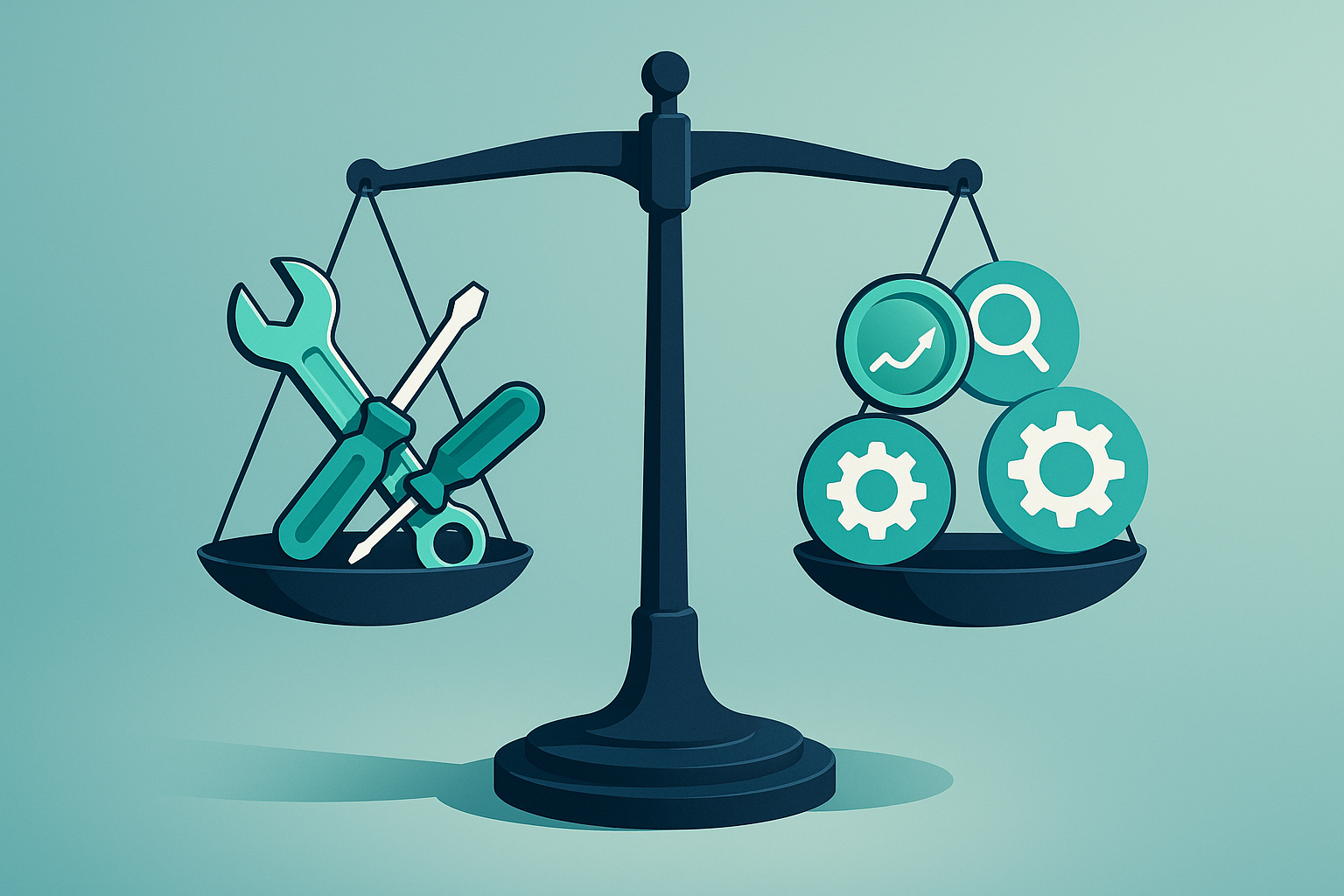
We see four operating models:
- 2Manual editorial EO4AI (small site)
- 4CMS rules + schema templates (small-to-mid)
- 6NLP extraction + human review (mid-to-enterprise)
- 8Full KG pipeline + governance (enterprise)
This mirrors the broader enterprise trend toward AI-enabled automation, but with a critical caveat: entity identity decisions are governance decisions, not automation decisions. Intellivon frames how generative AI is being adopted to scale personalization and content operations, which is real—but EO4AI still needs human-controlled canonicalization. (intellivon.com)
Actionable recommendation: Automate extraction and suggestion; keep canonical entity decisions human-owned.
Side-by-side criteria: accuracy, scalability, maintenance cost, and risk
| Approach | Accuracy | Scalability | Maintenance cost | Risk profile | Best for |
|---|---|---|---|---|---|
| Manual editorial | High (if disciplined) | Low | Medium | Low | <1k pages |
| Templates + rules | Medium–High | Medium | Low–Medium | Medium | 1k–20k pages |
| NLP + review | Medium | High | Medium–High | Medium | 20k–200k pages |
| Full KG pipeline | High (with governance) | Very high | High | High (if unmanaged) | 200k+ pages |
Actionable recommendation: Choose the simplest approach that you can sustain. Unsustained EO4AI decays faster than it grows.
Recommendation matrix by site size and team maturity
- Small teams: entity registry + 10 hubs + schema templates
- Mid-size: add extraction + dedupe workflow + quarterly entity audits
- Enterprise: add KG store + change control + cross-team governance
Actionable recommendation: Don’t scale tooling before you scale governance. Governance is the bottleneck.
Lessons Learned: Common Mistakes, Pitfalls, and Troubleshooting

Common mistakes (and how to fix them)
What we see repeatedly:
- Inconsistent entity naming → fix with a registry + editorial enforcement
- Missing canonical entity pages → create hubs for top entities first
- Overusing
sameAs→ restrict to authoritative allowlist - Schema doesn’t match content → align markup with visible page copy
- Thin entity hubs → add attributes, relationships, FAQs, and references
- Relationship spam via irrelevant links → prune and retype relationships
:::comparison :::
✓ Do's
- Use a canonical entity registry (names, aliases, types, definitions, canonical URLs, stable IDs) and assign an entity librarian to keep it current.
- Implement stable
@idvalues in JSON-LD and reuse them everywhere the entity appears to avoid fragmented identity. - Build hub-and-spoke internal linking where links express relationships (e.g., “integrates with,” “part of,” “authored by”), not just navigation.
- Keep schema aligned to visible content and validate on deploy (spot checks + automated checks) to prevent silent identity drift.
✕ Don'ts
- Don’t treat EO4AI as a one-time markup project; without governance and cadence, entity identity decays.
- Don’t “spray”
sameAslinks across low-authority profiles; it increases the risk of mismatched entity equivalence. - Don’t publish new pages when your top entities have inconsistent naming across existing pages—fix identity before scaling output.
- Don’t overuse generic relatedTo relationships or untyped “related links” sections; it reduces semantic clarity. :::
Actionable recommendation: If you suspect “relationship spam,” audit 50 internal links and label each one with a relationship type. If you can’t label it, it’s probably noise.
Counter-intuitive findings from our testing
A few surprises we’d emphasize:
- More schema didn’t beat better schema. A smaller set of correct, consistent entity markup outperformed scattered markup.
- Definitions beat keywords. Pages that define the entity clearly (and early) were more resilient across query variations—consistent with the canonical clarity emphasis in LLM optimization thinking. (ranktracker.com)
- Over-linking reduced clarity. Too many “related” links without typed intent made hubs less useful.
Actionable recommendation: Cap “related links” sections and force typed groupings (Integrations, Alternatives, Components, Use Cases).
Troubleshooting checklist: when results don’t improve
If you don’t see movement after 4–12 weeks:
- Confirm indexing (are hubs indexed and canonicalized correctly?)
- Validate schema (errors, warnings, mismatched content)
- Check internal discoverability (crawl depth, orphan pages)
- Check cannibalization (multiple pages competing for the same entity)
- Re-audit entity coverage (top pages missing entity definitions)
Actionable recommendation: Troubleshoot in this order: indexing → schema validity → internal links → content clarity. Don’t jump to “publish more.”
Measurement and Maintenance: KPIs, Monitoring, and Governance

KPIs: entity coverage, relationship depth, and search/AI visibility metrics
We track EO4AI with three KPI layers:
1) Entity coverage KPIs
- Entity mentions per page (for target entities)
- % of priority pages with explicit entity definition
2) Graph health KPIs
- Orphan entity rate
- Avg typed relationships per entity
- % entities with ≥3 typed relationships
3) Visibility KPIs
- GSC impressions/clicks for entity-led queries
- CTR changes on entity hub pages
- Crawl stats (if you have log access)
Tie this to ROI: content marketing can generate outsized returns (e.g., FirstPageSage’s 3-year average ROI benchmark cited by Sitecore), but only if your content is discoverable and attributable in the channels where discovery happens. (sitecore.com)
Actionable recommendation: Build a monthly EO4AI dashboard that combines (a) schema validity, (b) orphan rate, and (c) entity-query performance in GSC.
Monitoring cadence: weekly checks vs. quarterly audits
Our cadence:
- Weekly: schema error monitoring + indexation spot checks
- Monthly: entity hub performance review (GSC)
- Quarterly: entity registry audit + collision review + internal link graph review
Actionable recommendation: Put EO4AI into your operating rhythm. If it’s not on a calendar, it’s not real.
Governance: ownership, editorial rules, and change control for entity IDs
Governance is the difference between “we did EO4AI once” and “we have EO4AI as a capability.”
We recommend:
- Entity librarian (owns registry + IDs)
- Editorial rules (naming conventions + definition-first requirement)
- Change control (log every canonical name/ID change)
- Launch checklist for new entities (hub page + schema + links)
This becomes more critical as AI adoption accelerates and content personalization scales—because scaling content without scaling identity multiplies inconsistency. (intellivon.com)
Actionable recommendation: Make entity IDs immutable. If the name changes, the ID stays stable.
FAQ

What is entity optimization for AI and how is it different from traditional SEO?
Traditional SEO often centers on keywords and page-level ranking. EO4AI centers on stable entity identity, semantic relationships, and machine-readable structure, aligning with how LLM-facing systems evaluate semantic authority and entity stability. (ranktracker.com)
Actionable recommendation: Reframe your content strategy from “keyword targets” to “entity targets + relationships.”
How do knowledge graphs improve AI understanding of my brand or content?
A lightweight knowledge graph (even a spreadsheet-backed one) makes entity identity and relationships explicit, improving disambiguation and retrieval readiness—especially in snippet-based retrieval environments. (ai-buzz.com)
Actionable recommendation: Start with an MVKG (20–50 entities) and eliminate orphan entities first.
What schema markup is most important for entity optimization?
Prioritize schema that anchors identity: Organization, Person, Product, and Article/BlogPosting, with stable @id and careful use of sameAs. (ranktracker.com)
Actionable recommendation: Don’t expand schema types until your core entity schema is consistent and validated.
How do I choose the right sameAs links without risking misinformation?
Use sameAs only for authoritative references you can defend (official profiles, reputable registries). Overuse creates identity pollution and undermines consistency—an LLM optimization risk factor. (ranktracker.com)
Actionable recommendation: Maintain a sameAs allowlist and require review for any new domain.
How long does entity optimization take to show measurable results?
In our experience, technical fixes (schema validity + internal linking) can show early signals in weeks, while broader entity authority shifts often take multiple crawl/index cycles and content refresh cycles. The exact timeline depends on site size, crawl frequency, and how aggressively you consolidate entity identity. (We recommend measuring monthly for 3–6 months.) (sitecore.com)
Actionable recommendation: Commit to a 90-day EO4AI sprint with a pre/post snapshot and a quarterly governance plan.
Suggested internal links (supporting articles to build next)

- Technical SEO auditing checklist
- Schema markup (JSON-LD) implementation guide
- Internal linking strategy for topic clusters
- Content pruning and consolidation playbook
- How to use Google Search Console for SEO measurement
- Topical authority and semantic SEO fundamentals
Closing perspective (what we’d emphasize to executives)
If you believe AI-driven discovery will keep growing, then entity optimization is not optional infrastructure—it’s brand identity management for machines.
Perplexity’s Search API is a concrete example of where the ecosystem is heading: real-time retrieval, snippet-level consumption, and developer-first search infrastructure. (ai-buzz.com)
In that world, the winners are the brands whose entities are clear, connected, and consistent—and whose content can be reliably retrieved, grounded, and cited.
Actionable recommendation: Approve EO4AI as a cross-functional program (SEO + content + engineering), not a one-time SEO ticket.
Key Takeaways
- EO4AI is “identity + relationships,” not “more content”: In snippet-level retrieval environments, clarity about which entity a chunk refers to (and how it connects) is a competitive advantage. (ai-buzz.com)
- Start with a canonical entity registry before schema: If you can’t standardize names, aliases, and IDs, structured data will amplify inconsistency instead of fixing it.
- The highest-impact technical move is stable
@idreuse: Stable identifiers prevent fragmented entity representation across pages and templates. - Use
sameAssparingly to avoid identity pollution: TreatsameAsas an equivalence claim; restrict it to authoritative profiles and registries. (ranktracker.com) - “Better schema” beats “more schema”: Correct, consistent markup aligned to visible content outperforms scattered or aspirational markup.
- Internal links should express typed relationships: Hub-and-spoke linking with entity-based anchors helps machines interpret how concepts connect.
- Position EO4AI as revenue protection: Content can deliver outsized ROI (e.g., Sitecore citing FirstPageSage’s 3-year benchmark), but only if your content remains retrievable and attributable as AI interfaces scale. (sitecore.com)
Last reviewed: December 2025

Founder of Geol.ai
Senior builder at the intersection of AI, search, and blockchain. I design and ship agentic systems that automate complex business workflows. On the search side, I’m at the forefront of GEO/AEO (AI SEO), where retrieval, structured data, and entity authority map directly to AI answers and revenue. I’ve authored a whitepaper on this space and road-test ideas currently in production. On the infrastructure side, I integrate LLM pipelines (RAG, vector search, tool calling), data connectors (CRM/ERP/Ads), and observability so teams can trust automation at scale. In crypto, I implement alternative payment rails (on-chain + off-ramp orchestration, stable-value flows, compliance gating) to reduce fees and settlement times versus traditional processors and legacy financial institutions. A true Bitcoin treasury advocate. 18+ years of web dev, SEO, and PPC give me the full stack—from growth strategy to code. I’m hands-on (Vibe coding on Replit/Codex/Cursor) and pragmatic: ship fast, measure impact, iterate. Focus areas: AI workflow automation • GEO/AEO strategy • AI content/retrieval architecture • Data pipelines • On-chain payments • Product-led growth for AI systems Let’s talk if you want: to automate a revenue workflow, make your site/brand “answer-ready” for AI, or stand up crypto payments without breaking compliance or UX.
Related Articles
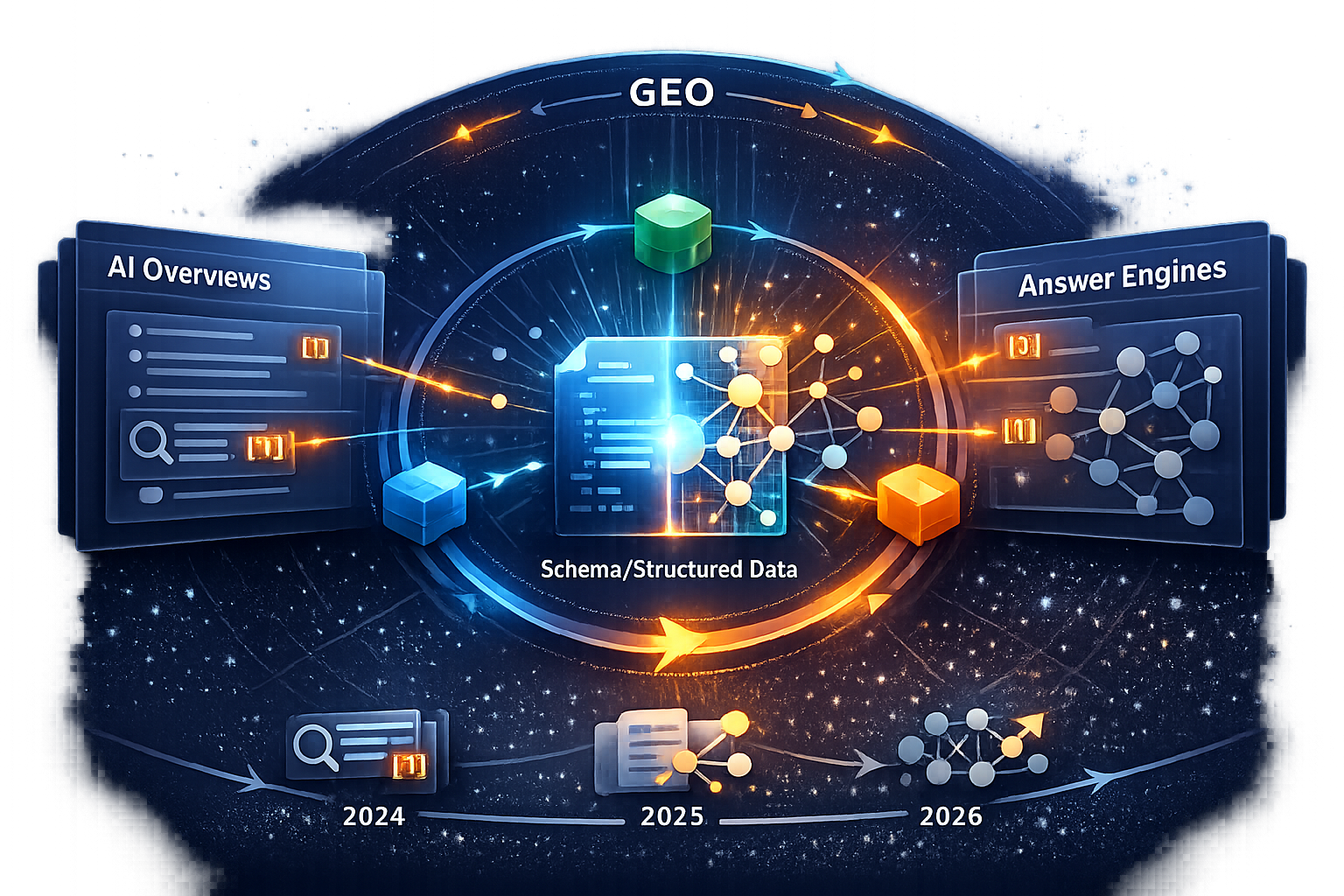
Structured Data in 2026: What Recent AI Search Changes Mean for Schema Markup Strategy
News analysis on how AI Overviews and answer engines are changing Structured Data priorities in 2026—what to update, measure, and expect next.
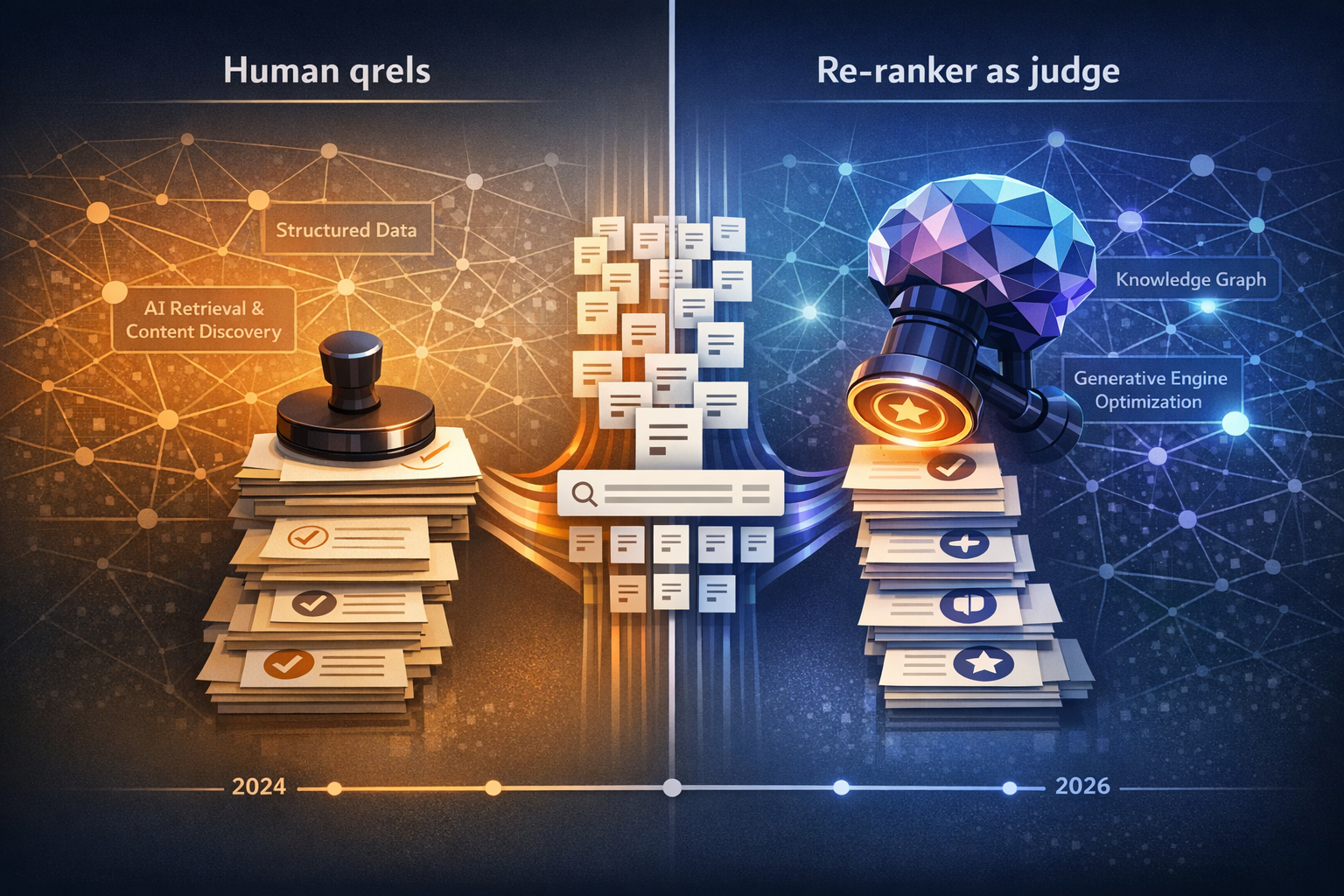
Re-Rankers as Relevance Judges: A New Paradigm in AI Search Evaluation
News analysis on re-rankers becoming relevance judges in AI search evaluation—what changed, why it matters for Knowledge Graph visibility, and what to measure next.