OpenAI Launches GPT-5.6 and ChatGPT Work: What Multi-Agent Modes Change for AI Search Teams
Analysis of how GPT-5.6 and ChatGPT Work multi-agent modes reshape AI search workflows, source verification, and Citation Confidence for research teams.
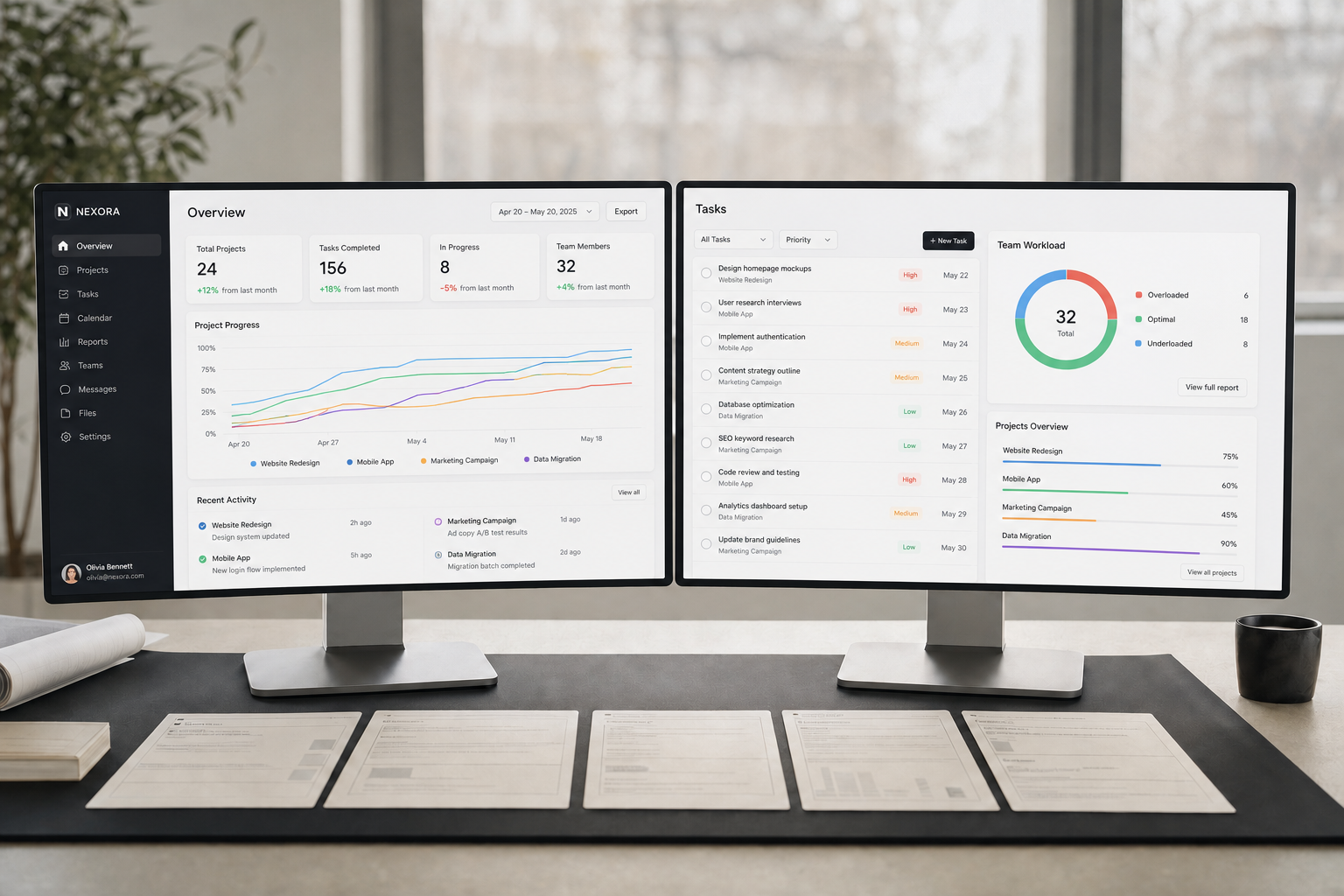
OpenAI Launches GPT-5.6 and ChatGPT Work: What Multi-Agent Modes Change for AI Search Teams
Citation Confidence is the measurable likelihood that an AI answer engine will cite a specific piece of content when answering relevant queries. In multi-agent research, it also reflects whether that source survives discovery, verification, contradiction checking, synthesis, and final-answer review with its meaning and attribution intact.
The central change introduced by agentic workflows is orchestration. Instead of asking one assistant to retrieve and summarize information sequentially, a system can assign parts of an investigation to specialized agents. This creates more opportunities for source discovery, but it also introduces points where citations can be challenged, replaced, duplicated, or lost.
Key Takeaways
Multi-agent research separates source discovery, claim verification, contradiction resolution, and answer composition into distinct stages.
More sources do not guarantee a reliable answer; agents can repeat retrieval bias or build consensus from flawed evidence.
Citation Confidence should measure final citations, attribution accuracy, relevance, authority, and repeatability—not raw mention volume alone.
Search teams must distinguish content discovered during research from content retained as evidence in the final response.
Evidence-rich pages with original data, explicit methods, stable URLs, and claim-level citations are better prepared for multi-agent scrutiny.
Executive Summary: Multi-Agent Search Changes How Citation Confidence Is Built
The OpenAI GPT-5.6 launch page should be the primary reference for confirmed model names, modes, availability, pricing, efficiency claims, and integrations. Operational conclusions in this analysis—such as whether parallel agents improve citation consistency—are interpretations that require controlled testing. The presence of multi-agent orchestration does not, by itself, prove that citations are more accurate or representative.
For AI search teams, the immediate implications are broader discovery opportunities, stricter evidence validation, and a need to monitor consistency across agent paths. Useful records must show which agent found a source, which claim it supported, whether another agent disputed it, and why it survived or disappeared during synthesis.
Single-Agent and Multi-Agent Research Workflows
| Dimension | Single-agent workflow | Multi-agent workflow |
|---|---|---|
| Research breadth | One mostly sequential retrieval path | Parallel paths can explore more queries and domains |
| Validation | The same assistant retrieves and evaluates evidence | Separate agents can challenge claims and resolve contradictions |
| Traceability | Prompts and final citations form the main record | Agent paths, handoffs, and discarded sources also matter |
| Citation Confidence | Measured across repeated final answers | Measured across discovery, verification, synthesis, and final citation stages |
Documentation establishes what a product is designed to do. Claims that multi-agent operation improves source diversity, attribution, or factual reliability remain hypotheses until identical prompts are tested against a single-agent baseline under comparable access conditions.
How Multi-Agent Modes Restructure the AI Research Process
A representative research task can be divided among four functional roles. Implementations may use different labels, combine roles, or run some stages invisibly, so teams should evaluate observable behavior rather than assume a fixed internal architecture.
Discover candidate sources
A discovery agent expands the query, searches multiple formulations, and records candidate pages. Its output should include rejected results so researchers can distinguish limited retrieval from deliberate source selection.
Verify claims and attribution
A verification agent checks whether each page supports the associated claim, whether statistics retain their original context, and whether the cited publisher is the primary source rather than an uncredited summary.
Resolve contradictory evidence
A review agent compares dates, definitions, samples, and methodologies when sources disagree. It should surface unresolved uncertainty instead of forcing consensus from evidence that addresses different questions.
Compose and audit the answer
A synthesis agent writes the response, while a final review checks that every consequential statement maps to a source and that links still resolve to the evidence described.
Parallel retrieval can increase coverage, and agent-to-agent review can expose unsupported synthesis. Failure can also compound. Several agents may retrieve the same low-quality domains, inherit identical search-ranking bias, lose context during handoffs, or mistake repeated claims for independent corroboration. Domain diversity therefore matters less than evidence independence: five pages repeating one unsupported assertion are not five confirmations.
A larger agent pool can create additional reasoning layers without adding independent evidence. Benchmark unique primary sources, retrieval overlap, unsupported-claim rate, and contradiction handling before concluding that multi-agent research is better.
Why Citation Confidence Becomes the Core Performance Metric
A practical AI Citation Score can combine query coverage, final-citation frequency, claim-to-source alignment, source authority, freshness, and consistency across repeated runs. Teams should define weights before collecting results and document why each signal matters. The Citation Confidence measurement guide provides a broader framework for establishing a defensible baseline rather than treating one citation as durable visibility.
Measure query coverage
Build prompt clusters around commercial, informational, comparative, and verification intents, then calculate the percentage for which the page is discovered.
Run repeated tests
Repeat each prompt across multiple runs and dates so a temporary citation is not mistaken for stable visibility.
Validate attribution
Confirm that the cited page supports the exact claim, preserves necessary context, and is credited as the correct source.
Compare agent paths
Record whether the source appeared in discovery, verification, synthesis, or only the final answer, including where it was removed.
Calculate consistency
Divide correctly attributed repeat citations by eligible test runs, then segment the result by query cluster and content type.
Higher citation volume does not automatically mean higher confidence. A source cited ten times for a claim it does not support is weaker than a source cited consistently and accurately across several relevant prompts. A useful scorecard therefore reports discovery rate, final-citation rate, correct-attribution rate, repeat-citation rate, and source volatility separately before combining them into a weighted score.
Example scoring model
One baseline might weight correct attribution at 30%, final-citation frequency at 25%, query relevance at 20%, repeatability at 15%, and authority plus freshness at 10%. The exact weights matter less than applying them consistently across 20–50 representative prompts.
What AI Search Teams Should Change in Their Measurement Workflow
Measurement must capture the research funnel rather than only the rendered answer. Define query clusters, control model settings where possible, run multiple trials, retain every source considered, validate final citations, and compare results over time. The process should complement a broader system for tracking brand citations in AI search without treating proprietary answer engines as perfectly reproducible analytics platforms.
- Record model version, test date, prompt text, workspace context, region, and source-access conditions.
- Separate source-discovery visibility from final-answer visibility and measure the conversion between them.
- Segment results by intent, content format, topic authority, freshness, and observed agent role.
- Track unique domains, primary-source share, citation overlap, unsupported claims, and volatility between runs.
- Require human review for legal, medical, financial, safety, and other consequential claims.
Discovery inclusion and final attribution represent different stages of Citation Confidence. A page repeatedly found but rarely cited may have strong topical relevance but weak evidence extraction, authority, or claim alignment. A page cited without appearing in an observable discovery record may reflect hidden retrieval or inherited context. Both outcomes deserve investigation rather than a single visibility label.
Save prompts, outputs, citations, screenshots, access errors, and human-review decisions. When model behavior changes, this record helps teams distinguish a content improvement from a rollout, interface change, or retrieval fluctuation.
The Strategic Implications for Generative Engine Optimization
Multi-agent systems may favor pages whose evidence can be extracted, independently checked, and reconciled with authoritative sources. This reinforces the fundamentals in the Generative Engine Optimization comprehensive guide: clear claims, original evidence, transparent authorship, stable URLs, and accessible page structures. The objective is not to manipulate agents, but to reduce ambiguity at each retrieval and verification stage.
- Publish original statistics with sample size, collection dates, and methodology.
- Place concise definitions and answer blocks near descriptive headings.
- Name authors and expert reviewers, including relevant credentials.
- Add publication and material-update dates that users can verify.
- Connect consequential claims to primary, claim-level citations.
- Keep evidence accessible without fragile scripts, expired files, or unstable URLs.
These practices also address the wider attribution problem documented in research on LLM search attribution. Separate citation studies also suggest that discoverability and ranking remain important, so formatting alone is unlikely to compensate for weak retrieval eligibility. Sustainable Citation Confidence depends on reliability, entity clarity, accessibility, and corroboration—not citation volume at any cost.
A Focused 30-Day Testing Plan
Teams can turn the analysis into a controlled monthly cycle. The broader strategic context is explored in OpenAI is turning ChatGPT into a cited research cluster, which examines how search, memory, research tools, and citations increasingly operate as a connected discovery system.
Benchmark
Test 20–50 high-value prompts and record discovery, final citation, correct attribution, domain diversity, and volatility.
Improve
Upgrade priority pages with explicit definitions, original data, clear methods, named authors, and primary-source support.
Retest
Repeat the same controlled prompts, preserving model, date, settings, and access details wherever possible.
Monitor
Compare conversion from discovery to final citation and flag major changes following model or product updates.
Frequently Asked Questions

Founder of Geol.ai
Senior builder at the intersection of AI, search, and blockchain. I design and ship agentic systems that automate complex business workflows. On the search side, I’m at the forefront of GEO/AEO (AI SEO), where retrieval, structured data, and entity authority map directly to AI answers and revenue. I’ve authored a whitepaper on this space and road-test ideas currently in production. On the infrastructure side, I integrate LLM pipelines (RAG, vector search, tool calling), data connectors (CRM/ERP/Ads), and observability so teams can trust automation at scale. In crypto, I implement alternative payment rails (on-chain + off-ramp orchestration, stable-value flows, compliance gating) to reduce fees and settlement times versus traditional processors and legacy financial institutions. A true Bitcoin treasury advocate. 18+ years of web dev, SEO, and PPC give me the full stack—from growth strategy to code. I’m hands-on (Vibe coding on Replit/Codex/Cursor) and pragmatic: ship fast, measure impact, iterate. Focus areas: AI workflow automation • GEO/AEO strategy • AI content/retrieval architecture • Data pipelines • On-chain payments • Product-led growth for AI systems Let’s talk if you want: to automate a revenue workflow, make your site/brand “answer-ready” for AI, or stand up crypto payments without breaking compliance or UX.
Related Articles
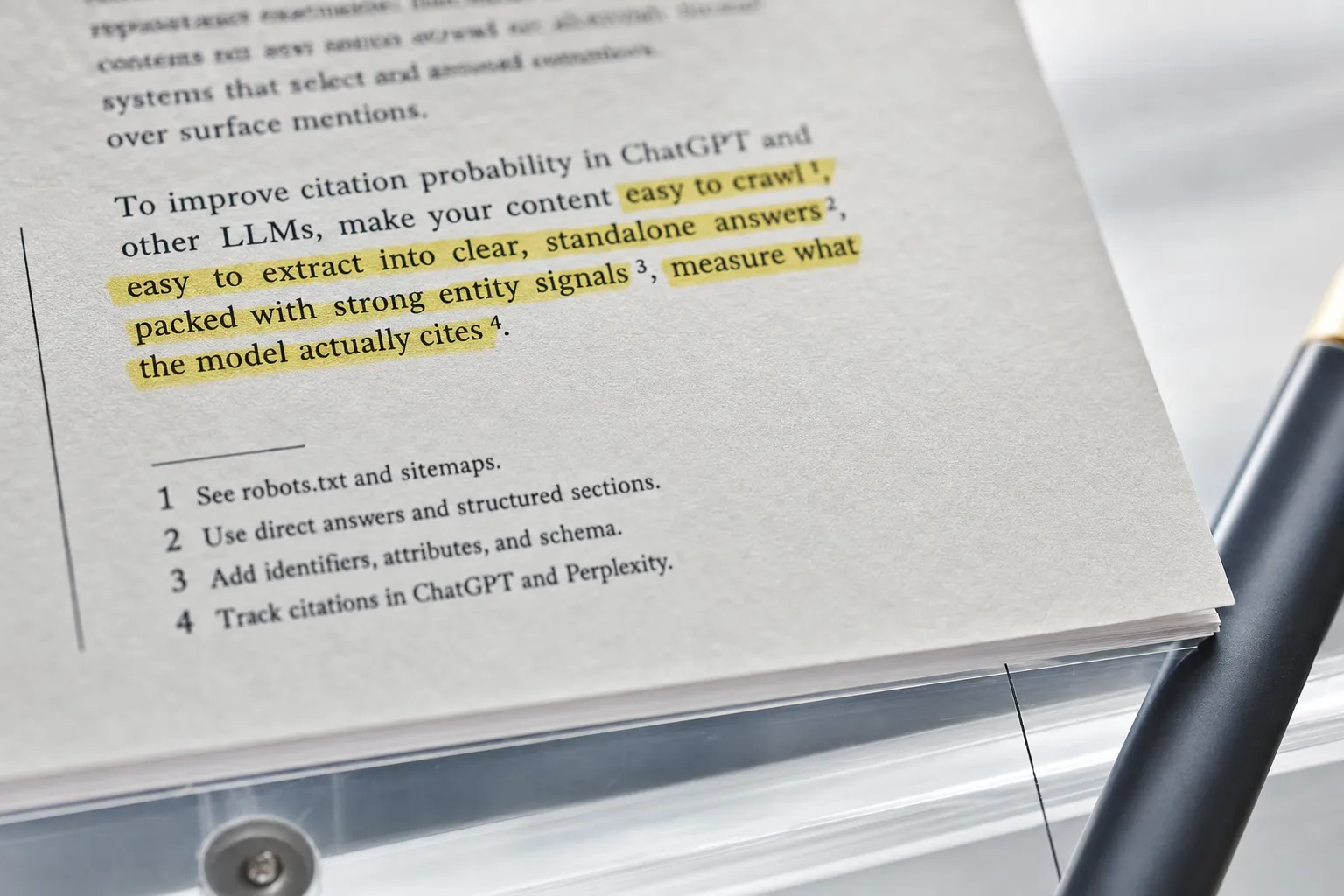
ChatGPT Optimization in 2026: A Working Checklist for Getting Your Brand Cited, Not Just Ranked
How ChatGPT retrieves and cites sources in July 2026, with a sourced Generative Engine Optimization checklist covering crawler access, extractable answers, entity signals, and measurement.
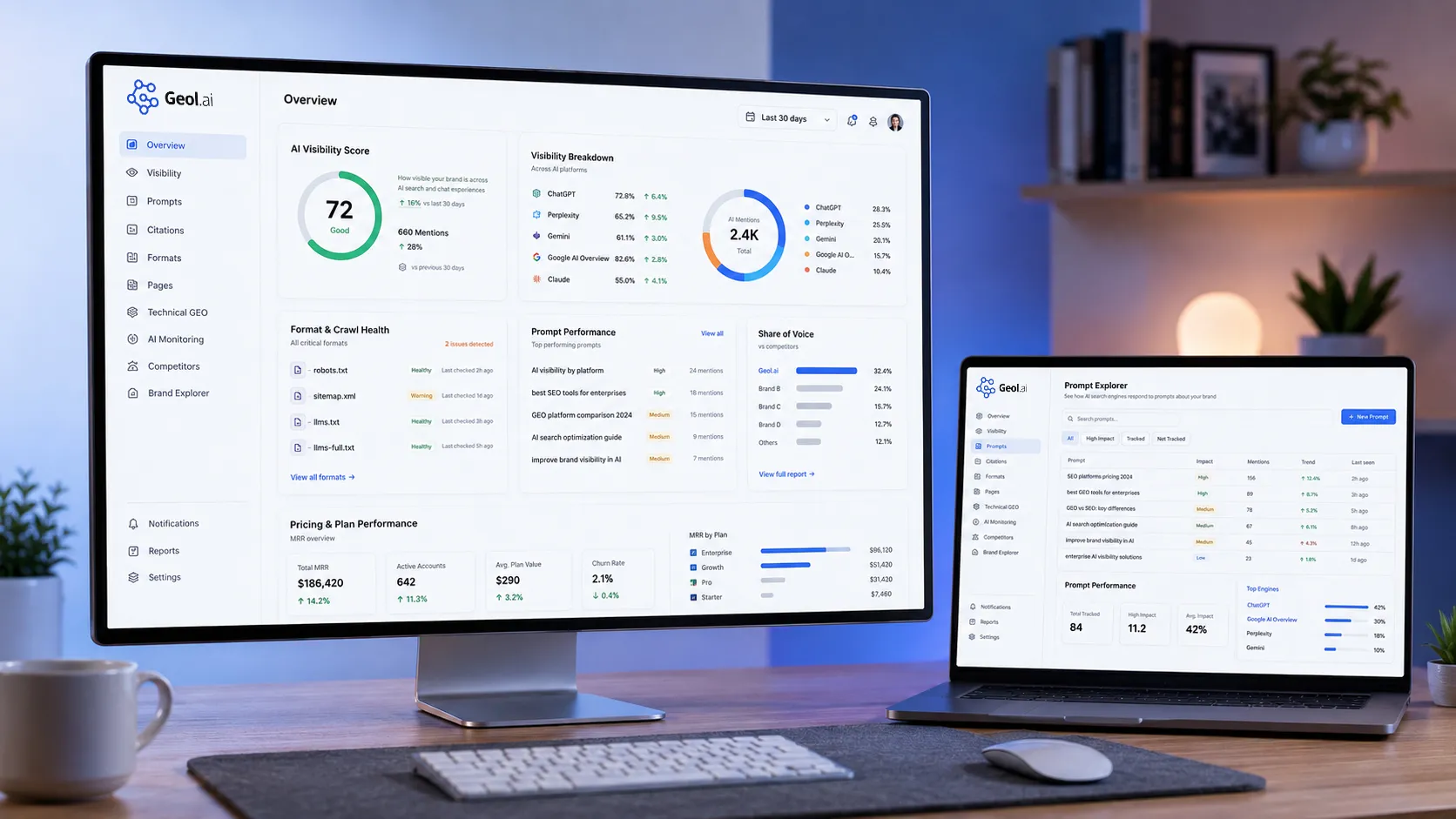
What a GEO Platform Actually Costs in 2026: The Pricing Guide Vendors Won't Write
Real published prices for the Generative Engine Optimization tool market in 2026: self-serve entry tiers, enterprise quote walls, metering math, and honest tool-versus-consultant economics.